Picture this: a sizzling pan, a chicken breast that turns from raw to golden in seconds, and a burst of tomato‑basil aroma that makes the kitchen feel like a summer garden in July. I was standing in a cramped apartment kitchen, juggling a bag of groceries, a phone, and a half‑finished casserole when my friend dared me to turn a simple chicken breast into something that could make a crowd swoon. The dare was simple: “I dare you to taste this and not go back for seconds.” I laughed, because I knew I could deliver something that would make that promise feel like a sweet crime.
The moment the first piece hit the hot skillet, a faint crackle erupted, and the air filled with the scent of olive oil and fresh herbs. The sound was like a tiny drumbeat that set the rhythm for the rest of the dish. As the chicken seared, its surface turned a deep, caramelized brown, and the juices began to mingle with the aromatics, creating a flavor profile that was both comforting and adventurous. I could already taste the subtle tang of balsamic glaze dancing with the bright, juicy tomatoes, and the basil whispering a fragrant promise of freshness.
What makes this version stand out is that it’s not just a recipe; it’s a culinary revelation. I’ve spent years experimenting with chicken dishes, and this one is the first that feels like it was written for the palate of a seasoned foodie and a home cook alike. The combination of a crisp, flavorful coating and a fresh, tangy topping creates a harmony that feels like a well‑orchestrated symphony. The result is a dish that is both humble and extraordinary, and it’s guaranteed to become the highlight of any dinner table.
The secret lies in a technique that most recipes overlook: marinating the chicken in a simple, yet powerful, blend of Italian seasoning and a splash of extra‑virgin olive oil before searing. This step infuses the meat with depth, allowing the flavors to penetrate the fibers and creating a juicy, tender center that melts in your mouth. The tomatoes are diced with care and tossed with a splash of balsamic vinegar and a drizzle of glaze, turning them into a silky, glossy topping that coats the chicken like velvet.
Let me walk you through every single step — by the end, you'll wonder how you ever made it any other way.
What Makes This Version Stand Out
Flavor Depth: The marriage of Italian seasoning, garlic, and onion powder creates a savory base that elevates the chicken beyond plain. The subtle sweetness of balsamic glaze adds a caramelized finish that lingers on the tongue.
Crispy Texture: A quick sear in olive oil produces edges that crackle like thin ice, giving a satisfying crunch that contrasts with the juicy interior. The result is a delightful textural play that keeps every bite interesting.
Freshness Factor: The topping of ripe tomatoes and basil is a burst of garden freshness. The basil leaves release their essential oils, delivering a fragrant, almost citrusy note that brightens the dish.
Time Efficiency: While it may look like a laborious dish, the entire process takes less than 45 minutes. You’ll be serving a crowdable meal in the time it takes to make a cup of coffee.
Versatility: It works as an appetizer, a main course, or a side dish. The flavors adapt well to different occasions, from casual family dinners to sophisticated dinner parties.
Make‑ahead Friendly: The chicken can be marinated ahead of time, and the tomato topping can be prepped a few hours in advance, making it a stress‑free option for last‑minute guests.
Ingredient Quality: Using high‑quality extra‑virgin olive oil and fresh basil transforms the dish from ordinary to unforgettable. The difference in flavor is palpable and worth the extra cost.
Alright, let's break down exactly what goes into this masterpiece…
Inside the Ingredient List
The Flavor Base
Italian seasoning is the backbone of this dish, providing a warm, aromatic foundation that complements the chicken’s natural flavor. It’s a blend of oregano, basil, thyme, and sometimes rosemary, which together create a savory note that’s unmistakably Italian. Skipping this would leave the chicken bland and devoid of that signature depth.
Kosher salt and ground pepper are the classic seasoning duo that balances the dish’s richness. The salt enhances the meat’s natural juices, while the pepper adds a subtle heat that awakens the palate. If you prefer a low‑sodium version, reduce the salt to half and compensate with a pinch of smoked paprika for an extra layer of flavor.
The Texture Crew
Olive oil is not just a cooking medium; it’s a flavor carrier that helps the seasoning cling to the chicken. The extra‑virgin variety adds a peppery bite that elevates the dish’s overall profile. Using a neutral oil would result in a flatter, less vibrant taste.
The chicken breasts themselves are the star. Boneless, skinless cuts are chosen for their tenderness and even cooking. If you’re a fan of a crispier exterior, let the chicken rest on a wire rack after searing; the heat circulates and dries the surface for a perfect crunch.
The Unexpected Star
Ripe tomatoes are the secret to the dish’s fresh, juicy bite. Their natural sweetness balances the acidity of the balsamic vinegar, while their flesh holds up well during cooking, preventing a soggy texture. If you’re in a season when tomatoes are scarce, substitute with roasted red peppers for a smoky twist.
Balsamic vinegar adds a subtle tang and depth that cuts through the richness of the chicken. It also caramelizes slightly during cooking, creating a glossy glaze that clings to the meat. A splash of balsamic glaze at the end adds a sweet, sticky finish that’s irresistible.
The Final Flourish
Fresh basil leaves bring a bright, herbal aroma that lifts the entire dish. Their leaves release essential oils when crushed, adding a fresh, almost citrusy note that complements the tomato’s sweetness. A handful of chopped basil right before serving gives the dish a burst of color and flavor.
Balsamic glaze is the final touch that turns the topping into a silky, glossy sauce. It’s thicker than vinegar, so it coats the chicken and tomatoes without dripping. If you don’t have glaze on hand, you can reduce balsamic vinegar in a saucepan until it thickens to a syrupy consistency.
Everything's prepped? Good. Let's get into the real action…
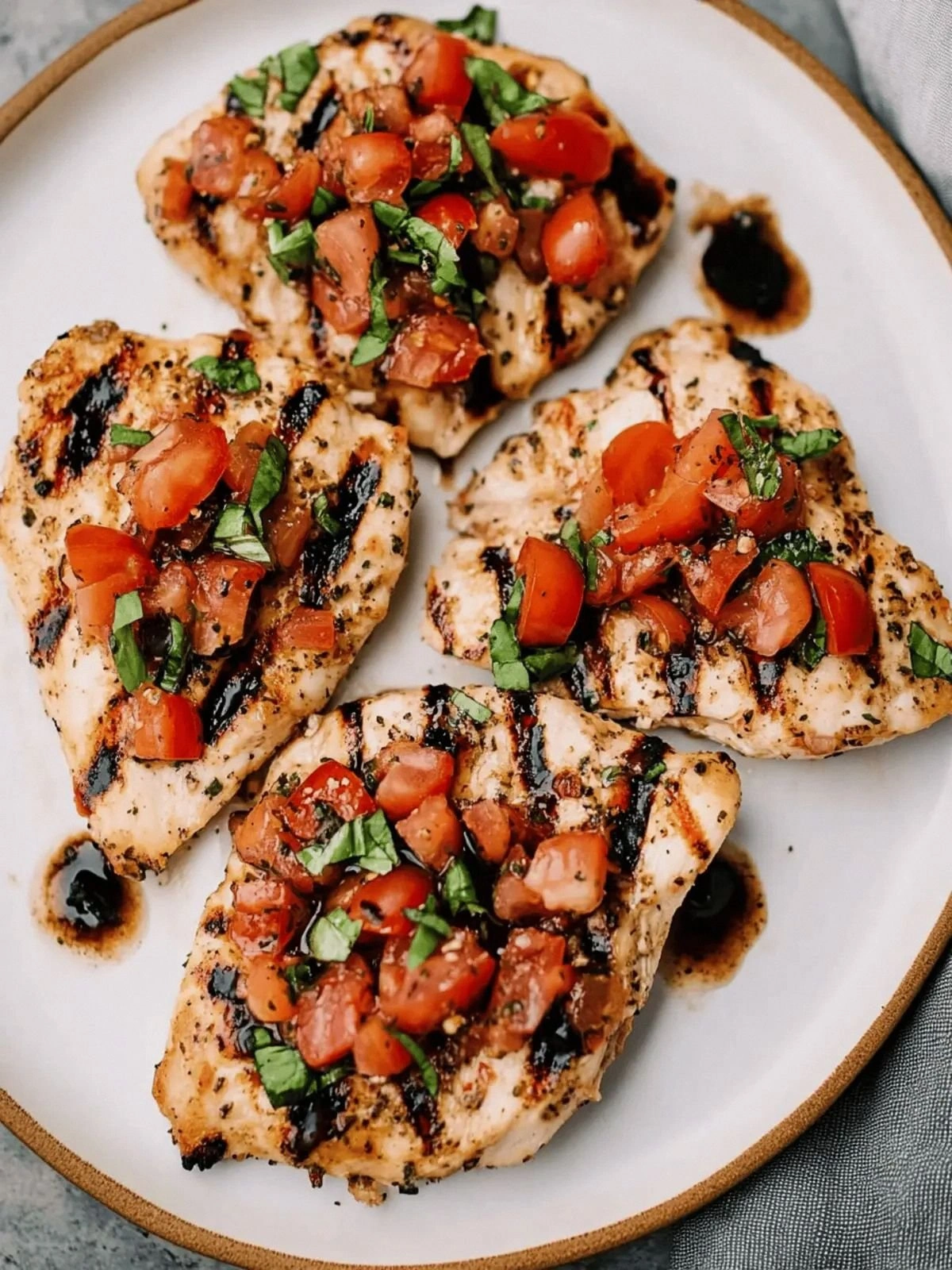
The Method — Step by Step
- In a small bowl, whisk together 2 teaspoons of Italian seasoning, 1 teaspoon of kosher salt, 1 teaspoon of onion powder, 1 teaspoon of garlic powder, and 1 teaspoon of ground pepper. This blend is the flavor foundation that will permeate every bite. Toss the chicken breasts in the mixture, ensuring each piece is coated evenly. Let them rest for 10 minutes to absorb the seasoning.
- Heat 2 tablespoons of olive oil in a large skillet over medium‑high heat until shimmering. The oil should be hot enough that a pinch of water sizzles upon contact. Place the marinated chicken breasts in the skillet, skin side up, and sear for 4–5 minutes on each side. The goal is a golden crust that locks in juices.
- While the chicken cooks, dice 2 cups of ripe tomatoes into bite‑size cubes. In a bowl, combine the tomatoes with 2 tablespoons of extra‑virgin olive oil, 1 tablespoon of balsamic vinegar, and a pinch of salt. Toss gently to coat the tomatoes, ensuring each cube is drenched in the tangy mixture. This will become the vibrant topping that crowns the dish.
- Once the chicken is seared, reduce the heat to medium. Sprinkle 1 cup of fresh basil leaves over the top of the chicken, allowing the heat to release their essential oils. The basil will wilt slightly, creating a fragrant, herbal aroma that will mingle with the savory chicken.
- Add the diced tomato mixture to the skillet, spooning it over the chicken. The tomatoes will steam in their own juices, becoming tender yet still retaining their shape. Cook for an additional 3–4 minutes, allowing the flavors to meld and the tomatoes to soften.
- Drizzle 1 tablespoon of balsamic glaze over the chicken and tomatoes, letting it swirl into the sauce. The glaze will caramelize slightly, creating a glossy, sweet finish that contrasts beautifully with the savory base.
- Check the internal temperature of the chicken; it should reach 165°F (74°C) for safe consumption. If it’s not yet at that temperature, cover the skillet and let it finish cooking for another 2–3 minutes. The final touch is a gentle simmer that ensures the chicken is juicy.
- Once cooked, transfer the chicken to a cutting board and let it rest for 5 minutes. Resting allows the juices to redistribute, ensuring each bite is moist and flavorful. Slice the chicken into strips, then arrange on a platter with the tomato‑basil topping drizzled over the top.
- Serve immediately, garnished with a few extra basil leaves if desired. The dish is best enjoyed hot, with the sauce still glossy and the chicken’s crust crisp. Pair it with crusty bread or a light salad for a complete meal.
- Enjoy the moment when the first bite hits your palate— the crunch, the burst of tomato, the aromatic basil, and the sweet balsamic glaze all harmonize in a single, unforgettable flavor profile.
That's it — you did it. But hold on, I've got a few more tricks that'll take this to another level…
Insider Tricks for Flawless Results
The Temperature Rule Nobody Follows
Many cooks rely on time alone, but the real secret lies in the skillet’s temperature. Use a thermometer to ensure the pan reaches 375°F (190°C) before adding the chicken. This high heat creates a crust that seals in moisture, giving you that coveted juicy center.
Why Your Nose Knows Best
Before you add the basil, give the skillet a quick sniff. If the aroma is sharp and green, the basil is fresh. A dull scent means the leaves are past their prime, and the dish will lack that bright, herbal punch.
The 5‑Minute Rest That Changes Everything
After searing, let the chicken rest for exactly five minutes before slicing. This step allows the juices to redistribute, preventing them from spilling out onto the cutting board. The result is a moist, succulent bite that feels indulgent.
The Balsamic Glaze Trick
If you don’t have ready‑made glaze, create one by simmering balsamic vinegar until it reduces to a syrupy consistency. Add a pinch of honey to balance the acidity. This homemade glaze will add a glossy finish and a subtle sweetness that enhances the dish.
The Fresh Basil Hack
Instead of chopping basil, tear the leaves into small strips. Tearing releases more essential oils, giving the dish a stronger aromatic presence. It also creates a more visually appealing presentation.
Creative Twists and Variations
This recipe is a playground. Here are some of my favorite ways to switch things up:
Mediterranean Twist
Swap the fresh basil for chopped spinach and add a handful of kalamata olives. The olives introduce a briny depth, while the spinach adds a subtle earthiness that complements the chicken’s savory notes.
Spicy Kick
Add a pinch of red pepper flakes to the seasoning blend. The heat will contrast with the sweet balsamic glaze, creating a balanced, fiery flavor that excites the palate.
Cheesy Finale
Sprinkle shredded mozzarella or crumbled feta over the chicken before adding the tomato topping. The cheese melts into the sauce, creating a creamy, indulgent layer that pairs wonderfully with the fresh tomato.
Grilled Variation
Instead of pan‑searing, grill the chicken on a preheated grill. The grill marks add a smoky aroma, and the direct heat creates a charred exterior that enhances the dish’s rustic appeal.
Herb‑Infused Oil
Infuse the extra‑virgin olive oil with rosemary and thyme before cooking. This oil will impart a fragrant, herbaceous note that deepens the overall flavor profile.
Pesto Power
Replace the basil topping with a swirl of basil pesto. The pesto’s nutty, garlicky undertones provide a luxurious twist that elevates the dish to gourmet status.
Storing and Bringing It Back to Life
Fridge Storage
Store the cooked chicken in an airtight container for up to 3 days. Keep the tomato topping separate in a sealed jar to preserve its freshness. When ready to serve, reheat the chicken in a skillet and drizzle the tomato mixture over it for a quick, flavorful revival.
Freezer Friendly
Freeze the chicken in a freezer‑safe bag for up to 2 months. Thaw overnight in the refrigerator before reheating. The tomato topping should be stored separately and added fresh to maintain texture.
Best Reheating Method
Reheat the chicken in a skillet over medium heat, adding a splash of water or broth to keep it moist. Once heated through, top with the tomato mixture and a drizzle of balsamic glaze. A tiny splash of water before reheating steams the chicken back to perfection.