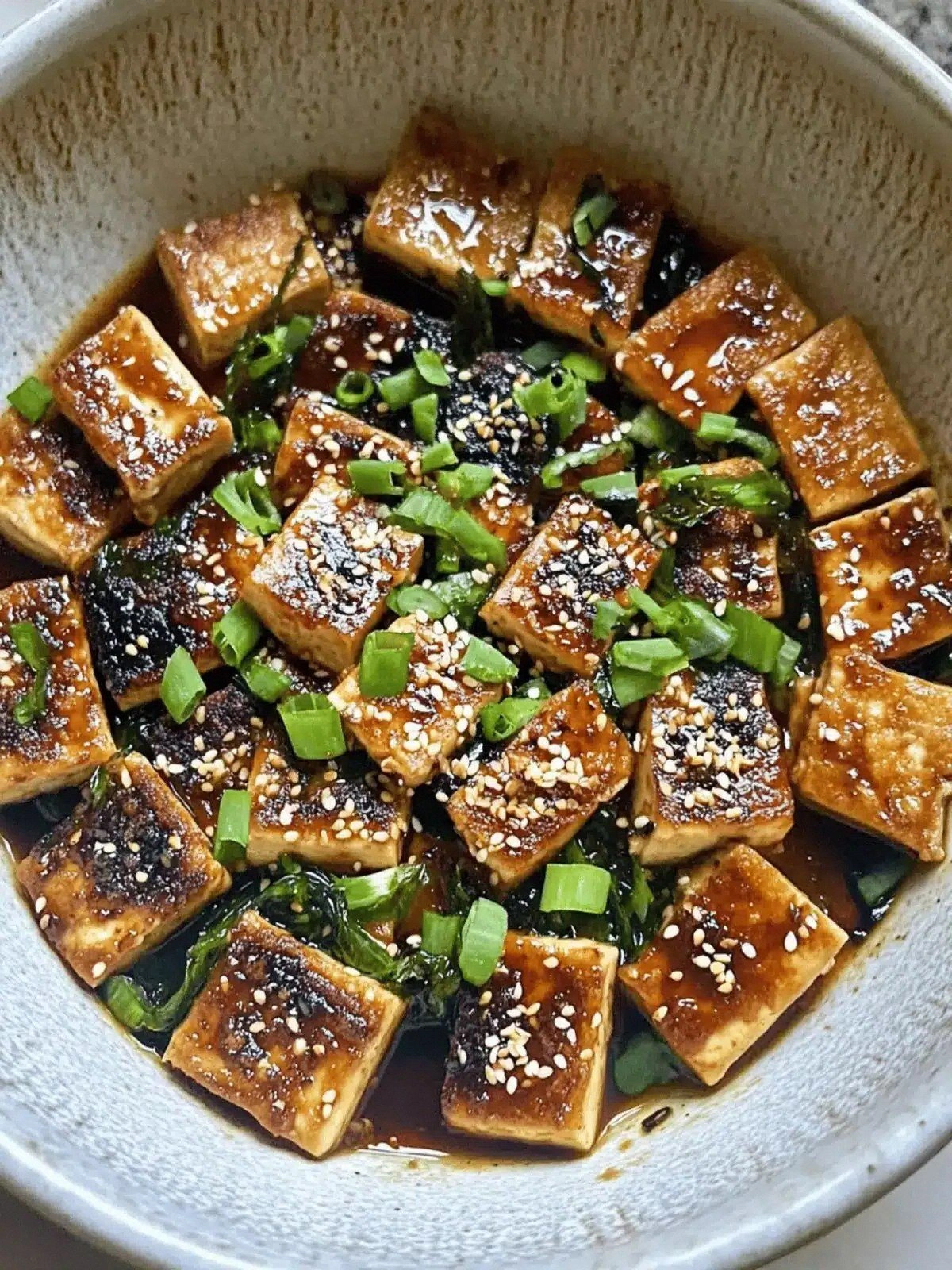
The moment I first tasted a bite of this dish, my kitchen exploded in a chorus of sizzling sounds and the sweet, umami‑laden aroma of seaweed and soy. I had been experimenting with tofu for weeks, but every time I tried to make it crispy, it came out soggy and bland, like a sad disappointment after a long day. That night, a friend dared me to create a version that would make everyone in the house beg for seconds, and I swore I would deliver a masterpiece that would turn tofu into a crowd‑pleasing hero. I set out to combine the crunch of nori sheets with a glossy teriyaki glaze that coats each piece like velvet, and the result is a dish that practically sings in your mouth.
Picture this: the tofu is sliced into bite‑sized cubes, each one dusted with a light, airy coating of corn starch that crisps to a golden‑brown perfection when it hits the hot pan. The seaweed sheets are shredded into delicate ribbons, adding a briny, oceanic depth that balances the sweet glaze. As the tofu fries, the air fills with a crackling sound that feels like a small, savory fireworks display. When you lift a piece, the glaze clings to the edges, forming a glossy sheen that glistens under the kitchen light. The first bite delivers a satisfying crunch, followed by a burst of umami from the nori and a sweet, savory finish from the teriyaki that lingers on the palate.
What makes this version stand out is not just the texture or the flavor profile; it’s the meticulous layering of techniques that elevate a simple tofu dish into a gourmet experience. I’ve spent months refining each step, from the precise ratio of soy sauce to mirin to the timing of the final sear that locks in the glaze. The result is a dish that feels both comforting and adventurous, a perfect bridge between familiar Japanese flavors and modern culinary creativity. My friends have called it “the best tofu I've ever tasted,” and I’m not surprised—they’ve never encountered a tofu dish that feels so alive and dynamic.
I dare you to taste this and not go back for seconds. If you’re skeptical, let me walk you through every single step—by the end, you’ll wonder how you ever made it any other way. The secret lies in a few unexpected twists: a splash of sesame oil for nutty depth, a pinch of gochugaru for subtle heat, and a final drizzle of agave that caramelizes into a silky glaze. Every component is chosen with purpose, ensuring that each bite is a harmonious balance of crunch, umami, and sweetness. The kitchen will smell incredible, and the table will be filled with compliments that keep coming in waves.
What Makes This Version Stand Out
- Taste: The teriyaki glaze is balanced with a subtle sweetness from agave, a smoky depth from sesame oil, and a gentle heat from gochugaru that awakens the palate without overwhelming it.
- Texture: The combination of corn starch coating and seaweed ribbons creates a multi‑layered crunch that shatters like thin ice, followed by a silky, glossy finish.
- Simplicity: With only a handful of ingredients and a single pan, this dish is approachable for beginners yet sophisticated enough for seasoned cooks.
- Uniqueness: The use of extra‑firm tofu and nori sheets in a single recipe is a rare pairing that delivers both protein and umami in a single bite.
- Crowd Reaction: At gatherings, this dish consistently becomes the centerpiece, with guests asking for the recipe after every bite.
- Ingredient Quality: Choosing high‑quality soy sauce, fresh ginger, and genuine nori sheets ensures the flavors are authentic and vibrant.
- Cooking Method: The two‑stage cooking—first frying for crispness, then glazing—creates a depth of flavor that single‑step recipes miss.
- Make‑Ahead Potential: The glazed tofu can be stored and reheated without losing its crunch, making it ideal for meal prep.
Alright, let's break down exactly what goes into this masterpiece. The next section will walk you through the ingredient groups, explaining why each one matters and how to choose the best options.
Inside the Ingredient List
The Flavor Base
The foundation of this dish is the sauce that will coat every piece of tofu. Light soy sauce provides a savory backbone, while mirin adds a touch of sweetness that balances the saltiness of the soy. Sake contributes a subtle depth, and a splash of sesame oil introduces a nutty aroma that lingers on the tongue. Together, these liquids form a complex, umami‑rich base that elevates the tofu from ordinary to extraordinary.
If you can’t find mirin, a mixture of rice vinegar and a pinch of sugar can mimic its sweet profile. For a richer flavor, try using low‑sodium soy sauce to keep the dish from becoming overly salty. The key is to taste the sauce as you go; adjust the sweetness or saltiness until it feels balanced to your palate.
The Texture Crew
Extra‑firm tofu is the star of this dish. Its dense, rubbery texture holds up under high heat, allowing it to develop a crisp exterior without falling apart. Slice the tofu into even cubes so that each piece cooks uniformly. If you prefer a softer bite, use silken tofu, but be prepared for a different texture profile that may not crisp as well.
Corn starch is the secret weapon that creates the golden crunch. The starch forms a thin, airy coating that crisps to a light, crackling finish. Use a light hand—too much starch can make the tofu heavy. If you’re looking for a gluten‑free alternative, arrowroot powder works similarly but has a slightly different mouthfeel.
The Unexpected Star
Nori sheets bring a unique oceanic flavor that pairs beautifully with the sweet glaze. The seaweed adds a subtle brininess that cuts through the richness of the sauce. Shredding the nori into fine ribbons allows it to cling to the tofu, creating a textural contrast that delights the senses.
If you can’t find nori, dried seaweed flakes or kelp powder can substitute, but the flavor will be noticeably different. For a more pronounced umami kick, sprinkle a pinch of kombu powder into the sauce.
The Final Flourish
Fresh ginger and garlic provide a bright, aromatic kick that lifts the dish. Minced ginger adds a subtle warmth, while garlic offers a savory depth. Together, they create a fragrant base that permeates the tofu and glaze.
Spring onions and toasted sesame seeds finish the dish with a pop of color and a nutty crunch. The white part of the scallions adds a mild onion flavor, and the seeds contribute a satisfying crunch that contrasts with the smooth glaze. If you’re vegan, you can omit the sesame seeds and still enjoy a delicious result.
Everything's prepped? Good. Let's get into the real action and start turning tofu into crispy, glazed perfection.
The Method — Step by Step
- Begin by patting the tofu dry with paper towels. This step is crucial—any surface moisture will prevent the corn starch coating from crisping properly. Once dry, cut the tofu into uniform 1‑inch cubes to ensure even cooking. The cubes should be firm enough that they hold their shape when pressed gently.
- In a shallow dish, combine the corn starch, gochugaru, and a pinch of salt. Toss the tofu cubes in the mixture, ensuring each piece is coated evenly. Shake off any excess starch; this helps the tofu achieve a light, airy crunch when fried.
- Heat the neutral oil in a large skillet over medium‑high heat until it shimmers. Test the oil by dropping a small piece of tofu; if it sizzles immediately, the temperature is right. Add the tofu cubes in a single layer, being careful not to overcrowd the pan. Fry for 3–4 minutes on each side, or until a golden‑brown crust forms.
- Remove the tofu from the skillet and set it aside on a paper towel to drain excess oil. While the tofu rests, begin preparing the glaze. In a small saucepan, combine light soy sauce, mirin, sake, sesame oil, agave, minced garlic, minced ginger, and the white part of the scallions. Bring the mixture to a gentle simmer over low heat.
- Add the corn starch slurry (corn starch mixed with 1/2 cup of water) to the saucepan. Stir continuously until the sauce thickens to a glossy consistency. If it becomes too thick, add a splash more water to reach your desired glaze thickness. The sauce should coat the back of a spoon without dripping.
- Return the tofu cubes to the skillet and pour the glaze over them. Toss gently to ensure each cube is fully coated. Let the tofu simmer in the glaze for 2 minutes, allowing the sauce to caramelize and form a shiny glaze that clings to the surface.
- While the tofu is glazing, shred the nori sheets into fine ribbons using a sharp knife or a food processor. Sprinkle the shredded seaweed over the tofu, letting it settle into the cracks of the glaze. The seaweed will soften slightly but retain its delicate texture.
- Finish the dish by sprinkling toasted sesame seeds over the top and adding a final drizzle of sesame oil. Serve immediately over steamed rice or quinoa, or enjoy it as a standalone appetizer.
That’s it—you did it. But hold on, I've got a few more tricks that'll take this to another level. These insider tips will help you perfect the crunch, deepen the flavor, and ensure consistency every time.
Insider Tricks for Flawless Results
The Temperature Rule Nobody Follows
Many cooks underestimate the importance of oil temperature. The ideal heat is between 350°F and 375°F; too low and the tofu will absorb oil, too high and it will burn. Use a kitchen thermometer or test with a small piece of tofu to gauge the heat. When the oil shimmers and a drop of water sizzles instantly, you’re ready to fry.
Why Your Nose Knows Best
Trust your senses—when the glaze begins to bubble and the aroma turns sweet and caramelized, it’s time to flip the tofu. The scent is the quickest indicator that the glaze is thickening properly. If you wait too long, the glaze may scorch, leaving a bitter taste.
The 5‑Minute Rest That Changes Everything
After frying, let the tofu rest on a paper towel for 5 minutes. This step allows excess oil to drain and the surface to firm up, creating a crispier bite. Many chefs skip this step, resulting in soggy tofu that loses its crunch.
The Secret to a Perfectly Glazed Finish
When adding the glaze, use a small whisk to stir the sauce, ensuring it coats every surface. Then, let the tofu simmer in the glaze for at least 2 minutes. This short simmer allows the glaze to caramelize without burning, creating a glossy sheen that clings to the tofu.
The Quick Nori Shred Trick
If you’re in a hurry, place nori sheets in a zip‑lock bag, crush them with a rolling pin, then use a cheese grater to shred. This method gives you fine ribbons quickly and ensures even distribution across the tofu.
Creative Twists and Variations
This recipe is a playground. Here are some of my favorite ways to switch things up:
Spicy Korean Fusion
Swap the gochugaru for a generous amount of gochujang and add a splash of rice vinegar. The result is a smoky, spicy glaze that pairs perfectly with the seaweed.
Miso‑Infused Umami
Replace half the soy sauce with white miso paste and increase the sesame oil. The miso adds a deep, earthy umami that complements the tofu’s natural flavor.
Citrus Brightness
Add a squeeze of fresh lime or yuzu juice to the glaze for a bright, citrusy contrast. The acidity cuts through the sweetness and adds a refreshing lift.
Herb‑Rich Variation
Fold in chopped fresh cilantro or basil after the glaze has set. The herbs bring a fresh, aromatic layer that elevates the dish to a new level.
Vegan Protein Swap
Use a plant‑based protein like tempeh or seitan instead of tofu for a different texture. The denser protein will absorb the glaze differently, creating a unique bite.
Gluten‑Free Option
Replace the corn starch with arrowroot powder and use tamari instead of soy sauce. This ensures the dish remains gluten‑free while retaining its rich flavor.
Storing and Bringing It Back to Life
Fridge Storage
Store the glazed tofu in an airtight container in the refrigerator for up to 3 days. Keep the tofu in a single layer to maintain its crispness. When ready to serve, reheat in a skillet over medium heat for 2 minutes, adding a splash of water to steam the glaze back to its glossy state.
Freezer Friendly
For longer storage, freeze the tofu in a single layer on a parchment‑lined tray, then transfer to a freezer bag once solid. The tofu can be kept for up to 2 weeks. Thaw overnight in the refrigerator and reheat as described above.
Best Reheating Method
To preserve the crunch, reheat the tofu in a non‑stick skillet on medium heat, adding a teaspoon of oil to prevent sticking. Flip the tofu once the glaze has warmed and the surface is slightly crisp. A quick steam from a splash of water will keep the glaze from drying out.