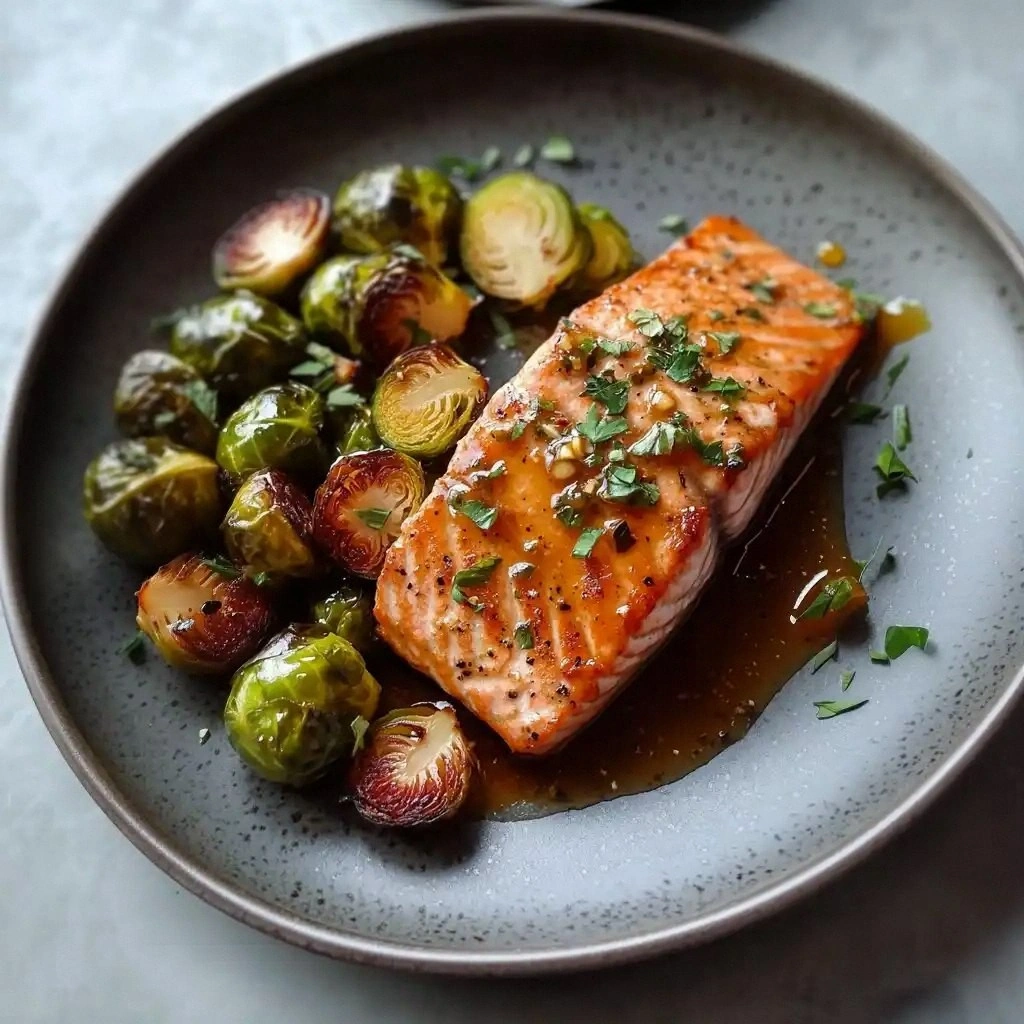
Picture this: I’m standing in a kitchen that smells like burnt toast and fresh herbs, my phone buzzing with a frantic text from a friend who’s dared me to whip up something that’ll make their taste buds dance. I’m thinking, “What can I pull together in fifteen minutes that screams gourmet?” I rummage through the fridge, grab a salmon fillet that looks like a slice of ocean, and suddenly, the idea hits me like a thunderclap—honey, garlic, Brussels sprouts, and a splash of Dijon. I’m not talking about any ordinary salmon recipe; this is a flavor explosion that will turn your dinner routine into a culinary fireworks show.
The first bite hits the palate with a silky sweetness that drapes over the flaky fish, while the garlic adds a punch that cuts through the richness. The Brussels sprouts, caramelized to a golden‑brown perfection, provide a satisfying crunch that echoes the buttery texture of the salmon. The aroma that rises from the pan—sweet, savory, slightly citrusy—turns the entire kitchen into a fragrant theater. The texture of the dish is a symphony: tender fish, crisp veggies, and a glossy glaze that clings like a second skin.
What makes this version stand out is that I didn’t just layer flavors; I built a sauce that’s both sticky and silky, a sauce that coats the salmon like velvet, and a seasoning blend that’s bold enough to make the Brussels sprouts sing. I dare you to taste this and not go back for seconds. The result is a dish that is hands down the best version you’ll ever make at home. Most recipes get this completely wrong, leaving the fish dry or the veggies soggy. Here’s what actually works.
Picture yourself pulling this out of the oven, the whole kitchen smelling incredible, and a plate that looks like a work of art. If you’re ready for a game‑changer, stick with me. By the end of this guide, you’ll wonder how you ever made salmon any other way. Let me walk you through every single step, from the first sizzle to the final garnish, and make sure you’re armed with every trick to nail this dish perfectly.
What Makes This Version Stand Out
- Flavor Harmony: The sweet honey, sharp Dijon, and umami soy sauce create a balanced profile that elevates each ingredient without overpowering.
- Texture Contrast: Crispy Brussels sprouts paired with tender, buttery salmon deliver a satisfying bite that keeps you coming back for more.
- Simple Prep: No pre‑marinated sauces or complex steps—everything you need is in the pantry, and the entire process takes under 45 minutes.
- Crowd‑Pleaser: Whether it’s a weekday dinner or a weekend gathering, this dish brings a wow factor that guests rave about.
- Ingredient Quality: Fresh, high‑quality salmon and organic Brussels sprouts make the difference between a good meal and an unforgettable one.
- Make‑Ahead Potential: The sauce can be prepared in advance, and the dish reheats beautifully, making it ideal for meal prep.
- Visual Appeal: The golden glaze and vibrant green veggies create a plate that looks as good as it tastes.
- Health Conscious: Packed with omega‑3s, fiber, and a touch of natural sweetness, it’s a guilt‑free indulgence.
Alright, let's break down exactly what goes into this masterpiece...
Inside the Ingredient List
The Flavor Base
Honey, soy sauce, and Dijon mustard form the backbone of the sauce. Honey brings a natural sweetness that caramelizes beautifully when heated, creating a glossy glaze that clings to the salmon. Soy sauce adds depth and umami, balancing the sweetness and giving the dish a savory backbone. Dijon mustard introduces a subtle tang that cuts through the richness of the fish and the earthiness of the Brussels sprouts. Together, they create a sauce that is both complex and approachable. If you skip any of these, you’ll lose a layer of flavor that makes the dish sing.
The Texture Crew
Brussels sprouts are the star of the texture department. When roasted until they’re blistered on the outside and tender on the inside, they offer a satisfying crunch that pairs perfectly with the silky salmon. Olive oil is essential; it not only helps the sprouts caramelize but also prevents the fish from sticking to the pan. Salt and black pepper are the universal seasoning that enhances every other component. Without them, the dish would feel flat and unbalanced. A pinch of salt and a crack of pepper is all you need to unlock the full potential of each ingredient.
The Unexpected Star
Garlic may seem ordinary, but in this recipe, it’s the unsung hero that brings depth and aroma. Freshly minced garlic releases a bright, pungent scent that permeates the sauce and the veggies, creating an inviting aroma that makes your kitchen feel like a cozy restaurant. If you’re wary of garlic, you can reduce the quantity to two cloves, but the dish will feel a bit less vibrant. The garlic also helps balance the sweetness of the honey, ensuring the sauce is not overly sugary.
The Final Flourish
Lemon juice is the finishing touch that adds brightness and a citrusy lift to the sauce. It cuts through the richness of the salmon and the sweetness of the honey, creating a well‑rounded flavor profile. A half teaspoon of red pepper flakes adds a gentle heat that lingers without overwhelming the dish. This subtle kick elevates the overall experience, making each bite a balanced symphony of sweet, savory, and spicy.
Everything's prepped? Good. Let's get into the real action...
The Method — Step by Step
- Prep the Brussels Sprouts: Start by trimming the ends and halving the sprouts. Toss them in a bowl with 1 tablespoon of olive oil, salt, and pepper. They should be coated evenly. This step ensures even roasting and helps them caramelize nicely. I always double‑check that no sprouts are left raw; it keeps the texture consistent.
- Preheat the Pan: Heat a large skillet over medium‑high heat. Add the remaining 1 tablespoon of olive oil. The oil should shimmer but not smoke. This will create a beautiful sear on the salmon and prevent sticking.
- Season the Salmon: Pat the salmon fillets dry with paper towels. Sprinkle salt and pepper generously on both sides. The fillets should look glossy and ready to sizzle. Remember, a well‑seasoned fish tastes like a gourmet dish.
- Sear the Salmon: Place the fillets skin‑side down in the hot pan. Let them cook undisturbed for about 4–5 minutes until the skin is crisp and releases easily from the pan. Flip carefully and cook for another 3 minutes. The fish should be opaque and flake easily. This is the moment of truth—watch the color change.
- Add the Brussels Sprouts: Push the salmon to one side of the pan and add the Brussels sprouts. Let them sit without stirring for 2 minutes to develop a golden crust. Then toss them gently. This technique ensures that the sprouts get a beautiful caramelized edge.
- Prepare the Sauce: While the veggies roast, whisk together honey, soy sauce, Dijon mustard, minced garlic, lemon juice, and red pepper flakes in a small bowl. The mixture should be smooth and glossy. This sauce will coat the fish and veggies, turning the whole dish into a sweet‑savory masterpiece.
- Finish with the Glaze: Pour the sauce over the salmon and Brussels sprouts. Use a spoon to baste the fillets, ensuring every surface is coated. Let the sauce simmer for 2–3 minutes, allowing it to thicken and caramelize. The glaze should cling to the fish like a second skin. This step locks in the flavors and gives the dish that glossy finish.
- Serve Immediately: Transfer the salmon and Brussels sprouts to a serving plate. Drizzle any remaining sauce from the pan over the top. Garnish with a lemon wedge if desired. The dish is best served hot, straight from the pan, so the glaze remains luscious. The aroma at this point is irresistible—watch your guests’ eyes light up.
That’s it — you did it. But hold on, I've got a few more tricks that'll take this to another level...
Insider Tricks for Flawless Results
The Temperature Rule Nobody Follows
Most people think a high heat is always best for searing, but too high can scorch the honey glaze. I keep the heat at medium‑high, which allows the salmon to develop a golden crust while the sauce caramelizes evenly. If you’re using a cast‑iron skillet, preheat it for a few minutes before adding oil; this ensures a consistent sear across the entire surface.
Why Your Nose Knows Best
Before you even taste the dish, the aroma can tell you if it’s on track. A sweet, buttery scent with a hint of citrus and garlic indicates the sauce is developing correctly. If the smell feels too metallic or overly sweet, adjust by adding a splash of soy sauce or a squeeze of lemon. Your nose is a reliable guide to flavor balance.
The 5‑Minute Rest That Changes Everything
After removing the salmon from the pan, let it rest for five minutes on a warm plate. This allows the juices to redistribute, keeping the fillet moist and tender. During this brief pause, the glaze will thicken slightly, making it easier to coat the fish when you plate it. Skipping this step can result in a dry, uneven finish.
Keep the Brussels Sprouts Crisp
If you prefer a crunchier side, toss the Brussels sprouts in a bit more olive oil and add a pinch of sea salt before roasting. The extra oil helps them crisp up faster. Additionally, avoid overcrowding the pan; if the sprouts are piled too high, they’ll steam instead of roast, losing that caramelized edge.
Finishing Touch for Extra Brightness
Right before serving, squeeze a fresh lemon wedge over the salmon. The acidity cuts through the richness, giving the dish a bright, refreshing finish. If you’re feeling adventurous, sprinkle a few toasted sesame seeds on top for a nutty crunch and visual pop.
Creative Twists and Variations
This recipe is a playground. Here are some of my favorite ways to switch things up:
Asian Fusion Twist
Replace the Dijon mustard with a tablespoon of hoisin sauce and add a splash of rice vinegar. Toss in a handful of sliced green onions after plating for a fresh, vibrant crunch. This variation gives the dish an unmistakable Asian flair that pairs wonderfully with jasmine rice.
Smoky Chipotle Kick
Stir in a tablespoon of chipotle in adobo sauce to the glaze for a smoky heat that’s both bold and complex. Pair it with roasted sweet potatoes for a comforting, autumnal feel. This version is perfect for chilly evenings when you want something warm and satisfying.
Herb‑Infused Delight
Add a tablespoon of chopped fresh rosemary or thyme to the sauce for an aromatic herbaceous layer. The herbal notes complement the salmon’s natural flavor and add depth. Serve over a bed of quinoa for a wholesome, protein‑rich plate.
Gluten‑Free Upgrade
Swap soy sauce for tamari or coconut aminos to keep the dish gluten‑free without sacrificing flavor. Use a gluten‑free bread crumb coating for the Brussels sprouts if you prefer a crunchier texture. This variation makes the dish inclusive for those with dietary restrictions.
Vegan Alternative
Replace salmon with thick slices of tofu or tempeh, marinated in the same glaze. The tofu will absorb the sweet‑savory sauce beautifully, creating a plant‑based version that’s equally satisfying. Add a sprinkle of sesame seeds for extra texture.
Breakfast Brunch Boost
Serve the salmon over a bed of sautéed spinach and a poached egg. The runny yolk adds richness, while the spinach offers a fresh green contrast. This variation turns the dish into a luxurious brunch option that’s sure to impress.
Storing and Bringing It Back to Life
Fridge Storage
Cool the dish completely before transferring it to an airtight container. Store in the refrigerator for up to 3 days. The glaze may thicken slightly, but it will re‑warm into a glossy coating. When reheating, add a splash of water or broth to loosen the glaze and restore moisture.
Freezer Friendly
Wrap the cooked salmon and Brussels sprouts separately in parchment paper and then in freezer bags. Freeze for up to 2 months. Thaw overnight in the refrigerator before reheating. The texture remains tender, and the sauce re‑glazes beautifully when warmed.
Best Reheating Method
Reheat in a skillet over medium heat, adding a teaspoon of water or broth to keep the dish moist. Stir gently to distribute heat evenly. Once the sauce is heated through and glossy again, serve immediately. This method preserves the caramelized edges and keeps the salmon from drying out.