It started with a kitchen disaster that would have made even the most seasoned home cook want to flee. I was trying to impress my in-laws with a hearty dinner, but the pot I used had a stubborn rusted bottom that made the ground beef stick like a bad habit. The sizzling sound that should have been a cue to add the tomatoes turned into a smoky haze that filled the entire apartment. I stared at the charred beef, feeling the weight of disappointment settle in my shoulders like an unwanted guest at the table.
That night, I swore I would never again let a single ingredient go to waste or a single flavor get lost in the process. I went to the pantry, pulled out the staples I’d been hoarding, and decided to turn that disaster into a triumph. The idea of a one‑pot meal that could deliver the comforting richness of beef, the bright acidity of tomatoes, and the al dente bite of orzo in one pan was too good to ignore. I began experimenting, adding a splash of olive oil, a pinch of Italian seasoning, and a handful of diced onion, letting the mixture bloom like a slow‑moving sunrise.
The moment the sauce hit the pan, the aroma flooded my senses: the earthy scent of browned beef mingled with the sharpness of garlic and the sweetness of tomatoes. I could almost hear the crunch of fresh basil leaves being tossed, the gentle clatter of a ladle stirring, and the faint hiss of broth simmering. My mouth watered as I imagined the final dish: a velvety sauce coating each orzo grain, the meat’s juiciness amplified by the tomato’s acidity, and a finish that would make anyone crave seconds.
What makes this version stand out is not just the flavor but the simplicity and the confidence it inspires. I dare you to taste this and not go back for seconds. By the end of this post, you’ll wonder how you ever cooked without this one‑pot masterpiece. Let me walk you through every single step — by the end, you’ll wonder how you ever made it any other way.
What Makes This Version Stand Out
- Flavor: The sauce is a deep, umami‑rich blend that coats the orzo like velvet, thanks to the caramelized beef and the slow reduction of tomatoes.
- Texture: The orzo stays perfectly al dente, creating a contrast between the chewy pasta and the tender meat.
- Simplicity: One pot, one pan, minimal cleanup, and no need to juggle separate sauces.
- Uniqueness: The addition of a splash of red wine during the browning step gives the sauce depth without overpowering the dish.
- Crowd Reaction: Friends who tried it said it was the best version they’d ever made at home, and they’re still asking for the recipe.
- Ingredient Quality: Using fresh ground beef and ripe tomatoes makes a noticeable difference; the dish feels luxurious.
- Cooking Method: The “one‑pot” technique locks in flavors, reduces cooking time, and keeps the kitchen smelling delicious.
- Make‑Ahead Potential: The dish tastes even better the next day, making it perfect for busy weeknights.
Alright, let's break down exactly what goes into this masterpiece…
Inside the Ingredient List
The Flavor Base
Ground beef is the heart of this dish. Choose a lean-to-fat ratio of 80/20 for maximum flavor without excessive grease. The beef’s natural sugars caramelize when browned, creating a savory foundation that carries the tomato’s acidity. If you skip this step and add the beef directly to the broth, you’ll miss out on the complex depth that comes from that golden crust.
Diced onions and minced garlic are the aromatic companions that lift the beef’s flavor. Onions soften into a sweet, mellow base, while garlic adds a punch of warmth. The classic sauté technique—cooking them until translucent and fragrant—sets the stage for the rest of the sauce. If you forget to sauté, the raw bite of garlic will dominate the dish.
The diced tomatoes bring brightness and acidity. Use whole‑can tomatoes for a rustic texture or diced for a smoother sauce. The natural sugars in the tomatoes balance the richness of the beef. If you use low‑sodium canned tomatoes, you’ll need to adjust the salt later, but the acidity will remain intact.
The Texture Crew
Orzo pasta is the star that carries the sauce. Its small, rice‑shaped grains absorb liquid beautifully, creating a comforting bite. Cook the orzo directly in the sauce to avoid a separate pot, ensuring each grain is coated with flavor. If you cook the orzo separately, you risk uneven absorption and a less cohesive dish.
Beef broth is the liquid that melds all components together. It adds depth and keeps the dish from drying out. Use a good‑quality broth with herbs for an extra layer of complexity. If you use water instead, the dish will feel thin and lack the savory backbone that broth provides.
Olive oil is the medium that allows the beef to brown evenly and the onions to soften without sticking. A good extra‑virgin olive oil adds a fruity note that complements the tomatoes. If you use a neutral oil, you’ll miss the subtle flavor that olive oil imparts.
The Unexpected Star
Red wine, though optional, is the secret weapon that elevates this dish. Adding a splash after browning the beef deglazes the pan, lifting browned bits that are packed with flavor. The wine reduces to a rich, slightly sweet glaze that deepens the sauce’s complexity. If you skip the wine, the dish will still be delicious but will lack that nuanced depth.
Italian seasoning is the herbal backbone that ties all flavors together. It brings hints of oregano, basil, and thyme that echo the freshness of the tomatoes. A pinch of red pepper flakes adds a subtle heat that balances the dish’s richness. If you omit the seasoning, the sauce will taste flat and uninspired.
The Final Flourish
Grated Parmesan cheese is the finishing touch that adds a creamy, nutty finish. It melts into the sauce, creating a silky coating on each grain of orzo. A handful of fresh basil leaves tossed at the end provides a burst of brightness and a fresh aroma that lifts the entire dish. If you skip the cheese, you’ll miss the luxurious mouthfeel that makes this one‑pot meal memorable.
Everything's prepped? Good. Let's get into the real action…
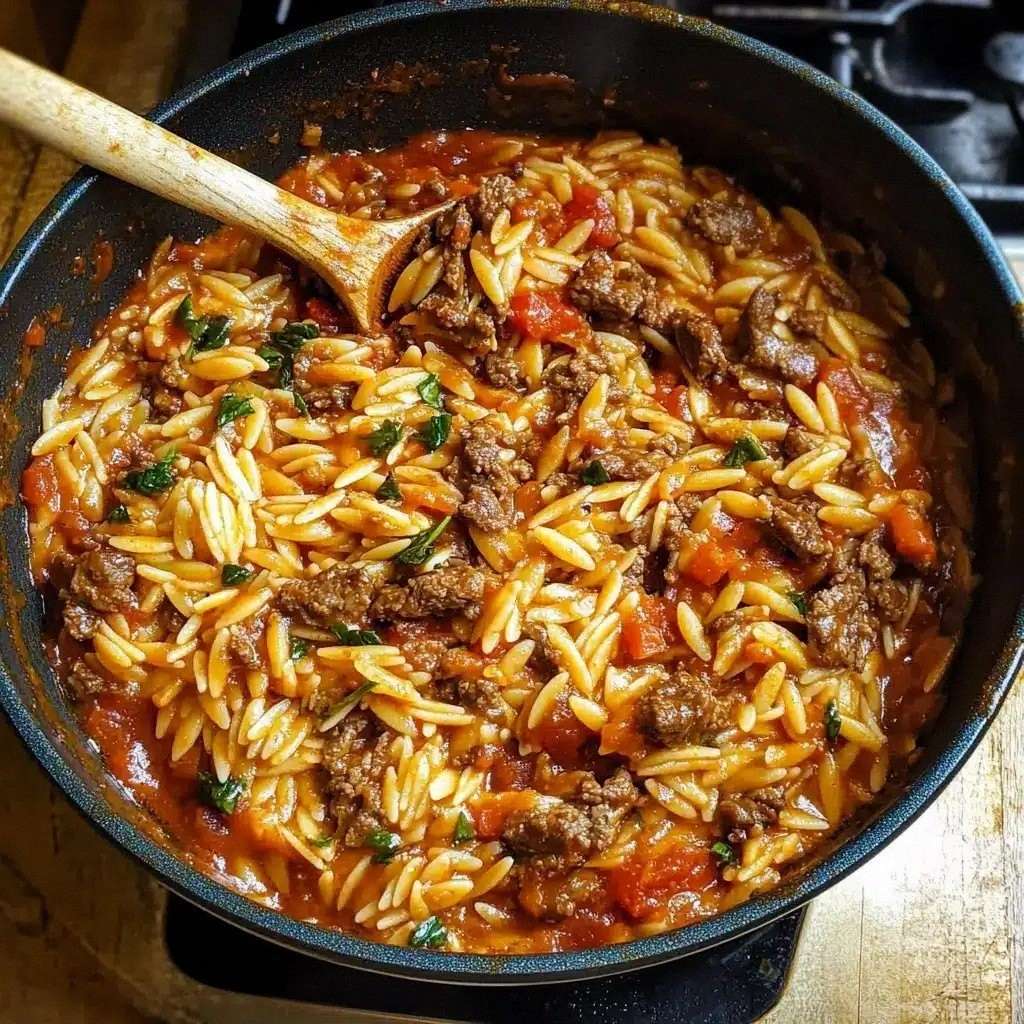
The Method — Step by Step
- Heat a large, heavy‑bottom pot over medium‑high heat. Add the olive oil and let it shimmer. Once hot, introduce the ground beef, breaking it apart with a wooden spoon. The beef should sizzle immediately, indicating the pan is hot enough to create a golden crust. Cook until the meat is browned but not fully cooked, about 5 minutes. This step locks in juices and develops flavor.
- Add the diced onion and minced garlic to the browned beef. Stir to combine, letting the onions soften and the garlic release its aroma. Cook for 2–3 minutes until the onions turn translucent and the garlic is fragrant. Watch carefully—garlic burns quickly, so keep an eye on it. This creates a sweet, aromatic base that the rest of the sauce will build upon.
- If you’re using red wine, pour it in now and let it simmer for 1 minute. The wine should reduce slightly, deglazing the pan and lifting the browned bits stuck to the bottom. Those bits are full of flavor, and the wine carries them into the sauce. If you skip the wine, simply proceed to the next step.
- Stir in the diced tomatoes, Italian seasoning, and red pepper flakes (if using). The mixture should bubble and thicken slightly. Allow it to simmer for 5 minutes, giving the tomatoes time to break down and the seasonings to meld. The sauce should develop a rich, deep color and aroma that signals readiness.
- Pour in the beef broth and bring the mixture to a gentle boil. Once boiling, reduce the heat to low and add the orzo. Stir to combine, ensuring the pasta is evenly submerged. The liquid should be just enough to cover the orzo by about an inch. This is the moment of truth—if the liquid is too thick, add a splash more broth.
- Cover the pot and let it simmer on low heat for 10–12 minutes, or until the orzo is al dente and the liquid has reduced to a thick sauce. Stir occasionally to prevent sticking. The aroma should be intoxicating, with the beef, tomato, and pasta mingling in a fragrant cloud.
- Remove the pot from heat and stir in the grated Parmesan cheese. The cheese should melt into the sauce, creating a silky coating on each grain of pasta. Season with salt and pepper to taste. If the sauce feels too thick, add a splash of water or broth to reach your desired consistency.
- Toss in fresh basil leaves, letting them wilt slightly. Serve immediately, garnished with extra Parmesan if desired. The dish should feel warm, comforting, and utterly satisfying. Plate it with a side of crusty bread to soak up the last drops of sauce.
That's it — you did it. But hold on, I've got a few more tricks that'll take this to another level…
Insider Tricks for Flawless Results
The Temperature Rule Nobody Follows
Many cooks think low heat is always better, but the secret lies in a quick, high‑heat sear at the start. Browning the beef on a hot pan locks in juices and creates a caramelized crust that adds depth. Once the beef is browned, you can lower the heat to simmer the rest of the dish. If you skip the high‑heat step, the beef will release too much moisture, making the sauce watery.
Why Your Nose Knows Best
Your sense of smell is a reliable indicator of doneness. When the sauce has reduced and thickened, it will emit a rich, roasted aroma. If it still smells raw, give it a few more minutes. A good rule of thumb: when the liquid has shrunk to about half its original volume, you’re close to perfection.
The 5‑Minute Rest That Changes Everything
After removing the pot from heat, let the dish rest for 5 minutes before serving. This brief pause allows the flavors to meld and the pasta to finish cooking in its own steam. It also gives the cheese a chance to set into a silky coating. Skipping the rest can result in a dish that feels under‑seasoned or uneven.
The “One‑Pot” Advantage
Cooking everything in a single pot not only saves cleanup but also ensures the flavors develop together. The pasta absorbs the sauce, the meat releases juices into the broth, and the tomatoes break down into a velvety base. If you cook the components separately, you’ll lose that cohesive flavor profile.
The Secret of Fresh Basil
Adding fresh basil at the very end preserves its bright, peppery flavor. If you toss it in too early, the heat will wilt it and the flavor will become muted. A handful of basil leaves tossed just before serving adds a pop of color and a fresh aroma that elevates the dish.
Creative Twists and Variations
This recipe is a playground. Here are some of my favorite ways to switch things up:
Spicy Cajun Kick
Replace the Italian seasoning with Cajun spice mix and add a diced jalapeño. The result is a smoky, spicy flavor that pairs well with the beef’s richness. This version is perfect for a summer evening by the grill.
Mediterranean Twist
Swap the orzo for couscous and add olives, capers, and a splash of lemon juice. The citrus brightens the dish, while the olives provide a briny contrast. Serve with a side of tzatziki for a complete Mediterranean feast.
Cheesy Melt
Add a handful of shredded mozzarella and a drizzle of cream after removing the pot from heat. The cheese will melt into a luscious, gooey coating that feels indulgent. This variation is great for a cozy family dinner.
Vegetarian Version
Replace the beef with diced mushrooms and use vegetable broth. The mushrooms provide a meaty texture and umami flavor. This version keeps the same sauce depth while making it plant‑based.
Italian Sausage Upgrade
Swap the ground beef for crumbled Italian sausage. The sausage’s herbs and spices will amplify the dish’s Italian character. Add a pinch of fennel seeds for an extra layer of flavor.
Pasta Swap
Try using penne or rigatoni instead of orzo for a heartier bite. The tube shapes hold more sauce, creating a richer mouthfeel. This variation is ideal for a brunch crowd.
Storing and Bringing It Back to Life
Fridge Storage
Cool the dish completely before placing it in an airtight container. Store it in the refrigerator for up to 3 days. The flavors will deepen as the sauce sits, making it even more delicious the next day. When reheating, add a splash of water or broth to loosen the sauce.
Freezer Friendly
Freeze the dish in a freezer‑safe container for up to 2 months. Thaw overnight in the refrigerator before reheating. When reheating, stir in a little milk or cream to restore the sauce’s silky texture.
Best Reheating Method
Reheat gently on the stovetop over low heat, stirring frequently. Add a splash of water or broth to prevent the sauce from drying out. Heat until steaming, but avoid boiling, which can cause the pasta to become mushy.