Picture this: a late‑night craving that feels like a guilty pleasure, the kind that makes you rummage through the fridge and the pantry, only to find a handful of udon noodles, a slab of beef, and a bottle of soy sauce that seems to promise something extraordinary. That was my kitchen in the middle of a stormy Tuesday when I decided to toss together a bowl of savory black pepper beef udon, and the result was so satisfying it felt like a culinary revelation. The aroma that hit me first was that sharp, earthy note of freshly ground black pepper, mingling with the sweet umami of soy and oyster sauce, while the visual of glossy noodles and bright green cabbage promised a vibrant bite. If you’ve ever felt that moment of culinary euphoria, you’ll recognize the rush I was riding.
I’ll be honest—my first attempt was a disaster. The beef was over‑cooked, the noodles were mushy, and the sauce had a watery, almost soggy texture that left me feeling disappointed. I stared at the pot, realizing I’d missed a simple step: the secret sauce that binds everything together like a velvet cloak. That single ingredient—black pepper sauce—turns the dish from ordinary to unforgettable, and it’s the one thing that makes this version stand out from every other recipe you’ll find online.
What I discovered was that the key to this dish isn’t the quantity of pepper or the number of sauce ingredients, but how they’re layered and how the flavors develop over time. The beef is marinated with a splash of soy, a touch of sesame oil, and a whisper of garlic, letting the proteins absorb the umami before they hit the pan. The noodles are boiled just until al dente, then tossed with the cabbage and a splash of vinegar to keep them from sticking. Finally, the black pepper sauce is poured over everything, thickening into a glossy, aromatic coating that clings to each strand of udon.
Let me walk you through every single step—by the end, you’ll wonder how you ever made it any other way. I dare you to taste this and not go back for seconds. This is hands down the best version you’ll ever make at home, and I’m about to show you why.
What Makes This Version Stand Out
- Flavor Depth: The combination of dark soy, oyster sauce, and a splash of rice vinegar creates a layered umami that lingers on the palate. The pepper’s heat cuts through the richness, leaving a clean finish.
- Texture Harmony: The udon noodles are al dente, the Chinese cabbage retains a crisp bite, and the beef is tender yet slightly chewy, creating a satisfying contrast.
- Quick Prep: From chopping to simmering, the entire dish takes under 45 minutes, making it perfect for a weeknight dinner.
- Versatility: Swap out the beef for pork, chicken, or tofu, and you’re still getting the same incredible flavor profile.
- Visual Appeal: The glossy sauce, bright green cabbage, and dark pepper crystals make the dish look as good as it tastes.
- Make‑Ahead Friendly: The sauce can be prepared ahead of time and reheated without losing its thickness or flavor.
- Ingredient Quality: Using fresh beef and high‑quality soy sauce elevates the dish, turning a simple bowl into a gourmet experience.
- Chef’s Confidence: Even those who are new to stir‑fries will feel empowered by the clear, step‑by‑step instructions.
Alright, let's break down exactly what goes into this masterpiece...
Inside the Ingredient List
The Flavor Base
The foundation of this dish is the sauce. Dark soy sauce, oyster sauce, and rice vinegar form a sweet‑savory backbone that balances the heat of the black pepper. Dark soy sauce provides a deep, almost chocolatey umami, while oyster sauce adds a subtle brininess that mimics the ocean. The vinegar cuts through the richness, brightening the overall profile. If you’re missing oyster sauce, a splash of hoisin or a dash of Worcestershire can fill the gap, but the authentic taste leans on oyster’s unique flavor.
Another key player is sesame oil. A tablespoon of this nutty oil brings a warm, toasted note that elevates the sauce without overpowering the other components. Sesame oil’s low smoke point means you should add it at the end of cooking to preserve its delicate aroma. If you’re vegan, a few drops of toasted sunflower seed oil can mimic the nuttiness.
The Texture Crew
Udon noodles are the star of the show, offering a chewy, slightly sweet base that soaks up the sauce. When boiling them, use plenty of salted water and stir occasionally to prevent sticking. Once cooked, drain and rinse under cold water to stop the cooking process, keeping them firm. If you prefer a lighter bite, use thinner ramen or soba noodles, but the udon’s heft is essential for a satisfying mouthfeel.
Chinese cabbage provides crunch and a mild, peppery flavor that complements the beef. Slice it into thin ribbons so it cooks quickly and retains a slight bite. The cabbage’s natural sugars caramelize slightly when sautéed, adding a hint of sweetness that balances the pepper’s bite. If you’re out of Chinese cabbage, Napa cabbage or even kale can substitute, but the texture will shift slightly.
The Unexpected Star
Fresh beef, sliced thinly against the grain, is the meat that delivers the most flavor. Look for a cut with a good marbling ratio—sirloin or flank steak works well. Thin slices ensure quick searing and prevent the meat from becoming rubbery. Marinating the beef for just 10 minutes in soy sauce, sesame oil, and minced garlic unlocks a deeper umami before the pan sears it to perfection.
The garlic, in two forms—one minced for the beef and one for the sauce—provides a pungent foundation. The minced garlic for the beef is incorporated during the marination, infusing the meat with a subtle warmth. The garlic in the sauce adds a final aromatic layer that lifts the entire dish. If you’re sensitive to raw garlic, you can use a smaller amount or replace it with garlic powder, but the fresh bite is irreplaceable.
The Final Flourish
Starch is the unsung hero that gives the sauce its silky consistency. The recipe calls for both corn starch or potato starch for the slurry and potato starch for the black pepper sauce. Mixing the starch with cold water before adding it to the hot sauce prevents clumping and ensures a smooth finish. A small amount of starch can go a long way; too much will make the sauce gummy.
Fresh ground black pepper is the star of the sauce, delivering a bright, peppery heat that cuts through the richness of the soy and oyster sauces. Use a freshly cracked grinder for maximum aroma; pre‑ground pepper loses its potency quickly. The pepper is added at the end of cooking to preserve its heat and aromatic oils, ensuring every bite is infused with that signature bite.
Everything’s prepped? Good. Let’s get into the real action...
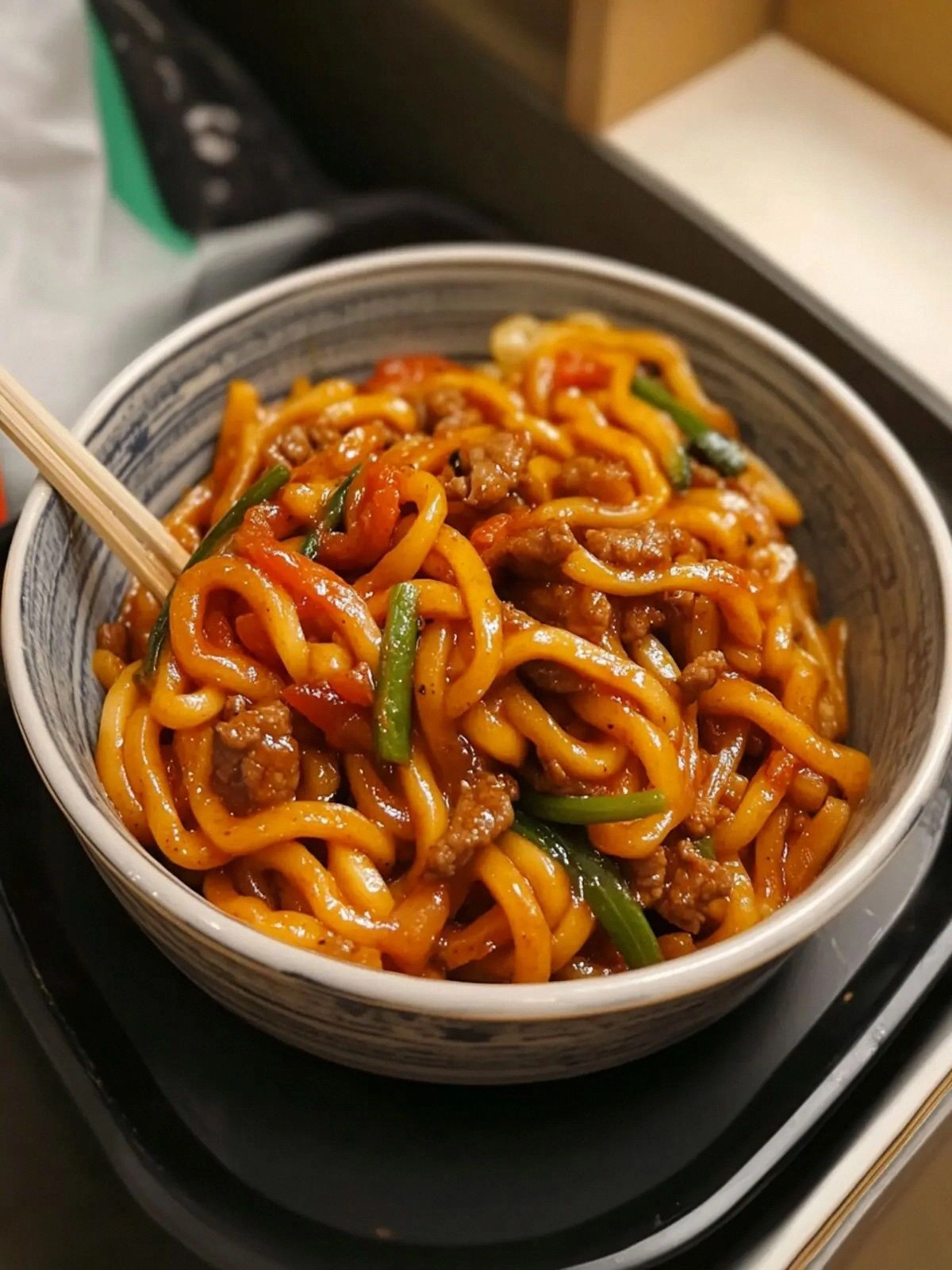
The Method — Step by Step
- Begin by boiling a large pot of salted water. Once boiling, add the udon noodles and cook for 4-5 minutes, or until they’re just shy of al dente. Drain, rinse under cold water, and set aside. The noodles should feel firm but not hard; this prevents them from becoming mushy when combined with the sauce.
- While the noodles are cooking, prepare the beef. In a bowl, combine the thinly sliced beef with 1 tbsp soy sauce, 1 tsp sesame oil, and 1 clove minced garlic. Toss until the slices are evenly coated and let them rest for 10 minutes. This quick marination allows the beef to absorb umami and reduces the cooking time.
- Heat a large wok or skillet over medium‑high heat. Add 1 tbsp of sesame oil, then drop the marinated beef into the pan. Sear the beef for 2-3 minutes, or until a brown crust forms. Flip the slices to sear the other side; the goal is a quick sear, not a full cook. Remove the beef and set aside.
- In the same pan, add the Chinese cabbage and a splash of water to create steam. Sauté for 2 minutes until the cabbage begins to wilt but still retains a slight crunch. This quick stir‑fry preserves the bright color and sweet flavor of the cabbage.
- Now it’s time for the sauce. In a small bowl, whisk together 3 tbsp dark soy sauce, 1 tbsp oyster sauce, 1 tsp Chinese white rice vinegar, 2 tsp fresh ground black pepper, 3 tbsp water, and 1/2 tsp potato starch. Mix until the starch dissolves completely. This mixture will thicken the sauce and give it a glossy finish.
- Pour the sauce into the wok, stirring constantly. As it heats, the sauce will begin to bubble and thicken. Add the 1 tsp corn starch slurry (1 tsp starch mixed with 1 tbsp cold water) to ensure a silky texture. Keep the sauce simmering for 2 minutes, allowing the flavors to meld.
- Add the cooked udon noodles back into the pan, tossing them with the sauce until every strand is coated. Return the seared beef to the wok, and give everything a final toss to combine. The heat should be low enough that the noodles don’t burn, but high enough that the sauce clings to each noodle.
- Serve hot, garnished with a sprinkle of extra fresh black pepper or a drizzle of sesame oil if desired. The dish is best enjoyed immediately, while the noodles are still warm and the sauce is at its peak.
That's it — you did it. But hold on, I've got a few more tricks that'll take this to another level...
Insider Tricks for Flawless Results
The Temperature Rule Nobody Follows
Many cooks assume that a higher heat is always better for stir‑fries, but that can lead to burnt noodles and over‑cooked vegetables. Keep the wok at a steady medium‑high heat for the initial sear, then lower it to medium for the sauce. This subtle shift preserves the noodles’ chewiness and prevents the sauce from scorching.
Why Your Nose Knows Best
As soon as the sauce starts to bubble, the aroma will tell you it's ready. That fragrant steam is the cue to add the noodles, ensuring they’re coated immediately. If you wait too long, the noodles will absorb too much liquid and become soggy.
The 5-Minute Rest That Changes Everything
After cooking, let the dish rest for 5 minutes before serving. This pause allows the flavors to redistribute and the sauce to thicken slightly, giving the noodles a glossy finish. It also gives the beef a chance to relax, making it more tender.
Use a Splash of Soy Sauce for Extra Depth
Adding a teaspoon of light soy sauce just before serving can brighten the dish and balance the saltiness of the dark soy. This small tweak can transform a good bowl into a great one.
Keep the Cabbage Crisp
If you prefer a crunchier cabbage, stir‑fry it for only 30 seconds before adding the sauce. The quick sauté locks in the texture while still allowing the flavors to mingle.
Stirring Technique
Use a wooden spoon or a metal spatula that can reach the bottom of the wok. This ensures even heat distribution and prevents the noodles from sticking. A good stir keeps the noodles separated and the sauce evenly distributed.
Creative Twists and Variations
This recipe is a playground. Here are some of my favorite ways to switch things up:
Spicy Szechuan Udon
Swap the black pepper with Szechuan peppercorns and add a splash of chili oil. The numbing heat pairs beautifully with the umami sauce, creating an exhilarating bite.
Vegetarian Mushroom Udon
Replace the beef with sliced shiitake mushrooms. Sauté them until they release their juices, then add the sauce. The mushrooms absorb the flavors and offer a meaty texture.
Thai Coconut Curry Udon
Infuse the sauce with 1 tablespoon of red curry paste and a splash of coconut milk. The creamy, spicy profile transforms the dish into a tropical delight.
Breakfast Udon with Egg
Crack a fried or poached egg into the pot just before serving. The runny yolk creates a rich, silky coating that adds a breakfast‑style indulgence.
Seafood Udon
Swap the beef for shrimp or scallops. Sear them briefly and then finish them in the sauce. The seafood adds a delicate sweetness that complements the pepper.
Gluten‑Free Udon
Use rice noodles or a gluten‑free udon blend. The texture changes slightly, but the sauce still clings beautifully, making the dish accessible to everyone.
Storing and Bringing It Back to Life
Fridge Storage
Store the cooked dish in an airtight container for up to 2 days. Keep the sauce separate if you prefer a fresher bite when reheating.
Freezer Friendly
Freeze in portions for up to 3 months. Reheat in a skillet or microwave, adding a splash of water or broth to loosen the sauce.
Best Reheating Method
Reheat on low heat, stirring constantly, and add a tiny splash of water to restore moisture. The noodles will reheat quickly, and the sauce will regain its glossy sheen.