Picture this: it’s a lazy Sunday morning, the rain is tapping a lazy rhythm on the windows, and you’ve just stumbled out of bed with a craving that feels like a hug from the inside. I was in that exact spot last weekend, half‑asleep, when a friend dared me to “make something that sounds like breakfast, dessert, and a hug all at once.” I laughed, grabbed the nearest bag of day‑old croissants, and set out on a culinary adventure that ended with a dish so decadent I’m still hearing the echo of that first bite. This is the story of how a simple dare turned into the most indulgent brunch‑meets‑brunch‑dessert you’ll ever taste.
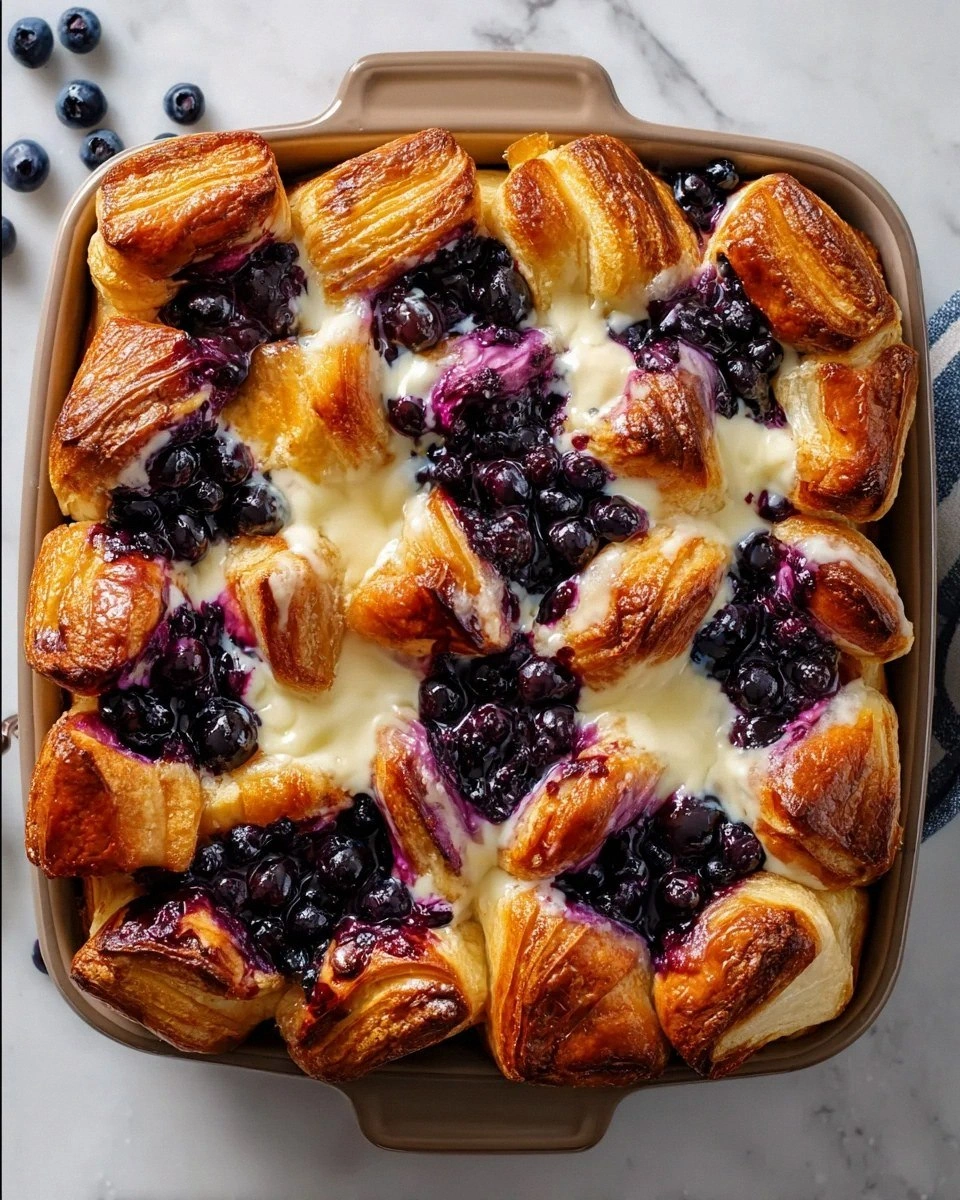
The kitchen was a symphony of sounds: the soft thud of buttered croissants being torn apart, the gentle whisking of eggs and milk that sounded like a lullaby, and the occasional pop of blueberries as they hit the hot pan. The aroma? A heady mix of vanilla, cinnamon, and that unmistakable buttery perfume that made my nose do a little happy dance. When the mixture hit the oven, the air filled with a caramelized scent that reminded me of a bakery on a crisp autumn morning, even though it was June outside. The first glimpse of the golden‑brown top, speckled with bubbling blueberries, was like a sunrise you could eat.
Why does this version stand out from the endless sea of croissant casseroles? Most recipes treat croissants as a bland canvas, soaking them in a generic custard that never quite reaches that perfect balance of creamy and flaky. I discovered that the secret lies in a few bold moves: using a generous amount of cream cheese for that luscious tang, folding in fresh blueberries for bursts of tartness, and letting the croissants sit overnight so they soak up every ounce of flavor. The result is a casserole that’s airy yet dense, sweet yet slightly tangy, and so comforting it practically hugs you from the inside out.
And here’s the kicker: I’m about to reveal a technique that most cooks completely skip—lightly toasting the croissants before they meet the custard. This tiny step creates a barrier that keeps the flaky layers from turning soggy, giving you a crust that’s crisp on the edges and melt‑in‑your‑mouth soft in the middle. I dare you to taste this and not go back for seconds. Okay, ready for the game‑changer? Let me walk you through every single step — by the end, you’ll wonder how you ever made it any other way.
What Makes This Version Stand Out
- Texture: The croissants stay flaky on the top while the interior becomes a custard‑kissed cloud, thanks to the overnight soak and a quick toast before baking.
- Flavor Depth: Cream cheese adds a subtle tang that balances the sweetness of blueberries and sugar, creating a sophisticated flavor profile.
- Simplicity: Only ten core ingredients, most of which you probably already have in your pantry, make this a no‑stress, high‑reward dish.
- Unique Twist: A splash of heavy cream elevates the custard from ordinary to decadently rich without feeling heavy.
- Crowd Reaction: Guests often claim they’ve never tasted anything like this before; it’s the kind of dish that sparks instant “wow” moments.
- Ingredient Quality: Using day‑old croissants actually improves the texture, as they absorb more custard without falling apart.
- Cooking Method: The two‑step bake (first at high heat for a golden crust, then lower to finish the custard) guarantees perfect doneness.
- Make‑Ahead Potential: Assemble the night before, refrigerate, and bake fresh in the morning—ideal for busy brunches.
Inside the Ingredient List
The Flavor Base
The heart of this casserole is the custard, a harmonious blend of whole milk, heavy cream, and eggs. Milk provides a light, velvety backbone, while the heavy cream injects richness that makes each bite feel luxurious. Eggs are the binding hero, turning the liquid into a silky custard that sets without turning rubbery. If you skip the heavy cream, you’ll lose that buttery mouthfeel; if you omit the eggs, the mixture will never set properly, leaving you with a soupy disaster.
The Texture Crew
Croissants are the star of the show, and their buttery layers are what give this dish its signature texture. Day‑old croissants are perfect because they’re slightly drier, allowing them to soak up the custard without turning mushy. If you can’t find croissants, a sturdy brioche or even a thick slice of Texas toast will do, but you’ll miss that flaky, buttery crunch. Cream cheese adds a dense, creamy layer that melds with the custard, creating a luscious mouthfeel that’s almost like a cheesecake in disguise.
The Unexpected Star
Blueberries bring a pop of acidity that cuts through the richness, preventing the dish from feeling cloyingly sweet. Fresh berries burst with juicy sweetness, while frozen ones release a slightly more concentrated flavor as they thaw. If you’re feeling adventurous, try swapping half the blueberries for raspberries for a tangier edge, or add a tablespoon of lemon zest to intensify the brightness.
The Final Flourish
A pinch of salt is the silent hero that amplifies every other flavor, while vanilla extract adds a warm, aromatic backbone. Optional cinnamon brings a whisper of spice that pairs beautifully with the berries, and a dusting of powdered sugar after baking gives a delicate sweet finish. Top with extra blueberries or a drizzle of maple syrup for a glossy, eye‑catching finish that also adds an extra layer of flavor.
Everything's prepped? Good. Let's get into the real action...
The Method — Step by Step
Preheat your oven to 375°F (190°C). While the oven warms up, line a 9‑inch square baking dish with parchment paper. This will make cleanup a breeze and prevent the casserole from sticking to the bottom, ensuring those gorgeous caramelized edges stay intact.
Take the six large croissants and slice them into 2‑inch squares. Lightly toast each piece in a hot skillet for about 30 seconds per side, just until the surface gets a hint of gold.
Kitchen Hack: If you’re short on time, pop the croissant pieces under the broiler for 1‑2 minutes, watching closely so they don’t burn.In a large mixing bowl, combine the softened cream cheese, granulated sugar, and vanilla extract. Beat with an electric mixer on medium speed until the mixture is smooth and slightly fluffy—think of it as the “cream cheese cloud” that will coat every croissant piece.
Add the eggs one at a time, beating well after each addition. This gradual incorporation prevents the eggs from scrambling and creates a uniform custard base. Then pour in the whole milk and heavy cream, whisking until the liquid is glossy and no streaks remain.
Stir in the optional cinnamon and a pinch of salt. The cinnamon adds a whisper of spice that deepens the flavor, while the salt is the secret amplifier that makes the sweet and tangy notes pop.
Watch Out: Over‑mixing at this stage can incorporate too much air, leading to a custard that rises too quickly and cracks on the surface.Gently fold the blueberry mixture into the custard, reserving a handful of berries for topping. The berries should stay whole, creating pockets of juicy burst throughout the casserole.
Arrange the toasted croissant squares in the prepared baking dish, overlapping them slightly. Pour the custard‑blueberry mixture over the croissants, ensuring every piece is drenched. Press down lightly with a spatula so the croissants soak evenly. Then sprinkle the remaining blueberries on top for that gorgeous, speckled appearance.
Place the dish in the preheated oven and bake for 20 minutes at 375°F. You’ll notice the edges pulling away from the pan and the top turning a deep golden brown—this is the moment of truth. After 20 minutes, reduce the heat to 325°F (165°C) and continue baking for another 10‑12 minutes, or until the custard is set but still slightly jiggles in the center.
Remove the casserole from the oven and let it rest for 5 minutes. This brief pause allows the custard to firm up, making it easier to slice. Dust with powdered sugar, drizzle with maple syrup, or add a few extra fresh blueberries if you’re feeling extra indulgent. Serve warm, and watch the smiles appear—this is pure, edible comfort.
Insider Tricks for Flawless Results
The Temperature Rule Nobody Follows
Most home cooks bake casseroles at a single temperature, but the two‑stage method (high heat then lower) creates a perfect contrast: a caramelized crust and a custard that’s set but still creamy. I once tried a single 350°F bake and ended up with a soggy middle—lesson learned. Keep a close eye on the first 20 minutes; when the edges start to pull away, you know you’re on the right track.
Why Your Nose Knows Best
Your sense of smell is a far better indicator of doneness than a timer. When the kitchen fills with that sweet‑buttery aroma and you can smell the faint hint of toasted blueberry, the casserole is ready to transition to the lower temperature. Trust that nose; it’s the secret weapon of every seasoned baker.
The 5‑Minute Rest That Changes Everything
Letting the casserole sit for five minutes after baking is non‑negotiable. This short rest lets the custard finish setting, preventing it from sliding off the plate when you cut it. I once skipped this step in a rush and ended up with a mess of liquid custard spilling onto the table—definitely not the Instagram moment I wanted.
Berries First, Then the Rest
Adding all the blueberries at once can cause them to sink to the bottom. By folding in most of them into the custard and reserving a handful for the top, you create a beautiful visual contrast and ensure every bite has a burst of berry goodness.
The Cream Cheese Whisper
Don’t over‑beat the cream cheese. A gentle mix keeps it from becoming too airy, which would otherwise create pockets of air in the final bake. This subtle technique maintains that smooth, velvety texture that makes the dish feel like a dessert and a breakfast all at once.
Creative Twists and Variations
This recipe is a playground. Here are some of my favorite ways to switch things up:
Chocolate‑Swirl Delight
Add a tablespoon of cocoa powder to the custard and swirl in dark chocolate chips. The result is a mocha‑kissed version that’s perfect for coffee lovers.
Citrus Burst
Replace half the blueberries with orange zest and a splash of fresh orange juice. The citrus lifts the richness and adds a bright, sunny note.
Nutty Crunch
Stir in a quarter cup of toasted chopped almonds or pecans into the top layer before baking. The nuts add a satisfying crunch that contrasts beautifully with the soft custard.
Vegan Velvet
Swap the cream cheese for a vegan cream cheese alternative, use almond milk instead of whole milk, and replace the eggs with a flax‑egg mixture (1 tablespoon ground flaxseed + 3 tablespoons water per egg). The flavor stays similar, and the texture remains luscious.
Pumpkin Spice Autumn
Add a half cup of pumpkin puree to the custard and a pinch of nutmeg and cloves. Top with toasted pumpkin seeds for a festive, seasonal twist that screams fall.
Storing and Bringing It Back to Life
Fridge Storage
Allow the casserole to cool completely, then cover tightly with foil or plastic wrap. It will keep in the refrigerator for up to three days. Reheat individual slices in the microwave for 30‑45 seconds, or place the whole dish in a 350°F oven for 10 minutes.
Freezer Friendly
If you want to make this ahead for a busy week, freeze the assembled (unbaked) casserole in an airtight container for up to two months. When ready, bake it directly from frozen—add an extra 5‑7 minutes to the cooking time.
Best Reheating Method
For the crispiest revival, preheat your oven to 325°F, place a slice on a baking sheet, and drizzle a tiny splash of milk or water over the top. Cover loosely with foil and heat for 8‑10 minutes. The added moisture steams the custard back to perfection while the foil protects the crust from over‑browning.