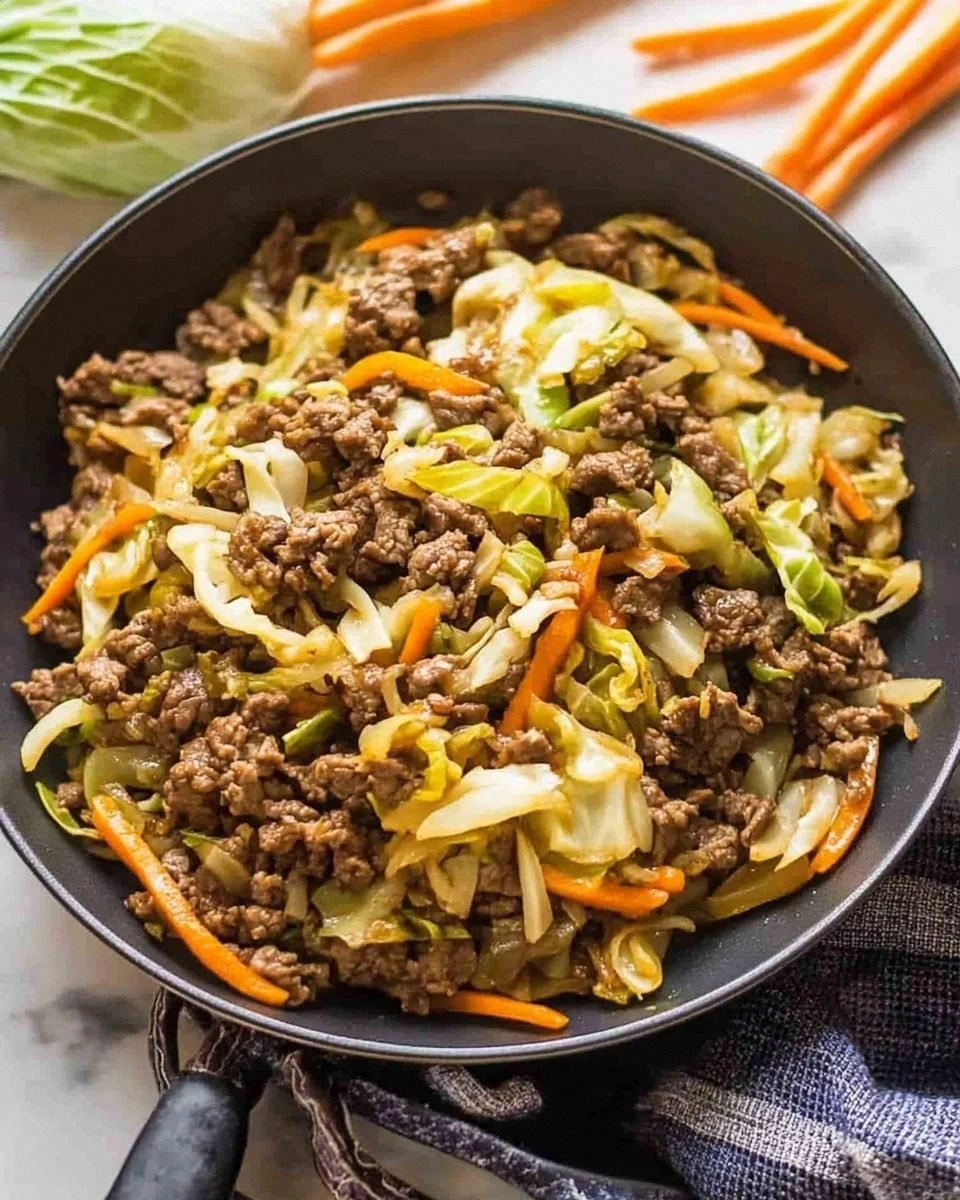
I still remember the Tuesday night I almost ordered takeout for the third time that week. My fridge held a sad hunk of cabbage and some ground beef that was one day away from retirement. My stomach growled like an angry landlord demanding rent. In desperation, I tossed them together with a reckless splash of soy sauce, a glug of sesame oil, and whatever else looked promising from my pantry. Ten minutes later, I was standing over the stove, shoveling caramelized beef and silky cabbage into my mouth with chopsticks, making sounds that would embarrass me in polite company. That accidental masterpiece became this recipe, and I've spent the last year refining it into something that tastes like restaurant takeout but costs less than a fancy coffee.
Picture this: it's 7:30 p.m., you're still wearing your work clothes, and your family is circling like hungry vultures. Most weeknight recipes promise speed but deliver bland, mushy sadness that tastes like dieting punishment. This beef and cabbage stir-fry laughs in the face of those recipes. We're talking about deeply savory beef that gets those crispy, caramelized edges that shatter like thin ice under your teeth. The cabbage transforms from humble vegetable into silky, sweet ribbons that drink up a glossy sauce so addictive you'll be licking it off your spoon. And the whole thing happens in one pan while your rice cooker does its thing in the background.
Here's what nobody tells you about cabbage: when it hits a screaming hot pan with beef fat and aromatics, it becomes something magical. The edges get wok-charred and smoky, while the centers stay crisp-tender, creating this incredible textural contrast that makes you wonder why you ever bothered with those sad bagged salad mixes. The sauce I'm about to show you clings to every cranny like velvet, hitting you with layers of umami, a gentle heat that builds rather than bludgeons, and that addictive sweet-savory balance that keeps you coming back for "just one more bite" until suddenly the pan is empty and you're feeling zero regrets.
I'll be honest — I ate half the batch before anyone else got to try it the first time I made this for company. My excuse was "quality control," but really, I couldn't stop. The smell alone had me weak in the knees: garlic and ginger dancing in hot oil, beef browning and developing those gorgeous fond bits, cabbage wilting and sweetening as it cooks. If you've ever struggled with watery stir-fries or tough beef that could double as shoe leather, you're not alone — and I've got the fix that'll change your weeknight dinner game forever. Let me walk you through every single step — by the end, you'll wonder how you ever made it any other way.
What Makes This Version Stand Out
Lightning Fast: From fridge to table in under 20 minutes, this recipe moves at the speed of your hunger. While your rice cooks, you're already browning beef and watching cabbage transform into something extraordinary. The whole operation uses one pan, one cutting board, and zero fancy equipment. Even my college nephew who can barely boil water nails this recipe every time.
Flavor Bomb Sauce: Most stir-fry sauces taste like someone watered down soy sauce and called it a day. This one's got depth like a good novel — layers of savory, sweet, and spicy that coat every bite. The secret weapon? A spoonful of oyster sauce that adds unctuous body and that restaurant-quality gloss you thought only takeout could deliver.
Texture Paradise: Crispy beef edges meet tender cabbage ribbons in a textural tango that'll make your teeth happy. The cabbage keeps just enough crunch to remind you it's a vegetable, while the beef gets those coveted caramelized bits that taste like concentrated umami candy. Every bite delivers a perfect balance of soft, crispy, chewy, and juicy.
Budget Hero: This entire feast costs less than a single takeout entrée, yet tastes like you ordered from the fancy Asian place downtown. Ground beef stretches further than steak strips, and cabbage is basically the superhero of cheap vegetables. Your wallet will thank you as much as your taste buds.
Meal Prep Champion: Make a double batch on Sunday, portion it into containers, and you've got lunches that'll make coworkers jealous all week. The flavors actually improve overnight as the sauce penetrates deeper into the beef. Just reheat in a hot pan for two minutes, and it's better than fresh.
Infinitely Adaptable: Keto? Skip the cornstarch and serve over cauliflower rice. Feeding spice-lovers? Double the chili flakes and add a drizzle of chili crisp. Vegetarian? Swap the beef for crumbled tempeh and add a splash more soy sauce. This recipe bends to your will like a culinary yoga master.
Kid-Approved Stealth Health: My picky niece scarfs this down, completely unaware she's eating an entire head of cabbage. The sweet-savory sauce and fun ground beef texture make vegetables disappear like magic. It's basically a Trojan horse for nutrition, and I'm not even sorry about the deception.
Inside the Ingredient List
The Flavor Foundation
Ground beef is the star here, but not just any ground beef. You want 80/20 for the perfect fat ratio — enough richness to carry flavors but not so much that you're eating beef soup. The fat renders out and becomes your cooking medium, infusing the cabbage with meaty depth that vegetable oil could never achieve. Skip the lean 90/10 stuff; it dries out faster than a conversation about cryptocurrency. If you can find locally raised beef, the difference is like comparing a garden tomato to those sad winter supermarket ones — night and day.
Green cabbage brings the bulk and the crunch, transforming from humble vegetable to something crave-worthy. Look for heads that feel heavy for their size with tightly packed leaves that snap when you bend them. Avoid anything with yellowing edges or that smells like old gym socks — freshness matters here. When sliced properly, cabbage creates little cups and curls that catch sauce like edible spoons, ensuring every bite delivers maximum flavor.
The Aromatics Squad
Garlic and ginger aren't just supporting players; they're the aromatic backbone that makes your kitchen smell like a proper restaurant. Fresh ginger, grated on a microplane, delivers bright heat and that signature zing that wakes up your palate. Don't even think about reaching for the pre-minced jarred stuff — it tastes like disappointment and preservatives. Mince your garlic fine enough that it distributes evenly but not so fine that it burns into bitter charcoal the second it hits the pan.
Green onions serve double duty: the whites go in early for savory depth, while the greens scattered on top add fresh bite and color contrast. They're like the exclamation point at the end of a perfect sentence — technically optional, but why would you skip it? Save those tops for the very end; their delicate flavor can't handle the high heat and turns sad and wilted if cooked too long.
The Sauce Superstars
Soy sauce provides the salty umami base, but here's where it gets interesting — use a mix of light and dark if you have it. Light soy brings salt and fermentation complexity, while dark adds color and a subtle sweetness from molasses. Together they create layers of flavor that sing in harmony rather than just shouting "salty!" at your taste buds. If you're gluten-free, tamari works beautifully and actually has a richer, smoother flavor profile.
Sesame oil is your finishing move, added off-heat to preserve its delicate nuttiness. A little goes a long way — too much and you'll feel like you're eating a sesame candy bar. Look for toasted sesame oil; it's darker, more aromatic, and packs way more flavor than the pale stuff. Store it in the fridge to keep those precious volatile compounds from going rancid faster than your motivation on a Monday morning.
The Unexpected Game-Changers
Oyster sauce might sound weird if you've never cooked with it, but trust me — it's the secret weapon in every Chinese restaurant's arsenal. Made from oyster extracts, it's thick, glossy, and adds incredible body and that indefinable "what is that delicious flavor?" quality to your sauce. Vegetarian oyster sauce made from mushrooms exists and works beautifully if you're plant-based. A bottle lasts forever in your fridge and will revolutionize your stir-fry game.
Rice vinegar brings the acid that brightens everything up and makes your tongue salivate for the next bite. It's milder than white vinegar, with a subtle sweetness that plays nicely with the other flavors. No rice vinegar? Apple cider vinegar works in a pinch, but avoid harsh white vinegar unless you want your stir-fry to taste like a science experiment.
The Method — Step by Step
Start by freezing your ground beef for exactly 15 minutes — set a timer because this is crucial. While it chills, whisk together your sauce: 3 tablespoons light soy sauce, 2 tablespoons oyster sauce, 1 tablespoon rice vinegar, 2 teaspoons cornstarch, and 1 teaspoon sugar. The cornstarch is your insurance policy for that glossy restaurant sheen; skip it and you'll have thin, watery sauce that puddles sadly at the bottom of your bowl. Add 1/2 teaspoon chili flakes if you like gentle heat, or go wild with a full teaspoon if you want to wake up your sinuses. This sauce should taste bold and slightly too salty — it'll dilute once it hits the vegetables.
Slice your cabbage through the core into quarters, then cut out the tough core in a V-shape. Lay each quarter flat and slice across into 1/4-inch ribbons — not paper-thin (they'll disappear) and not thick chunks (they'll never cook through). You want Goldilocks cabbage that'll wilt but keep some body. A whole medium cabbage looks like way too much, but trust the process — it cooks down to about a quarter of its volume, like magic but tastier.
Mix your aromatics: 4 cloves garlic minced, 1 tablespoon fresh ginger grated, and the white parts of 3 green onions sliced thin. Keep the green tops separate for later — they're your fresh finish. This trio is your flavor bomb, ready to perfume your kitchen and make neighbors jealous. If your ginger is older and fibrous, peel it with a spoon — the edge scrapes off just the thin skin without wasting any precious ginger flesh.
Heat your largest skillet or wok over high heat until it smokes — and I mean actually wisps of smoke, not just "kinda hot." Add 1 tablespoon neutral oil (peanut or canola work great) and immediately crumble in your semi-frozen beef. Don't touch it for 30 seconds! This contact time creates the Maillard reaction magic that gives you those crave-worthy crispy edges. Break it up with a wooden spoon, but leave some bigger chunks for textural variety.
Cook the beef until it's about 80% done — still slightly pink in spots but mostly browned. This takes 3-4 minutes depending on your pan and heat. Push the beef to the edges, creating a clear center, and add your aromatics. Let them sizzle for 30 seconds until fragrant but not browned — burnt garlic turns bitter faster than your ex's attitude.
Now the fun part: dump in all that mountain of cabbage. It'll look impossible, like trying to fit a sleeping bag back in its original packaging. Use tongs to toss and turn, coating everything in the beefy, aromatic oil. The cabbage will start wilting and releasing water — this is good! Keep everything moving so nothing burns while the magic happens.
After 4-5 minutes, your cabbage should be tender-crisp and reduced by about half. Pour your sauce around the edges of the pan — this prevents cornstarch lumps from forming. Toss everything together for another minute until the sauce thickens and coats every surface with glossy perfection. The whole thing should look like it belongs in a restaurant window, not your home kitchen.
Remove from heat immediately and drizzle with 1 teaspoon toasted sesame oil and the reserved green onion tops. Give it one final toss — this distributes the sesame oil without letting it cook off and lose its delicate flavor. Serve over steamed rice, cauliflower rice, or just eat it straight from the pan like I do when nobody's watching. Garnish with extra chili flakes if you like living dangerously.
That's it — you did it. But hold on, I've got a few more tricks that'll take this to another level...
Insider Tricks for Flawless Results
The Temperature Rule Nobody Follows
Here's the thing about stir-fries: they're named for the stirring, but the real magic happens when you stop moving things around. Your pan needs to be hot enough to make water droplets dance and evaporate on contact — we're talking surface-of-the-sun levels of heat. Most home cooks are too timid with the burner knob, resulting in steamed vegetables swimming in their own sad juices. If you're not setting off smoke detectors occasionally, you're not doing it right. Restaurant woks sit over 100,000 BTU flames — your home stove needs time and courage to catch up.
Why Your Nose Knows Best
Forget timers — your nose is the most sophisticated kitchen tool you own. When the garlic hits the pan, you should smell it within 15 seconds, not immediately (too cold) and not after a minute (too late). Same with the sesame oil at the end — you want to smell its nutty perfume as you're tossing, not while it's still in the bottle. That aroma tells you the volatile compounds are alive and kicking, ready to make your taste buds sing. A friend tried skipping this step once — let's just say her stir-fry tasted like it forgot to show up to the flavor party.
The 5-Minute Rest That Changes Everything
I know, I know — when you're hungry, waiting feels like torture. But letting this stir-fry rest for five minutes after cooking does two magical things: the sauce thickens slightly as it cools, clinging better to every bite, and the flavors meld together like old friends at a reunion. The cabbage continues cooking gently from residual heat, achieving that perfect tender-crisp texture that separates good stir-fries from great ones. Cover it loosely with foil and use this time to set the table or pour yourself a well-deserved drink.
The Cutting Board Secret
How you cut your cabbage matters more than you think. Those perfect restaurant strips? They come from stacking the leaves, rolling them into a tight cigar, and slicing across — a chiffonade that creates uniform ribbons that cook evenly. Random chopping gives you a mix of paper-thin bits that dissolve and thick chunks that stay raw. Take the extra 30 seconds to do it right — your teeth will thank you, and your presentation goes from "home cook" to "Instagram worthy" without any extra effort.
Leftover Transformation Magic
Here's where this recipe becomes legendary: leftovers transform into completely different meals. Stuff cold stir-fry into omelets for a breakfast that'll make you excited to wake up. Mix it with beaten eggs and pan-fry for killer fritters. Toss it cold with soba noodles and a splash of rice vinegar for tomorrow's lunch that'll make coworkers jealous. The flavors intensify overnight, creating new depth that wasn't there fresh. I dare you to make a batch just for leftovers — it's that good cold.
Creative Twists and Variations
This recipe is a playground. Here are some of my favorite ways to switch things up:
The Korean-Inspired Version
Add 1 tablespoon gochujang to your sauce for a funky, spicy kick that'll make your lips tingle happily. Swap the green cabbage for napa cabbage — it cooks faster and has a sweeter, more delicate flavor. Finish with a sprinkle of toasted sesame seeds and serve with kimchi on the side. The fermented heat from gochujang adds incredible depth that makes regular chili flakes seem boring by comparison. My Korean neighbor tried this version and said it tastes like her grandmother's cooking, which is basically the highest compliment achievable.
The Thai-Style Tropical Twist
Replace the rice vinegar with lime juice and add a teaspoon of fish sauce for that authentic Thai flavor profile. Throw in a handful of Thai basil leaves at the end — they add an incredible anise-like perfume that transforms the whole dish. If you're feeling fancy, add some thinly sliced bell peppers for color and crunch. Serve over coconut rice and prepare for your taste buds to take a vacation to Bangkok without the jet lag.
The Low-Carb Powerhouse
Swap the cornstarch for xanthan gum (just a pinch) and serve over cauliflower rice that you've pan-fried until golden. Add extra vegetables like zucchini noodles or shirataki noodles to bulk it up without carbs. The result tastes like takeout but fits perfectly into keto or low-carb eating plans. My friend lost 30 pounds eating variations of this four nights a week — it's that satisfying and sustainable.
The Breakfast-for-Dinner Remix
Add a fried egg on top with a runny yolk that creates its own sauce when you break it. The richness of the egg yolk marries with the savory beef in ways that'll make you question why you don't put eggs on everything. Throw in some crispy potatoes for a hash-like situation that transcends meal categories. Kids go absolutely bonkers for this version — something about the egg makes it feel like breakfast for dinner, which apparently is the highest form of culinary rebellion.
The Fancy Dinner Party Upgrade
Use ground lamb instead of beef, add a pinch of cinnamon and allspice to the sauce, and finish with pomegranate seeds for a Middle Eastern twist that'll impress even food snobs. Serve it in lettuce cups for a hand-held appetizer that disappears faster than you can plate it. The lamb's natural gaminess pairs beautifully with cabbage in ways that'll make you wonder why beef gets all the stir-fry attention. Drizzle with tahini thinned with lemon juice for a creamy contrast that takes it into restaurant territory.
The Vegetarian Umami Bomb
Swap the beef for crumbled tempeh that's been marinated in soy sauce and smoked paprika. Add shiitake mushrooms for meaty texture and mushroom powder for incredible depth. Use vegetarian oyster sauce made from mushrooms — it has the same rich, complex flavor without any seafood. The result is so satisfying that even devoted carnivores won't miss the meat. My steak-loving husband requests this version weekly, which is basically a miracle on par with water into wine.
Storing and Bringing It Back to Life
Fridge Storage
Store leftovers in an airtight container — glass works best because it doesn't absorb odors like plastic can. It'll keep for up to 4 days, but honestly, it's never lasted that long in my house. Press plastic wrap directly onto the surface before sealing to prevent that weird fridge taste that happens when air hits the food. Don't pack it while hot — the steam creates condensation that waters down your beautiful sauce. Let it cool for 30 minutes first, or spread it on a plate to speed up the process.
Freezer Friendly
This stir-fry freezes like a dream for up to 3 months. Portion it into individual servings in freezer bags, press out all the air, and lay flat to freeze — they stack like delicious edible books. Thaw overnight in the fridge or use the defrost setting on your microwave. The cabbage texture changes slightly after freezing — it becomes more tender, which some people actually prefer. Pro tip: freeze rice in portions too, and you've got instant meals that beat any frozen dinner from the store.
Best Reheating Method
Skip the microwave unless you enjoy rubbery beef and sad cabbage. Instead, reheat in a hot skillet with a splash of water — the water creates steam that brings everything back to life without drying it out. Cover for the first minute to trap steam, then uncover and toss until hot. Add a tiny splash of soy sauce and sesame oil to refresh the flavors — they wake up like they've had a good nap. This method brings it back to 95% of fresh quality, which is basically a leftover miracle.