Picture this: it’s a rainy Saturday afternoon, the kind where you’re stuck inside, scrolling through endless recipe posts, and a friend texts you a dare—“Make something that looks like a cloud but tastes like a sunrise.” I laughed, rolled my eyes, and muttered, “Sure, I’ll just conjure a pastry that floats.” Little did I know that this reckless challenge would become the catalyst for the most unforgettable dessert I’ve ever crafted. The kitchen was a battlefield of spilled sugar, a cracked egg‑white bowl, and a stubborn oven that seemed to have its own agenda. Yet, amidst the chaos, a fragrant wave of lavender and lemon began to drift from the mixing bowl, promising something magical.
The moment the batter hit the whisk, I could hear a faint fizz, like tiny fireworks preparing for launch. The scent was intoxicating—lavender’s floral whisper mingling with lemon’s bright, citrusy zing, each note dancing around the kitchen like an elegant waltz. I could see the glossy swirl of the meringue forming, a delicate white cloud waiting to be coaxed into perfection. My hands felt the silky texture of the whipped egg whites, the way they stretched and folded like a soft, airy silk scarf. The anticipation built with every second, and I could already taste the crisp, caramelized edges that would shatter like thin ice under a gentle bite.
Most Pavlovas I’ve tried either collapsed into soggy mush or turned into hard, brittle biscuits that felt more like a dental drill than a dessert. This version, however, is a game‑changer. It captures the ethereal lightness of a cloud while delivering a punchy citrus‑lavender flavor that sings on the palate. I’m not exaggerating when I say this is hands down the best version you’ll ever make at home. The secret? A pinch of cornstarch and a splash of white vinegar that stabilizes the meringue, plus a daring infusion of culinary lavender that most recipes shy away from. Trust me, the balance of floral and tart is nothing short of perfection.
And the best part? The technique is deceptively simple, yet it feels like a culinary sorcery you’ll want to brag about at every dinner party. I dare you to taste this and not go back for seconds—your friends will beg you for the recipe, and you’ll finally have the answer to that age‑old “why does my Pavlova always flop?” question. Okay, ready for the game‑changer? Let me walk you through every single step — by the end, you’ll wonder how you ever made it any other way.
What Makes This Version Stand Out
- Flavor Fusion: Lavender and lemon create a harmonious contrast—floral elegance meets bright citrus, delivering a taste experience that’s both soothing and invigorating.
- Cloud‑Like Texture: The meringue’s interior stays soft and marshmallowy, while the outer shell crisps to a delicate crunch, giving you that perfect “cloud‑crack” sensation.
- Simplicity Meets Sophistication: Fewer than ten ingredients, yet the result feels like a pastry from a five‑star patisserie.
- Unique Ingredient: Culinary lavender is the unexpected star; most recipes skip it, but its subtle perfume elevates the whole dessert.
- Crowd Reaction: Guests often claim they’ve never tasted anything like it, and the visual impact of the airy meringue topped with glossy lemon‑cream is Instagram gold.
- Ingredient Quality: Using fresh, organic lemons and high‑grade lavender ensures the flavors pop without any bitterness.
- Cooking Method: Low‑heat, slow baking prevents cracks and guarantees an even rise—no more “pancake‑like” Pavlovas.
- Make‑Ahead Potential: The meringue can be prepared a day ahead, stored in an airtight container, and assembled just before serving.
Inside the Ingredient List
The Flavor Base
Fresh Lemon Zest: The zest provides the bright, aromatic backbone that cuts through the sweetness of the meringue. If you skip it, the dessert will taste flat, like a cloud without sunshine. For the best zest, use a microplane and avoid the bitter white pith. A quick tip: zest the lemon over a bowl of sugar to capture the oils, adding an extra layer of flavor.
The Texture Crew
Egg Whites (4 large): These are the structural heroes, creating the airy foam that defines a Pavlova. Fresh, room‑temperature whites whip up faster and achieve more volume. If you use older eggs, the meringue will be dense and won’t hold its shape. Make sure no yolk contaminates the whites—one stray drop can ruin the whole batch.
Granulated Sugar (1 cup): Sugar stabilizes the foam and adds the signature caramelized crunch on the edges. Skipping or reducing sugar leads to a soggy center that collapses under its own weight. Use superfine caster sugar for a smoother texture; it dissolves more readily during the whisking process.
Cornstarch (2 tsp): This secret weapon absorbs excess moisture, ensuring the interior stays soft while the exterior crisps. Without cornstarch, you’ll end up with a rubbery shell that shatters like a dry leaf. It also helps the meringue maintain its shape during the long, low‑heat bake.
The Unexpected Star
Dried Culinary Lavender (1 tbsp, finely ground): Lavender is the daring twist that elevates this Pavlova from ordinary to extraordinary. It adds a subtle, herbaceous perfume that pairs perfectly with lemon. If you use garden lavender, you risk a soapy taste—always opt for culinary‑grade buds. For a smoother infusion, grind the buds in a mortar and pestle before folding them into the meringue.
The Final Flourish
Heavy Cream (1 cup) & Powdered Sugar (2 tbsp): Whipped into a silky cloud, this topping provides a luxurious mouthfeel that balances the crisp meringue. Over‑whipping turns the cream into butter, ruining the light texture. Fold in the powdered sugar gradually to keep the cream airy and sweet without becoming grainy.
Fresh Lemon Juice (1 tbsp): A splash of juice brightens the whipped cream, tying the whole dessert together. Too much juice will curdle the cream, so measure carefully. If you prefer a milder tang, reduce the juice to half a tablespoon and add a pinch of extra sugar.
Everything's prepped? Good. Let's get into the real action…
The Method — Step by Step
Preheat your oven to 250°F (120°C) and line a baking sheet with parchment paper. Draw a 9‑inch circle on the parchment to guide the shape of your Pavlova. This low temperature is the secret to a slow, even bake that prevents cracks. The kitchen will fill with a faint, sweet aroma as the heat begins to coax the meringue into a delicate crust. Power transition: Okay, ready for the game‑changer?
Separate the egg whites from the yolks, ensuring no trace of yolk contaminates the whites. I dare you to taste the whites before whipping—they’re practically flavorless, but they’ll transform in a moment. Add a pinch of salt; it helps stabilize the foam.
Kitchen Hack: Place the bowl and whisk in the freezer for 10 minutes before beating; the cold surface traps more air for a higher rise.Begin whisking the egg whites on medium speed until they become frothy. Once soft peaks form, increase to high speed and gradually add the granulated sugar, one tablespoon at a time. This slow incorporation is crucial; it allows the sugar to dissolve completely, preventing a gritty texture. You’ll notice the mixture turning glossy and thick, resembling a silky waterfall. The moment the sugar is fully dissolved, the meringue will hold stiff peaks that stand tall like tiny mountain tops.
Stir in the white vinegar and cornstarch, then gently fold in the lemon zest and ground lavender. This is where the fragrance truly awakens—your kitchen will smell like a spring meadow after a rainstorm. Be careful not to over‑mix; the goal is to keep the air bubbles intact.
Watch Out: Over‑folding at this stage can deflate the meringue, leading to a dense, flat Pavlova.Transfer the meringue onto the parchment circle, using a spatula to shape it into a shallow nest with higher edges. Create a slight well in the center—this will hold the lemon‑cream later. The edges should be slightly higher than the center, giving the final dessert a beautiful cratered look. If you’re feeling artistic, use the back of a spoon to create gentle ridges for an extra visual wow factor.
Slide the sheet into the oven and bake for 90 minutes. Do not open the door during the first 60 minutes; the sudden temperature change can cause the meringue to collapse. Around the 90‑minute mark, the outer shell should be a pale golden‑beige, and the edges will start pulling away from the parchment. The interior will still feel soft to the touch—this is the coveted “cloud” interior. This next part? Pure magic.
Turn off the oven, crack the door open slightly, and let the Pavlova cool completely inside the oven for at least 30 minutes. This gradual cooling prevents cracks and ensures the meringue stays fluffy. While you wait, whip the heavy cream with powdered sugar and lemon juice until soft peaks form. The cream should be glossy and hold its shape without turning buttery.
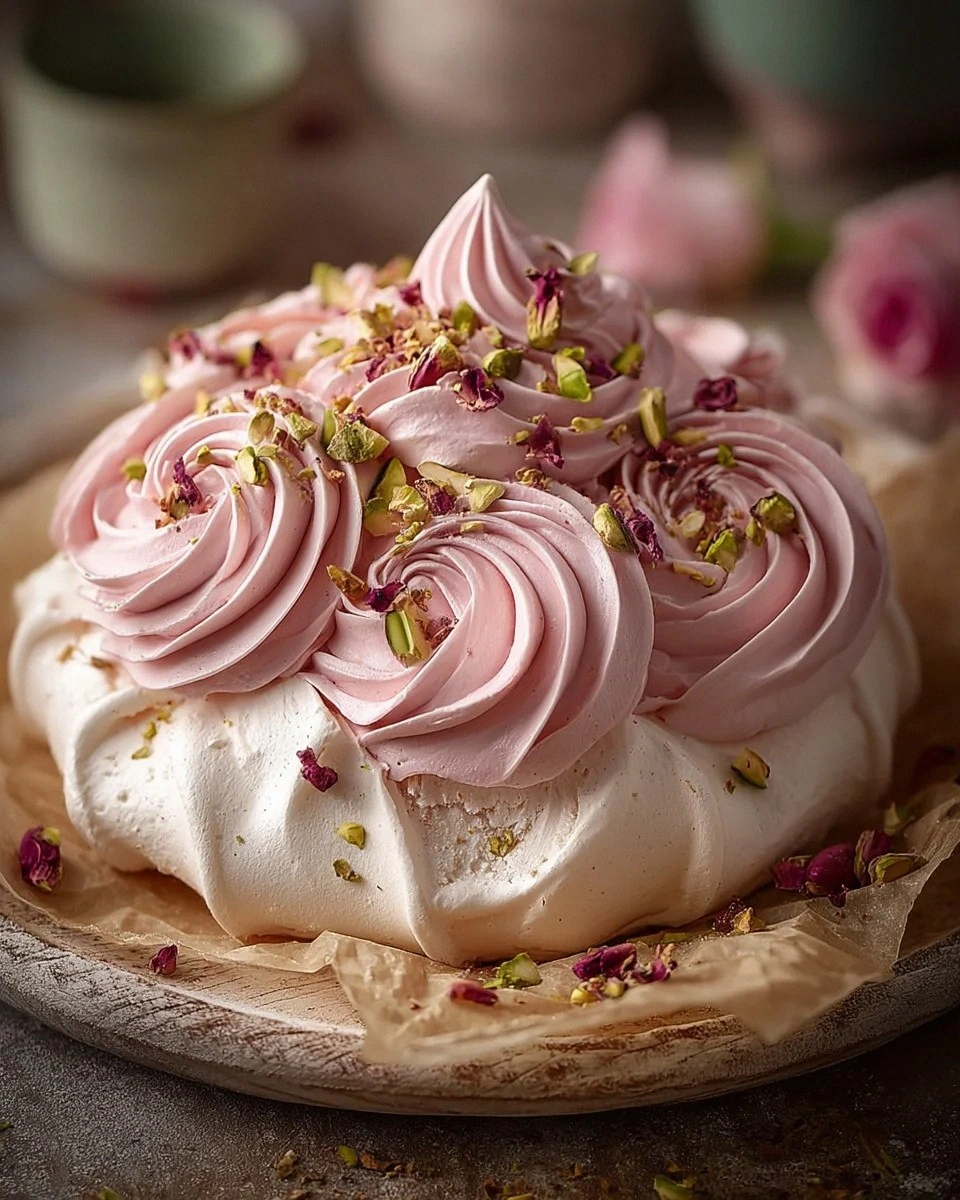
Once the meringue is cool, carefully transfer it to a serving platter. Spoon the lemon‑infused whipped cream into the center, allowing it to spill over the edges like a sunrise spilling over clouds. Garnish with a few extra lavender buds and a light dusting of powdered sugar for that final sparkle. And now the fun part: serve immediately, letting the contrast of crisp shell and airy interior sing on the palate.
Insider Tricks for Flawless Results
The Temperature Rule Nobody Follows
Never rush the bake by cranking up the heat. A low, steady temperature allows the meringue to dry out evenly, creating that perfect crackly exterior while preserving a marshmallow interior. I once tried a 300°F blast and ended up with a burnt crust and a gummy center—trust me, the disappointment was palpable.
Why Your Nose Knows Best
When the sugar has fully dissolved, you’ll notice a faint caramel scent wafting from the bowl. This is the moment to stop whisking; over‑mixing can cause the proteins to tighten, resulting in a tough meringue. Let your nose be the guide, not the timer.
The 5‑Minute Rest That Changes Everything
After whisking, let the meringue rest for five minutes before folding in the lavender and zest. This short pause lets the air bubbles stabilize, ensuring the final shape holds its height. Skipping this step once led to a droopy Pavlova that resembled a wilted flower.
Silicone Spatula Savior
When folding in the delicate lavender mixture, use a wide silicone spatula and employ a gentle “cut‑and‑turn” motion. Metal spoons can deflate the foam, while a rubber spatula preserves the airy structure. I’ve seen novices lose half their volume simply by using a regular fork.
Cool‑Down Patience Pays
Allow the meringue to cool inside the oven with the door ajar. This slow cooling prevents the dreaded “shrink‑wrap” effect where the outer shell contracts and cracks. If you’re in a hurry, you’ll end up with a Pavlova that looks like a cracked desert floor.
Creative Twists and Variations
This recipe is a playground. Here are some of my favorite ways to switch things up:
Berry Burst Pavlova
Swap the lemon‑cream topping for a mixture of mascarpone, honey, and fresh mixed berries. The tartness of strawberries and blueberries complements the lavender, creating a summer garden in every bite.
Matcha‑Mint Fusion
Replace the lavender with 1 tsp of culinary matcha powder and add a few drops of peppermint extract to the whipped cream. The earthy green notes pair surprisingly well with lemon, delivering a fresh, invigorating flavor.
Chocolate Velvet
Fold 2 tbsp of high‑quality cocoa powder into the meringue and drizzle dark chocolate ganache over the whipped cream. This turns the dessert into a sophisticated chocolate‑citrus duet.
Spiced Autumn
Add ½ tsp of ground cinnamon and a pinch of nutmeg to the meringue, and serve with a caramel‑drizzled whipped cream. Perfect for a cozy fall gathering.
Almond‑Lemon Crunch
Stir in ¼ cup toasted almond slivers into the whipped cream and sprinkle extra slivers on top. The nutty crunch adds texture contrast to the soft clouds.
Vegan Light
Replace egg whites with aquafaba (the liquid from canned chickpeas) and use coconut cream sweetened with agave for the topping. The result is a plant‑based cloud that still boasts that signature crisp edge.
Storing and Bringing It Back to Life
Fridge Storage
Store the baked meringue in an airtight container at room temperature for up to 2 days. If you need to keep it longer, place a slice of bread inside the container to absorb moisture and maintain crispness.
Freezer Friendly
Wrap the cooled meringue tightly in plastic wrap, then foil, and freeze for up to 1 month. Thaw in the refrigerator overnight, then let it sit at room temperature for 30 minutes before adding the whipped cream.
Best Reheating Method
To revive a slightly softened Pavlova, preheat the oven to 300°F (150°C), place the meringue on a baking sheet, and heat for 5‑7 minutes. Add a tiny splash of water to the bottom of the oven to create steam; this re‑crispes the shell without drying out the interior.