Picture this: I’m standing in my kitchen, a half‑finished pot of bland chicken broth simmering on the back burner, when my roommate walks in, sniffs the air, and declares, “What on earth are you cooking? It smells like a bland sitcom episode.” I laughed, tossed a handful of garlic into the pan, and a sudden burst of aroma made the whole apartment pause. That moment of culinary embarrassment turned into a daring challenge – I had to transform that forgettable broth into something unforgettable, something that would make even the most skeptical palate sing. I dared myself to create a one‑pot wonder that would be so good, you’d swear it was a restaurant secret, but it would still be doable on a Tuesday night after work. The result? A dish that smacks you with buttery richness, a spicy kick, and a comforting creaminess that coats every tortellini like velvet.
The kitchen was alive with the sound of sizzling butter hitting the pan, a rhythmic pop that promised flavor fireworks. The garlic hit the heat and instantly released its heady perfume, while the red pepper flakes began to dance, turning the air a shade hotter. As the chicken pieces hit the pan, they sizzled and browned, creating those coveted caramelized edges that shatter like thin ice when you bite into them. I could hear the faint hiss of the broth as it joined the party, and the heavy cream swirled in, turning the whole thing into a glossy, dreamy sauce that made my spoon swoon. The whole scene was a sensory overload – the sight of golden butter, the smell of garlic and spice, the sound of a gentle simmer, the taste of buttery richness, and the feel of the warm pot in my hands – all screaming, “You’re about to eat something amazing.”
Most recipes for chicken tortellini end up either dry or drowning in sauce, and the spice level is either nonexistent or overwhelming. I’ve tried a dozen versions that left the pasta soggy, the chicken rubbery, or the sauce cloyingly heavy. That’s why this version stands out: it balances every element with surgical precision, delivering a dish that’s creamy but not greasy, spicy but not fiery, and packed with flavor without any unnecessary steps. The secret? A clever order of operations that lets the chicken develop a deep, caramelized flavor before the broth and cream join forces, and a splash of chicken broth that cooks the tortellini perfectly in the same pot, saving you time and dishes. And yes, there’s a tiny twist – a dash of fresh herbs added at the very end that lifts the whole thing into a bright, aromatic finish.
Let me walk you through every single step – by the end, you’ll wonder how you ever made it any other way. I’m going to spill the beans on the exact technique that makes the sauce coat the pasta like silk, the moment you should add the red pepper flakes for that perfect kick, and the final garnish that turns a simple weeknight dinner into a show‑stopping plate. Ready? Okay, ready for the game‑changer? Let’s dive in.
What Makes This Version Stand Out
- Flavor Fusion: The combination of garlic‑butter base, spicy red pepper flakes, and a splash of chicken broth creates layers of taste that build with each bite, delivering a depth you won’t find in ordinary one‑pot meals.
- Texture Harmony: Bite‑size chicken pieces stay juicy thanks to quick searing, while the tortellini retain a perfect al‑dente bite, all wrapped in a velvety cream sauce that clings without drowning.
- Simplicity: Only one pot, minimal prep, and a handful of pantry staples – ideal for busy weeknights when you still crave something special.
- Unique Twist: Adding fresh herbs at the end adds a burst of brightness that cuts through the richness, preventing the dish from feeling heavy.
- Crowd Reaction: I dare you to taste this and not go back for seconds – even the most skeptical eaters are left begging for the recipe.
- Ingredient Quality: Using real butter, fresh garlic, and high‑quality cheese tortellini elevates the dish from “just okay” to “hands down the best version you’ll ever make at home.”
- Cooking Method: The one‑pot technique locks in moisture and flavor, reducing cleanup and ensuring every component cooks in harmony.
- Make‑Ahead Potential: This dish reheats beautifully, and the flavors actually improve after a few hours, making it perfect for meal prep.
Alright, let's break down exactly what goes into this masterpiece...
Inside the Ingredient List
The Flavor Base
Butter: This is the foundation of our sauce. It brings a luxurious richness that carries the garlic and pepper flakes, creating a glossy, buttery backdrop for the entire dish. If you skip it, you’ll lose that silky mouthfeel and the sauce may end up thin. For a dairy‑free version, try a high‑quality plant‑based butter, but the flavor profile will shift slightly.
Garlic: Fresh minced garlic is the aromatic heart of this recipe. It releases a sweet, pungent aroma as it cooks, infusing the butter and chicken with depth. Using pre‑minced garlic in a jar will work in a pinch, but you’ll miss out on that bright, fresh bite that only freshly crushed cloves can deliver.
Crushed Red Pepper Flakes: These tiny warriors add a gentle heat that dances on the palate without overwhelming the creamy sauce. Adjust the amount to suit your spice tolerance – start with a teaspoon and add more if you’re feeling daring. If you’re sensitive to spice, a pinch of smoked paprika can provide a subtle warmth without the heat.
The Texture Crew
Chicken Breast or Thighs: I love using bite‑size pieces of juicy chicken for that tender texture. Thighs add richness, while breasts are leaner—choose based on your preference! Cutting the meat into uniform cubes ensures even cooking and prevents some pieces from drying out while others stay undercooked.
Fresh Cheese Tortellini: These little pouches of delight hold a cheesy surprise that melts into the sauce, adding both protein and a comforting creaminess. If you’re feeling adventurous, swap them for ravioli or even gnocchi for a different mouthfeel.
The Unexpected Star
Heavy Cream: This is the secret weapon that transforms a simple broth into a decadent, velvety sauce. It binds the butter, broth, and cheese together, creating a luscious coat that clings to each tortellini. If you’re watching calories, you can substitute half‑and‑half, but the sauce won’t be quite as rich.
Chicken Broth: Low‑sodium broth adds depth without making the dish salty. It also provides the liquid needed to cook the tortellini right in the pot, allowing the pasta to soak up all the flavors. Homemade broth is best, but a good quality store‑bought version works just fine.
The Final Flourish
Grated Parmesan Cheese: A sprinkle of Parmesan at the end adds a salty, nutty finish that brightens the whole dish. It also helps thicken the sauce just enough to cling to the pasta without becoming gluey.
Fresh Basil or Parsley: Chopped fresh herbs add a pop of color and brightness. They make the plate look fancy even on a busy weeknight, and the herbaceous note lifts the richness of the butter and cream.
Salt and Black Pepper: Essentials to season your dish to perfection. Remember, taste as you go – a little salt early on, and a final dash of pepper right before serving to add a subtle bite.
Everything's prepped? Good. Let's get into the real action...
The Method — Step by Step
Start by heating a large, deep skillet or Dutch oven over medium‑high heat. Add the butter and let it melt until it starts to foam, then watch for that golden‑brown speckle that signals it’s ready for the next move. Toss in the minced garlic and crushed red pepper flakes, stirring constantly; you’ll hear a gentle sizzle and the kitchen will fill with an irresistible aroma. Let the garlic cook for about 30 seconds, just until it turns fragrant but not brown, because burnt garlic can ruin the entire flavor profile. This is the moment of truth – if you can smell the garlic, you’re on the right track.
Now, add the bite‑size chicken pieces, spreading them out in a single layer. Let them sear without moving for 2‑3 minutes; you’ll see the edges start to pull away and turn a beautiful caramel color. Flip the pieces and brown the other side, ensuring each piece gets a nice crust – this caramelization is what gives the dish its depth. Once the chicken is golden all over (it won’t be fully cooked yet), remove it with a slotted spoon and set aside. Watch Out: If you crowd the pan, the chicken will steam instead of sear, resulting in a bland texture.
Deglaze the pan by pouring in the chicken broth, scraping the browned bits from the bottom with a wooden spoon. As the broth bubbles, you’ll notice a rich, caramel‑laden liquid forming – that’s the base of our sauce. Bring the broth to a gentle boil, then add the fresh cheese tortellini directly into the pot. The pasta will begin to soften immediately, soaking up the broth’s savory goodness. Reduce the heat to a simmer and let the tortellini cook for about 5‑7 minutes, stirring occasionally to prevent sticking.
When the tortellini are just shy of al‑dente, stir in the heavy cream, letting it swirl into the broth to create a luxurious, glossy sauce. The heat should be low enough that the cream thickens without boiling – you’ll see it coat the back of a spoon. Add the seared chicken back into the pot, allowing it to finish cooking in the creamy sauce. This step is where everything melds together; the chicken re‑absorbs the buttery‑garlic flavor, and the sauce becomes velvety smooth.
Stir in the grated Parmesan cheese, allowing it to melt into the sauce and add a salty, nutty depth. Taste the dish now and season with salt and freshly cracked black pepper – remember, the Parmesan already adds some saltiness, so go light at first. Let the sauce simmer for another 2‑3 minutes, just enough for the cheese to fully integrate and the flavors to marry.
Turn off the heat and fold in the chopped fresh basil or parsley. The residual heat will wilt the herbs just enough to release their aromatic oils without losing their bright green color. Give the pot one final gentle stir, then let it sit for a minute – this resting period lets the sauce thicken slightly and the flavors settle.
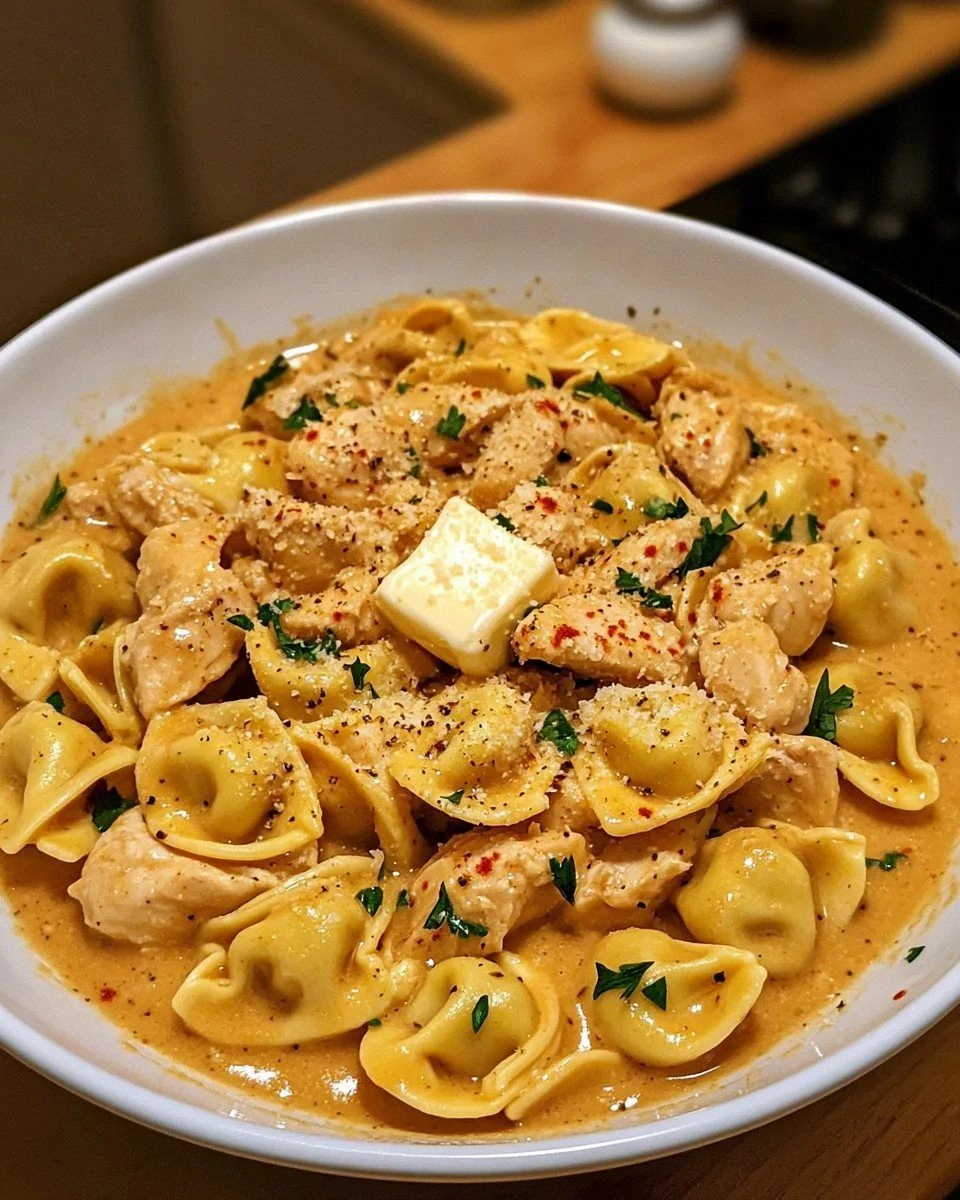
Serve the dish straight from the pot, scooping generous portions of chicken, tortellini, and that luscious sauce onto plates. Garnish with an extra sprinkle of Parmesan and a few more herb leaves for visual flair. That sizzle when it hits the pan? Absolute perfection. And now the fun part – dig in and watch everyone’s faces light up. I’ll be honest — I ate half the batch before anyone else got to try it.
That's it — you did it. But hold on, I've got a few more tricks that'll take this to another level...
Insider Tricks for Flawless Results
The Temperature Rule Nobody Follows
Never crank the heat to “high” when you’re adding the cream. A medium‑low simmer allows the cream to thicken gradually, preventing curdling. I once tried a high‑heat finish and ended up with a grainy mess – lesson learned. Keep the flame gentle, and you’ll get that glossy, restaurant‑style sauce every time.
Why Your Nose Knows Best
Trust the scent cues. When the garlic turns aromatic and the butter begins to brown, you’re at the perfect point to add the chicken. If you wait too long, the butter can burn; too early, and you miss the flavor foundation. Your nose is a built‑in timer – let it guide you.
The 5‑Minute Rest That Changes Everything
After you turn off the heat, let the pot sit for five minutes before serving. This short rest lets the sauce thicken just enough to cling to the tortellini without becoming gloopy. A friend tried to serve it immediately and complained the sauce was “runny.” Five minutes later, the same dish was a silky masterpiece.
Seasoning Layers, Not One Dump
Season at multiple stages: a pinch of salt with the garlic, a dash after the broth joins, and a final sprinkle before serving. This layered approach builds depth and prevents a flat flavor profile. If you season only at the end, the salt won’t have time to integrate fully.
Butter‑First, Then Cream
Starting with butter creates a flavor base that the cream can’t achieve on its own. The butter caramelizes, adding nutty notes that the cream simply carries. Skipping the butter and diving straight into cream yields a sauce that feels thin and lacks that buttery richness.
Creative Twists and Variations
This recipe is a playground. Here are some of my favorite ways to switch things up:
Spicy Sausage Swap
Replace the chicken with sliced Italian sausage for a heartier, meatier bite. The sausage’s inherent spices complement the garlic‑butter sauce, and the dish takes on a rustic Italian vibe. Perfect for a cold night when you need something extra comforting.
Sun‑Dried Tomato Burst
Stir in a quarter cup of chopped sun‑dried tomatoes just before adding the cream. Their tangy, slightly sweet flavor adds a pop of color and a subtle acidity that cuts through the richness. This variation is great for anyone who loves a bit of Mediterranean flair.
Veggie‑Packed Version
Add a cup of baby spinach or kale during the last two minutes of simmering. The greens wilt quickly, adding nutrients and a fresh, earthy note. This is an excellent way to sneak veggies into a pasta‑heavy meal without compromising flavor.
Creamy Coconut Twist
Swap half the heavy cream for full‑fat coconut milk for a subtle tropical undertone. The coconut pairs surprisingly well with the garlic and red pepper flakes, creating a dish that feels exotic yet familiar. Just be mindful of the slight sweetness it introduces.
Cheese Lover’s Upgrade
Mix in a handful of shredded mozzarella or fontina along with the Parmesan for extra gooeyness. The cheese melts into the sauce, creating a stretchy, comforting texture that cheese addicts will adore. Serve with a side of garlic bread for the ultimate indulgence.
Storing and Bringing It Back to Life
Fridge Storage
Transfer any leftovers to an airtight container and refrigerate for up to three days. The sauce may thicken as it cools; simply reheat gently on the stove and stir in a splash of chicken broth or milk to loosen it back up.
Freezer Friendly
This dish freezes beautifully. Portion into freezer‑safe bags or containers, leaving a little headspace for expansion, and store for up to two months. When ready to eat, thaw overnight in the fridge, then reheat in a saucepan over low heat, adding a splash of broth to revive the creaminess.
Best Reheating Method
Reheat on the stovetop over low heat, stirring constantly. Add a tiny splash of water or broth – this steams the pasta back to perfection and prevents the sauce from separating. Microwaving is an option, but you risk uneven heating and a rubbery texture.