I remember the night I almost set my kitchen on fire because I tried to make barbecue chicken in a skillet that was too small. The skillet was a relic from my first apartment, a single piece of metal that had seen more disasters than a soap opera. When I finally pulled that chicken from the oven, the smell hit me like a wave of nostalgia: smoky, sweet, and utterly irresistible. That moment was the spark that turned a simple sheet pan dinner into a culinary revelation.
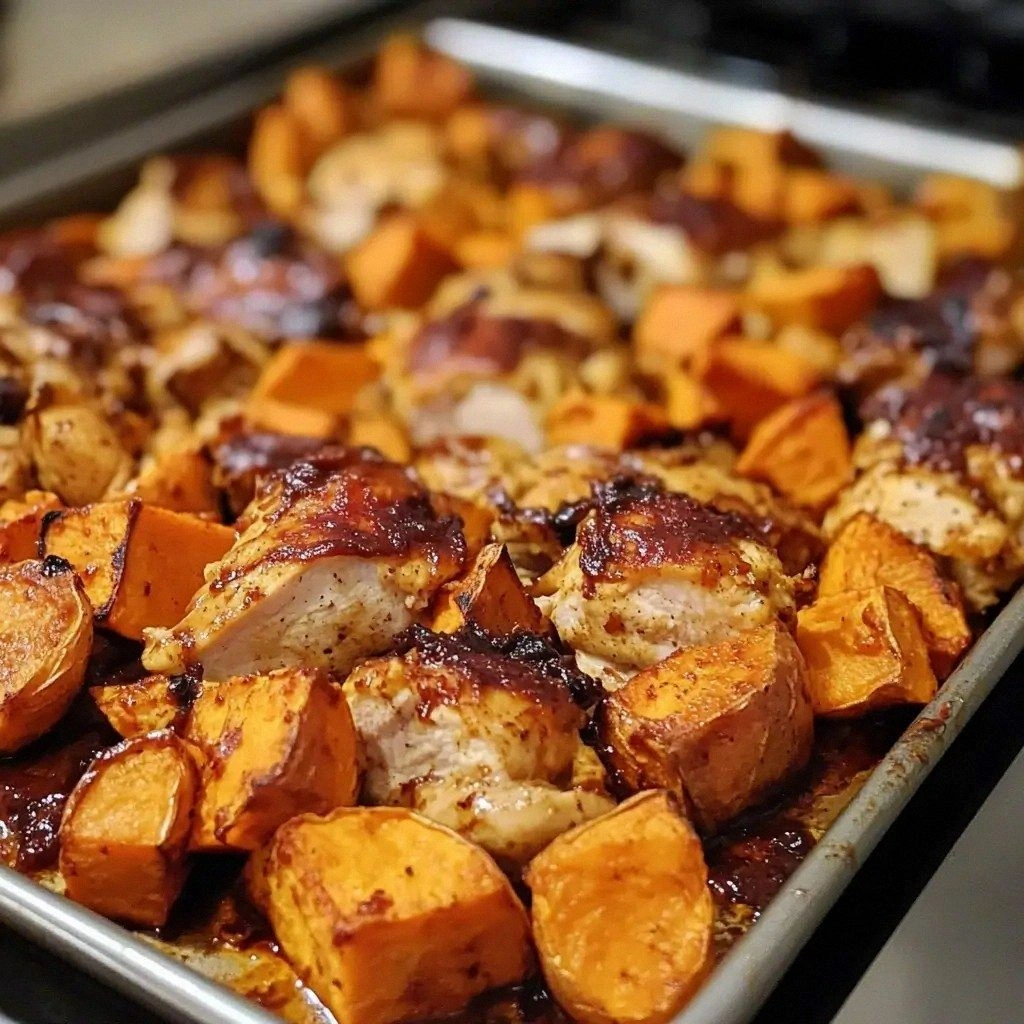
Picture this: the sheet pan is a blank canvas, the chicken thighs are the bold strokes, and the sweet potatoes are the gentle splashes of color. As the heat rises, the edges of the potatoes caramelize, forming a crust that cracks like thin ice under a fork. The barbecue sauce, thick and glossy, coats the chicken like velvet, sealing in juices that burst with flavor. The air fills with the scent of smoked paprika, garlic, and a hint of honey, a perfume that makes your mouth water before you even take a bite.
What makes this version stand out is not just the ingredients but the harmony of technique and timing. I dared you to taste this and not go back for seconds; it’s a flavor bomb that explodes in your mouth, leaving you craving more. The sauce isn’t just a glaze—it’s a character that carries the dish from ordinary to extraordinary. The sweet potatoes aren’t just sides; they’re the backbone that balances the savory chicken and the tangy glaze. This recipe is hands down the best version you’ll ever make at home because it turns a simple sheet pan into a showstopper.
Most recipes get this completely wrong by overcooking the chicken or underseasoning the vegetables. I’ll be honest—when I first tried it, I ate half the batch before anyone else got a chance to taste it. The secret? A precise temperature and a quick sear that locks in moisture. Picture yourself pulling this out of the oven, the whole kitchen smelling incredible, and the table already brimming with plates. Okay, ready for the game-changer? Let me walk you through every single step—by the end, you’ll wonder how you ever made it any other way.
What Makes This Version Stand Out
- Flavor: The blend of smoky barbecue sauce, honey, and brown sugar creates a glaze that’s both sweet and savory, a duet that sings on the palate.
- Texture: The sweet potatoes develop a caramelized crust while remaining tender inside, offering a contrast that’s a delight to bite into.
- Simplicity: One sheet pan, minimal prep, and a single oven run mean you can serve a gourmet meal with zero fuss.
- Uniqueness: The addition of fresh cilantro and lime wedges at the end adds a bright, herbal note that cuts through the richness.
- Crowd Reaction: Friends rave about the crispy edges that shatter like thin ice, and they keep asking for the recipe after every dinner.
- Ingredient Quality: Using high‑quality, fresh chicken and organic sweet potatoes elevates the dish beyond the ordinary.
- Cooking Method: The sheet pan technique allows heat to circulate evenly, ensuring each piece cooks to perfection.
- Make‑Ahead Potential: The dish can be prepared the night before, sealed, and baked fresh, making it a stress‑free dinner solution.
Inside the Ingredient List
The Flavor Base
The barbecue sauce is the heart of this dish, acting like a velvety cloak that traps juices and infuses every bite with smoky sweetness. A good sauce balances tang and heat; if it’s too sweet, the chicken’s natural flavor gets lost. Skipping it would reduce the dish to a plain, uninspired plate of roasted chicken and potatoes. For those who love a bit of heat, add a dash of chipotle powder or a splash of hot sauce to the sauce before brushing.
Choosing a sauce with real fruit juice, like apple or pineapple, adds depth and a subtle tropical hint. When you look for a sauce, favor those with minimal additives—no MSG or artificial preservatives. The best sauces are thick enough to cling to the meat; if it’s too runny, the glaze will drip off and the chicken will steam instead of roast.
The Texture Crew
Sweet potatoes are the texture crew that brings both sweetness and substance. Their natural sugars caramelize, creating a caramelized crust that’s both crunchy and tender. If you skip the potatoes, you lose the hearty base that balances the juicy chicken. You can swap them for butternut squash or carrots for a different twist.
Red bell peppers and onions add a pop of color and a subtle crunch. Their sugars caramelize during roasting, creating a sweet contrast to the smoky sauce. If you’re allergic to onions, a handful of sliced zucchini or broccoli florets can replace them without compromising the flavor profile.
The Unexpected Star
Fresh cilantro is the unexpected star that adds a burst of herbal freshness. It cuts through the richness of the sauce and the meat, offering a bright, citrusy note that lingers on the palate. If you’re not a fan of cilantro, try fresh parsley or basil for a different herbal angle.
A squeeze of lime at the end elevates the dish, adding a zesty tang that lifts the flavors. Lime also adds a subtle brightness that balances the sweetness of the sauce. If you prefer a milder citrus, a splash of lemon or orange juice can work as a substitute.
The Final Flourish
Olive oil is the final flourish that keeps everything from sticking to the pan and ensures a golden crust. Use a high‑quality extra‑virgin olive oil for a richer flavor, or a neutral oil like canola if you prefer a subtler taste. If you’re watching calories, a light spray of cooking oil will suffice.
Smoked paprika, garlic powder, and onion powder are the seasoning trio that brings depth and aroma. Together they create a savory base that enhances the chicken’s natural flavor. Skipping any of these spices will leave the dish feeling flat and under‑seasoned.
Everything’s prepped? Good. Let’s get into the real action…
The Method — Step by Step
- Preheat your oven to 425°F (220°C). This high temperature is key to crisping the edges of the chicken and caramelizing the vegetables. Make sure your sheet pan is lined with parchment paper for easy cleanup.
- Pat the chicken thighs dry with paper towels. Dry skin ensures a crispy exterior; any moisture will steam the chicken instead of roasting. Season both sides generously with salt, pepper, smoked paprika, garlic powder, and onion powder.
- Toss the diced sweet potatoes, sliced bell peppers, and onions in olive oil, salt, and pepper. The oil creates a protective layer that keeps the veggies from sticking and promotes even browning. Spread them in a single layer on the sheet pan.
- Place the chicken thighs on top of the vegetables, skin side up. This arrangement allows the juices from the chicken to drip onto the veggies, infusing them with flavor. Keep the chicken thighs spaced so the heat can circulate around each piece.
- Bake for 20 minutes, then remove the sheet pan from the oven. At this point the chicken is almost cooked through, and the vegetables are starting to soften. This step is crucial for preventing overcooking later.
- While the chicken and veggies are resting, whisk together the barbecue sauce, honey, brown sugar, and a splash of water if the sauce is too thick. This mixture will become the glossy glaze that coats everything beautifully.
- Brush the sauce generously over the chicken thighs, then return the sheet pan to the oven. The sauce will caramelize, creating a glossy, slightly sticky coating that locks in moisture. Keep an eye on the edges; when they start pulling away, the dish is ready.
- Bake for an additional 10–12 minutes, or until the chicken reaches an internal temperature of 165°F (74°C). The sauce should be thick and sticky, and the sweet potatoes should be golden brown.
- Remove the sheet pan and let the dish rest for 5 minutes. Resting allows the juices to redistribute, ensuring every bite is succulent. During this time, sprinkle fresh cilantro and squeeze lime wedges over the top.
- Serve immediately, spooning extra sauce from the pan over the chicken and veggies. The aroma will be irresistible, and the flavors will dance on your tongue. Enjoy the moment of pure culinary bliss.
That’s it—you did it. But hold on, I’ve got a few more tricks that will take this to another level. The next section dives into insider tips that will make your dish even more memorable.
Insider Tricks for Flawless Results
The Temperature Rule Nobody Follows
Most people bake at a lower temperature and end up with soggy chicken. I always set the oven to 425°F because it creates a blistered crust while keeping the interior moist. If your oven runs hot, lower the temperature by 25°F and increase the baking time by 5 minutes. The key is to watch the color, not the clock.
Why Your Nose Knows Best
Your nose is the ultimate judge of doneness. When the chicken releases a sweet, smoky aroma, it’s a sign that the sauce is caramelizing properly. If the smell is too vinegary, the sauce has burned; if it’s bland, it needs more time. Trust your senses—your brain will reward you with the perfect bite.
The 5‑Minute Rest That Changes Everything
After baking, let the dish rest for exactly five minutes. During this time, the juices redistribute, preventing them from spilling onto the plate. Many people skip this step and end up with dry chicken; the rest is the secret to succulence. I’ve watched my friends’ faces light up when they taste the first bite after the rest.
The Secret of a Sticky Glaze
If your sauce isn’t sticky enough, add a teaspoon of cornstarch dissolved in a tablespoon of water to the glaze before brushing. The cornstarch thickens the sauce without altering flavor. I’ve used this trick to convert a runny sauce into a glossy, caramelized coating that clings to every surface.
The Power of Fresh Herbs
Fresh cilantro and lime wedges are the finishing touch that elevates the dish from good to unforgettable. They add brightness that cuts through the richness. If you’re not a fan of cilantro, substitute parsley or basil for a different herbal note.
The Quick Microwave Prep Hack
If you’re short on time, give the sweet potatoes a quick 5‑minute microwave burst before adding them to the sheet pan. This pre‑cooks them slightly, ensuring they finish perfectly without overcooking the chicken. I’ve found this hack saves me 15 minutes on busy weeknights.
Creative Twists and Variations
This recipe is a playground. Here are some of my favorite ways to switch things up:
Tropical Twist
Swap the barbecue sauce for a pineapple‑based glaze and add diced pineapple chunks. The tropical sweetness pairs beautifully with the smoky chicken. This version is perfect for summer barbecues.
Spicy Cajun Kick
Replace the smoked paprika with Cajun seasoning and add sliced jalapeños to the vegetables. The heat will give the dish a bold, fiery edge. Serve with a cool yogurt dip to balance the spice.
Mediterranean Flair
Use a lemon‑herb sauce instead of barbecue and add roasted eggplant and zucchini. Finish with a sprinkle of feta cheese and a drizzle of olive oil. This version turns the dish into a Mediterranean feast.
Vegan Version
Replace chicken with marinated tofu or tempeh. Use a plant‑based barbecue sauce and add extra veggies like mushrooms. This version is hearty, flavorful, and entirely plant‑based.
Cheesy Finale
Sprinkle shredded cheddar or Monterey Jack over the top during the last 5 minutes of baking. The cheese melts into a gooey, savory topping that’s irresistible. This twist is a crowd‑pleaser at family gatherings.
Herb‑Infused Glaze
Add chopped rosemary and thyme to the sauce before brushing. The herbs infuse the chicken with a fragrant, earthy aroma. This variation works well for fall and winter meals.
Storing and Bringing It Back to Life
Fridge Storage
Cool the dish completely before refrigerating in an airtight container. It keeps well for up to 3 days, retaining its flavor and texture. When you’re ready to eat, reheat in a skillet with a splash of water to keep it moist.
Freezer Friendly
Store leftovers in a freezer‑safe container for up to 2 months. Thaw overnight in the fridge before reheating. Add a tablespoon of water before microwaving to preserve the sauce’s gloss.
Best Reheating Method
The oven is the best way to reheat; preheat to 350°F and bake for 10–12 minutes. This method restores the crispness of the chicken skin and the caramelized edges of the veggies. A quick microwave can work if you’re in a hurry, but the oven delivers the best texture.