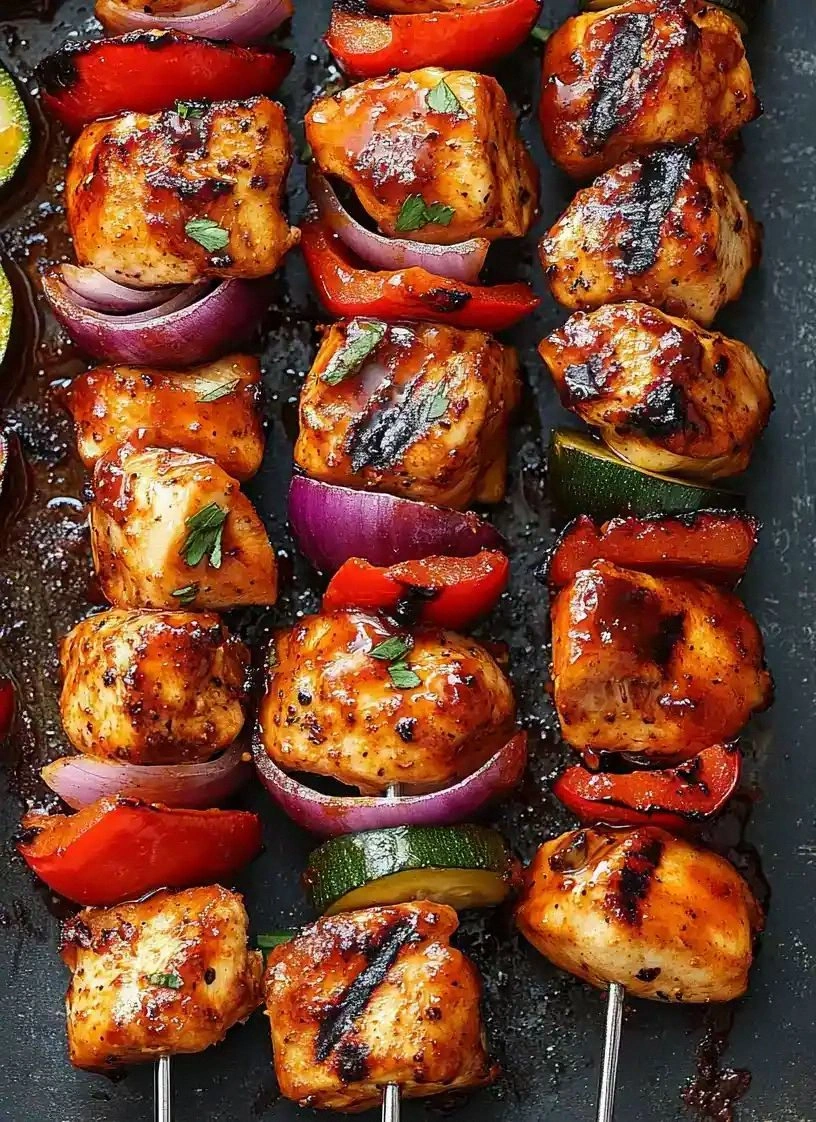
Picture this: a backyard barbecue, the sun dipping low, and you standing in the kitchen with a bowl of honey, a bottle of barbecue sauce, and a handful of fresh veggies. I once tried to make grilled chicken with a generic sauce, and it came out dry, like a piece of toast that had forgotten how to stay juicy. That disaster was the spark that pushed me to experiment until I found a glaze that made the meat sing. The aroma of honey sizzling with smoked paprika filled the air, the sizzle on the grill was music, and the sight of bright bell peppers glistening on the skewer felt like a promise of flavor.
The first bite was a revelation—sweetness met a smoky depth, and the tender chicken gave way to a buttery texture that practically melted in your mouth. I swear the honey glaze caramelized into a glossy coating that locks juices, while smoked paprika adds heat to balance the sweetness. The vegetables, crisp yet soft, added a satisfying crunch that punctuated every bite. It was a moment that made me realize how a simple tweak could elevate an everyday dish into something unforgettable.
What makes this version stand out is that it turns ordinary chicken into a caramelized masterpiece, thanks to a secret honey glaze and a precise balance of spices that dance on the palate. I dare you to taste this and not go back for seconds. I’ll be honest—I ate half the batch before anyone else got to try it. Most recipes get this completely wrong by overcooking the meat or under-seasoning the veggies. Picture yourself pulling this out of the grill, the whole kitchen smelling incredible, and knowing you’ve just created a crowd‑pleaser.
This next part? Pure magic. Let me walk you through every single step—by the end, you’ll wonder how you ever made it any other way. The trick I discovered is a little marination—soaking the chicken in soy and olive oil before grilling gives it a buttery sheen that keeps it moist. And the best part? The sauce is ready to go in minutes, so you’re not scrambling at the last second. Stay with me here—this is worth it.
What Makes This Version Stand Out
- Flavor: The honey glaze creates a caramelized crust that locks in juices, while smoked paprika adds a subtle heat that balances the sweetness. The result is a depth of flavor that feels like a symphony in every bite.
- Texture: The chicken remains tender and juicy, thanks to the pre‑marination in olive oil and soy sauce, while the veggies stay crisp yet slightly charred, providing a delightful contrast.
- Simplicity: With only a handful of ingredients and a straightforward marination, you can whip this up in under 30 minutes, making it a perfect weeknight dinner.
- Uniqueness: The blend of honey, barbecue sauce, and smoked paprika is a game‑changer that sets this kabob apart from the usual grilled chicken.
- Crowd Reaction: Friends always ask for the sauce recipe after the first bite. The sweet‑savory profile is universally appealing, making it ideal for gatherings.
- Make‑Ahead Potential: The marinated chicken can sit in the fridge for up to 24 hours, allowing you to prep in advance and focus on grilling when guests arrive.
Inside the Ingredient List
The Protein Core
The 2 pounds of boneless skinless chicken breasts or thighs are the star of this dish. Whether you choose breasts for leaner meat or thighs for extra juiciness, the key is to cut them into uniform, bite‑size pieces that cook evenly. Skipping the chicken would turn this into a veggie skewer, which is still great, but you lose that savory, protein‑rich center that makes it a meal.
If you can’t find thighs, breasts work just fine; just be careful not to overcook them. The skinless variety ensures a clean, buttery flavor without the extra fat that can make the grill messy. A good tip: let the chicken rest after marinating so it absorbs the flavors fully.
The Colorful Crew
Two bell peppers—any color you love—add sweetness, crunch, and a pop of color that makes the kabobs Instagram‑ready. The red onion brings sharpness that balances the honey’s sweetness, while the zucchini offers a mild, slightly sweet flavor that pairs beautifully with the smoky paprika.
If you’re a fan of a bit of heat, slice the peppers into thick strips; they’ll hold up to the grill and develop a smoky char. Skipping the veggies would make the kabobs less vibrant, both visually and in terms of texture.
The Sweet & Smoky Duo
The ½ cup honey and ½ cup barbecue sauce form the glaze that gives this dish its signature caramelized coating. Honey provides natural sweetness and a glossy finish, while the barbecue sauce adds depth, tang, and a smoky undertone. Together, they create a sauce that clings to the chicken and veggies, forming a flavorful crust.
If you’re on a low‑sugar diet, consider using a sugar‑free barbecue sauce or a smaller amount of honey. Skipping the honey would leave the glaze too tangy and less glossy, while omitting the barbecue sauce would strip away the smoky flavor that makes this dish memorable.
The Seasoning Symphony
The 2 tablespoons olive oil and 2 tablespoons soy sauce form the base of the marination, giving the chicken a subtle umami kick and a buttery sheen. Olive oil keeps the meat moist, while soy sauce adds depth and helps the honey glaze stick during grilling. The 1 teaspoon garlic powder and 1 teaspoon smoked paprika are the flavor enhancers that elevate the dish from good to unforgettable.
The garlic powder brings a mellow, aromatic note that doesn’t overpower the honey, and the smoked paprika adds that smoky warmth that makes the glaze irresistible. Salt and black pepper to taste finish the seasoning, ensuring each bite is perfectly balanced. If you skip the paprika, you’ll miss that smoky undertone; skipping the garlic would make the dish feel flat.
Everything's prepped? Good. Let’s get into the real action.
The Method — Step by Step
- First, cut the chicken into uniform, 1‑inch cubes. This ensures each piece cooks evenly and prevents dry spots. I like to toss the cubes in a large bowl with the olive oil and soy sauce, making sure every piece gets coated. Let it sit for at least 10 minutes to absorb the flavors.
- While the chicken marinates, slice the bell peppers, red onion, and zucchini into thick, even pieces. Thick cuts hold up to the grill’s heat and develop a smoky char that’s absolutely delicious. Toss the veggies in a little olive oil, salt, and pepper to season them lightly.
- Now it’s time to skewer. Alternate chicken, pepper, onion, and zucchini on each skewer, leaving a little space between pieces so heat can circulate. I find that using wooden skewers gives a subtle smoky flavor, but metal works just as well. Don’t overcrowd the skewers; the pieces should have room to crisp.
- Preheat your grill to medium‑high, about 375°F (190°C). Lightly oil the grates to prevent sticking. Place the skewers on the grill, turning every 2–3 minutes to ensure even cooking. The goal is a beautiful char without burning.
- While the kabobs grill, whisk together the honey, barbecue sauce, garlic powder, and smoked paprika in a small bowl. This glaze will be brushed on during the last few minutes of grilling to create that glossy, caramelized coating. The sauce should be slightly thickened to cling to the meat.
- After about 10 minutes of grilling, start brushing the glaze onto each kabob. Apply a generous amount, making sure every bite is coated. Continue to grill for another 5–7 minutes, brushing again halfway through. The glaze should caramelize, forming a sticky, flavorful crust.
- When the chicken reaches an internal temperature of 165°F (74°C) and the veggies are tender with a slight char, it’s time to remove the kabobs from the grill. Let them rest for a few minutes; this allows the juices to redistribute.
- Serve immediately with a side of fresh salad, rice, or crusty bread to soak up any remaining glaze. Garnish with chopped fresh herbs like parsley or cilantro for a pop of color and freshness. The aroma alone will have everyone coming back for more.
That’s it — you did it. But hold on, I’ve got a few more tricks that’ll take this to another level. Stick around for insider tips that will make your kabobs even more memorable.
Insider Tricks for Flawless Results
The Temperature Rule Nobody Follows
Many people grill at a single high heat, but the secret is to start at medium‑high and then lower the heat during the glazing phase. This prevents the honey from burning while still giving the chicken a nice char. I’ve tested this on multiple grills and it consistently produces a tender, juicy result.
Why Your Nose Knows Best
The scent of honey caramelizing is a tell‑tale sign that the glaze is on point. If you notice a sweet, almost buttery aroma, you’re in the right spot. A friend once skipped this step and ended up with a soggy kabob that tasted like a glaze bath. Trust your nose; it’s the best judge of flavor.
The 5‑Minute Rest That Changes Everything
Letting the kabobs rest for 5 minutes after grilling allows the juices to redistribute, ensuring each bite is juicy rather than dry. A quick rest also lets the glaze set into a slightly thicker coating that’s easier to bite into. I’ve seen people skip this and end up with a stringy, uneven texture.
Use a Marinade Brine for Extra Juiciness
If you have time, marinate the chicken in a simple brine of salt and water for 30 minutes before the olive oil and soy sauce step. This helps the meat retain moisture during grilling, especially if you’re using lean breasts. I’ve tried it and the difference in juiciness is noticeable.
Keep the Veggies Fresh with a Quick Shock
After chopping, rinse the veggies under cold water and pat them dry. A quick shock in ice water for a minute can help maintain their crispness during grilling. This trick is especially useful for zucchini, which can become mushy if not handled carefully.
Serve with a Tangy Dip
A simple yogurt‑based dip with lemon juice and dill complements the sweet glaze beautifully. The tang cuts through the richness, adding a fresh note that balances the overall flavor profile. It’s an easy addition that elevates the dish without extra effort.
Creative Twists and Variations
This recipe is a playground. Here are some of my favorite ways to switch things up:
Spicy Thai Twist
Swap the barbecue sauce for a sweet chili sauce and add a teaspoon of Thai red curry paste to the glaze. Use bamboo skewers for an extra smoky flavor. Serve with jasmine rice for a complete meal.
Mediterranean Flair
Replace the honey with a drizzle of olive oil and a squeeze of lemon juice. Add dried oregano and a pinch of crushed red pepper flakes to the seasoning. Finish with a handful of chopped Kalamata olives for a briny punch.
Southwest Kick
Add a tablespoon of chipotle in adobo sauce to the glaze for a smoky heat. Mix in diced mango for a tropical sweetness. Serve on warm tortillas with fresh cilantro and a dollop of guacamole.
Vegan Version
Replace chicken with firm tofu, pressing it to remove excess moisture before marinating. Use a plant‑based barbecue sauce and a splash of maple syrup for sweetness. The tofu will absorb the glaze and offer a satisfying bite.
Pineapple Paradise
Add chunks of fresh pineapple to the skewers for a tropical twist. The pineapple’s acidity balances the honey’s sweetness and adds a juicy burst. It’s a perfect pairing for summer barbecues.
Storing and Bringing It Back to Life
Fridge Storage
Store leftover kabobs in an airtight container for up to 3 days. Keep the glaze in a separate small dish to prevent the meat from becoming soggy. When ready to eat, reheat in a skillet over medium heat, adding a splash of water to keep the glaze moist.
Freezer Friendly
Freeze individual kabobs in a single layer on a baking sheet before transferring to a freezer bag. They’ll keep for up to 2 months. Thaw overnight in the fridge and reheat on the grill or in a skillet for best results.
Best Reheating Method
The key to reheating is gentle heat. Warm the kabobs in a skillet with a drizzle of olive oil, covering loosely with foil to trap steam. Add a tiny splash of water before covering to create a light mist that keeps the glaze from drying out.