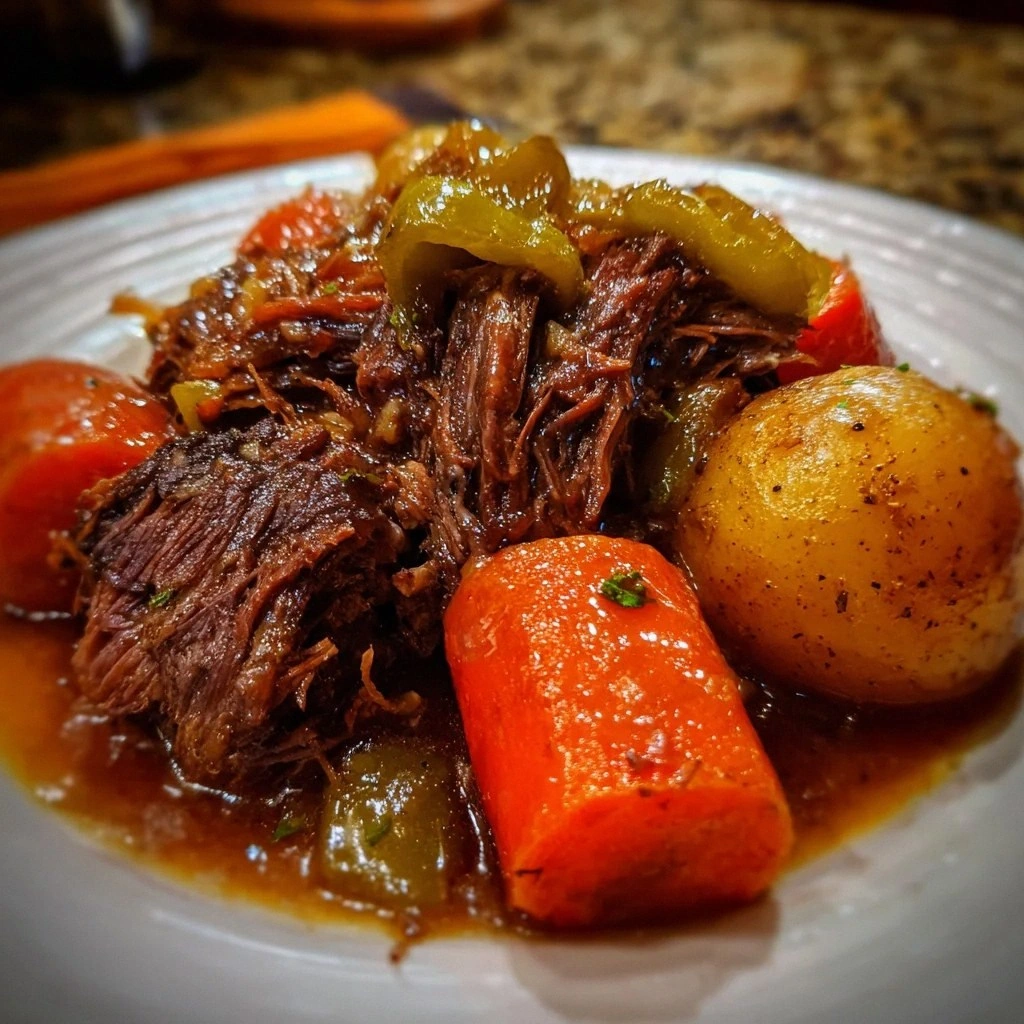
I still remember the first time I made Mississippi Pot Roast the "traditional" way — searing, deglazing, babysitting a Dutch oven for half a Sunday while the football game blared in the background. By the time the roast hit the table I was too cranky to enjoy it, and the meat was only 80 percent as tender as I wanted. Fast-forward a few months: same craving, zero patience. I dumped everything into my crockpot before work, crossed my fingers, and slunk out the door. Eight hours later I opened the front door to a wave of peppery, buttery, ranch-kissed aroma so intense I practically skated across the hardwood in my socks. One bite and I was muttering apologies to my crockpot for ever doubting it. The meat shredded itself at the mere sight of a fork, and the sauce — oh, the sauce — coats every fiber like liquid gold flecked with tangy pepperoncini confetti.
Look, I know the internet is swollen with Mississippi Pot Roast recipes, but most of them treat the crockpot like a lazy after-thought: "Yeah, sure, eight hours on low, whatever." They toss the ingredients in willy-nilly, walk away, and then wonder why dinner tastes like a vague approximation of flavor rather than the full-throttle punch we all secretly want. This version obsesses over the little things — the order you add the mixes, the temperature curve that coaxes maximum collagen melt, the way a modest splash of pepperoncini juice turbo-charges the umami without turning the dish into a salt lick. I dare you to taste this and not go back for seconds; I double-dog dare you to leave leftovers overnight. (Spoiler: you won't.)
If you've ever struggled with dry edges, soupy blandness, or that weird gray tint that screams "institutional cafeteria," you're not alone — and I've got the fix. Picture yourself pulling this beauty out of the crockpot, the whole kitchen smelling like a honky-tonk steakhouse run by a ranch-dressing evangelist. The chuck roast practically sighs as you prod it, swimming in a glossy pool of buttery au jus that tastes like someone distilled Sunday supper into liquid form. Stay with me here — this is worth it.
Let me walk you through every single step — by the end, you'll wonder how you ever made it any other way.
What Makes This Version Stand Out
- Collagen Whisperer: A slow, even rise from room temp to 205 °F means the connective tissue dissolves into silky gelatin rather than seizing into meat-flavored rubber bands. Translation: fork-shreds without the stringy snap-back.
- Ranch Layering: Instead of dumping the powdered mix on top like confetti, we tuck half below the roast so it hydrates slowly, preventing those dusty clumps that never quite dissolve.
- Butter Discipline: One whole stick, yes — but added in two waves. The first half bastes the meat during the initial low phase; the second half melts into the juices at the end for a glossy finish that clings instead of puddling.
- Pepperoncini Precision: Most recipes add the peppers at hour zero and they over-steep into limp ghosts of themselves. We stir them in for only the final 45 minutes so they stay pert, colorful, and vibrantly tangy.
- Make-Ahead Magic: Because the crockpot insert is removable, you can build the whole thing the night before, stash it in the fridge, then drop it into the base before you head to work. Dinner greets you at the door like a golden retriever.
- Crowd Math: One 3-pound roast feeds four with hearty leftovers, but the sauce doubles beautifully if you scale up. I've fed twenty people at a potluck by nesting two roasts side-by-side and rotating them halfway. Zero extra work, hero status achieved.
Alright, let's break down exactly what goes into this masterpiece...
Inside the Ingredient List
The Flavor Base
Chuck roast is the undisputed star — well-marbled, tough enough to demand low-and-slow love, and cheap enough to feed a youth-soccer team without remortgaging your house. Look for a slab that flexes like a yoga instructor when you pick it up; if it's stiff as a plank, the butcher trimmed too much fat and you'll end up with dry shreds. Skip anything labeled "stew meat" — those random cubes cook unevenly and you'll play roulette with texture. Aim for three pounds untrimmed; you'll lose maybe two ounces in silver skin, but the intramuscular fat is pure insurance against dryness.
Ranch dressing mix is the fairy-dust of American suburbia, but not all packets are created equal. Store brands often bulk up with maltodextrin and dried whey, which can scorch against the crock walls. Spring for a name-brand or, better yet, whip up a homemade blend the weekend before (buttermilk powder, dried dill, granulated garlic, onion, cracked pepper). The payoff is a cleaner, punchier herb note that doesn't taste like a dusty snack aisle.
The Texture Crew
Au jus gravy mix sounds old-school, but it's the stealth umami bomb that makes people ask, "Why does this taste like steakhouse drippings?" The soy-salt blend amplifies the beef's natural glutamates, creating that lip-smacking depth you can't quite name. If you're gluten-free, swap in a teaspoon of porcini powder and a pinch of soy sauce; you'll get similar savoriness without the wheat. Don't even think about skipping it — without this layer your roast tastes like Sunday supper at the bland-relative's house.
The Unexpected Star
Pepperoncini peppers are the zippy plot twist. They're mild — think banana-pepper-meets-green-bell-pepper — but they carry a gentle vinegar bite that slices through all that richness. Buy the whole peppers, not pre-sliced rings; they stay perky during their brief swim and won't bleed neon green into the sauce. Three peppers are perfect for the faint-of-heart; if you want a subtle back-of-throat glow, use five and add a teaspoon of the brine. Future pacing moment: imagine twirling those silky strands around your fork and hitting a bright little pop of pepper — pure magic.
The Final Flourish
Butter gets vilified in modern diet culture, but here it's non-negotiable. A full stick melts into the juices, emulsifying with the meat drippings to create a sauce that clings like velvet. Use salted if that's all you have, but unsalted lets you control the final salinity after the mixes do their thing. Pro move: cut it into thin pats and freeze them while you prep everything else; they'll distribute faster and you won't have a greasy iceberg bobbing around for hours.
Everything's prepped? Good. Let's get into the real action...
The Method — Step by Step
- Pat the chuck roast bone-dry with paper towels. Moisture is the enemy of browning, and although we're not searing here, we still want the surface primed to accept seasoning. Season aggressively with kosher salt and cracked black pepper on all sides — think "snow-dusted driveway," not polite sprinkles. Let it rest on a rack while you rummage through the pantry; the salt will begin drawing protein-rich juices to the surface, setting you up for a self-basting crust later.
- Whisk the ranch mix and au jus mix together in a small bowl. Most recipes dump them separately and you end up with pockets of pure MSG next to bland meat. Blending first ensures a homogenous flavor snow that will dissolve evenly. Reserve one tablespoon of this mixture; you'll use it later to bloom in butter for an eleventh-hour sauce boost.
- Lay half the seasoned powder mixture across the bottom of the crockpot insert, creating a fragrant mattress for the roast. Nestle the meat on top, fat-cap upward. The fat will render downward, self-basting the leaner sections. Sprinkle the remaining powder over the crown, gently pressing so it adheres like savory glitter.
- Scatter the frozen butter pats around the perimeter, not directly on top. This placement allows them to melt outward, forming a protective lipid moat that keeps the meat from scorching against the hot ceramic wall. Add three whole pepperoncini, but resist the urge to splash in the brine just yet; early acid can tighten muscle fibers and you'll lose that spoon-soft texture we're chasing.
- Clamp on the lid and set the crockpot to LOW for 8 hours. (If you're in a 10-hour workday bind, HIGH for 5 hours works, but the texture edges toward stringy.) During the first hour you'll hear a gentle blip-blop as the butter liquefies; that's your cue to walk away and conquer your day. Trust the low, even heat — opening the lid releases steam and adds 20 minutes to your cook time.
- At the 7-hour mark, tug on a corner of the roast with tongs. It should yield like a hammock, not spring back like a trampoline. If you hit resistance, re-lid and give it another 45 minutes. Once tenderness is confirmed, scatter in the remaining pepperoncini plus one tablespoon of their juice for every pound of meat. This late addition brightens the sauce without pickling the beef into mush.
- Crank the crockpot to HIGH, remove the lid, and let the sauce reduce for 15 minutes. The surface will develop a glossy sheen that screams "restaurant plating." Skim off excess fat if you're feeling virtuous; I simply stir it back in because flavor > vanity.
- Shred directly in the pot using two forks. The strands should ribbon apart with zero sawing motion. If you find any stubborn chunks, they need another 30 minutes — patience, grasshopper. Once shredded, fold the meat through the sauce so every fiber gets its velvet coat. Taste and adjust salt; you may not need any thanks to the mixes.
- For the grand finale, melt a final tablespoon of butter in a small skillet, sprinkle in the reserved seasoning mix, and swirl until nutty and fragrant. Drizzle this "flavor rocket" over the shredded roast just before serving. It blooms the dried herbs in fat, releasing an aroma that makes grown adults hover around the crockpot like moths to porch-light.
That's it — you did it. But hold on, I've got a few more tricks that'll take this to another level...
Insider Tricks for Flawless Results
The Temperature Rule Nobody Follows
Most home cooks obsess over time; pros obsess over temperature. Slide a probe thermometer into the thickest part at hour six. You're aiming for 203–205 °F — the sweet spot where collagen converts to gelatin without squeezing moisture from muscle fibers. Anything under 195 °F and you'll chew strands like bubblegum; over 210 °F and the meat drifts into pot-roast purgatory. If you don't own a probe, use the "pinch test": a properly softened strand should smush between thumb and forefinger like marshmallow.
Why Your Nose Knows Best
Midway through the cook, your kitchen should smell like a buttery steak kissed a pickle. If you detect acrid, burnt-top-of-the-crock odor, the seasoning layer is scorching. Quickly lift the insert using oven mitts, give everything a gentle stir, and add a quarter-cup of warm water around the edges. The water will redistribute heat and rescue the fond before it carbonizes. Trust me — a friend tried skipping this step once, and her roast tasted like smoky cardboard sprinkled with regret.
The 5-Minute Rest That Changes Everything
Yes, it's shredded and swimming in sauce, but let the crockpot sit on WARM with the lid ajar for five minutes before serving. This brief pause allows the gelatinized juices to thicken slightly so the sauce clings rather than puddling on the plate. During this window, toast your buns or whip up quick mashed potatoes; the timing synchronicity feels like culinary choreography.
Creative Twists and Variations
This recipe is a playground. Here are some of my favorite ways to switch things up:
Spicy Cowboy Style
Add a diced chipotle in adobo plus a teaspoon of the sauce for smoky heat that rides shotgun with the pepperoncini tang. Swap half the butter for bacon grease if you're feeling rowdy. The result tastes like a barbecue joint collided with a Mississippi diner — in the best possible way.
Mushroom Umami Bomb
Layer in eight ounces of cremini mushrooms, quartered, at hour two. They'll absorb the ranch-y fat and baste the roast with their earthy liquor. Finish with a splash of sherry vinegar for woodland depth that'll have mushroom-haters asking for seconds.
Italian Stallion
Replace ranch mix with a packet of zesty Italian dressing mix and swap pepperoncini for mild cherry peppers. Stir in a handful of baby spinach at the end for color. Pile the shredded meat onto crusty ciabatta with provolone for a next-level hot sandwich.
Low-Carb Bowl Base
Skip the potatoes and serve over cauliflower rice. The buttery sauce compensates for cauli-rice's bland reputation, and you can justify an extra helping under keto logic. Confession: I ate half the batch before anyone else got to try it when I tested this version.
Sweet-Hearth Breakfast Hash
Chop leftover cold roast into tiny cubes, sear in a cast-iron skillet until edges crisp, fold in diced sweet potatoes and a fried egg. That crispy-fat-meets-sweet-potato moment is breakfast nirvana and uses up leftovers without the microwave sadness.
Tex-Mex Tuesday
Stir a teaspoon each of cumin and smoked paprika into the seasoning blend, swap pepperoncini for pickled jalapeños, and finish with fresh cilantro. Pile into warm tortillas with quick-pickled red onions for tacos that taste like Mississippi took a vacation to Austin.
Storing and Bringing It Back to Life
Fridge Storage
Transfer cooled meat plus plenty of sauce to airtight glass containers; the fat will congeal into a protective cap that seals flavor. Refrigerate up to five days, but good luck waiting that long. To reheat, spoon into a saucepan with a splash of broth, cover, and warm gently over medium-low heat until steamy. Microwave works in a pinch, but stir every 30 seconds to prevent rubbery edges.
Freezer Friendly
Pack into quart-size freezer bags, press out excess air, and freeze flat for space-saving bricks. Label with the date; quality peaks at three months but remains safe far longer. Thaw overnight in the fridge, then rejuvenate in a covered skillet with a quarter-cup of beef broth and a pat of butter. The sauce will re-emulsify and taste nearly identical to day one.
Best Reheating Method
For large batches, return to the crockpot, add a splash of water, and set to WARM for 90 minutes. The gentle heat prevents that dreaded "over-stewed" edge. For single portions, simmer in a non-stick skillet until edges sizzle and caramelize; those crispy bits are kitchen gold and will have you picking at the pan like a raccoon at a campsite.