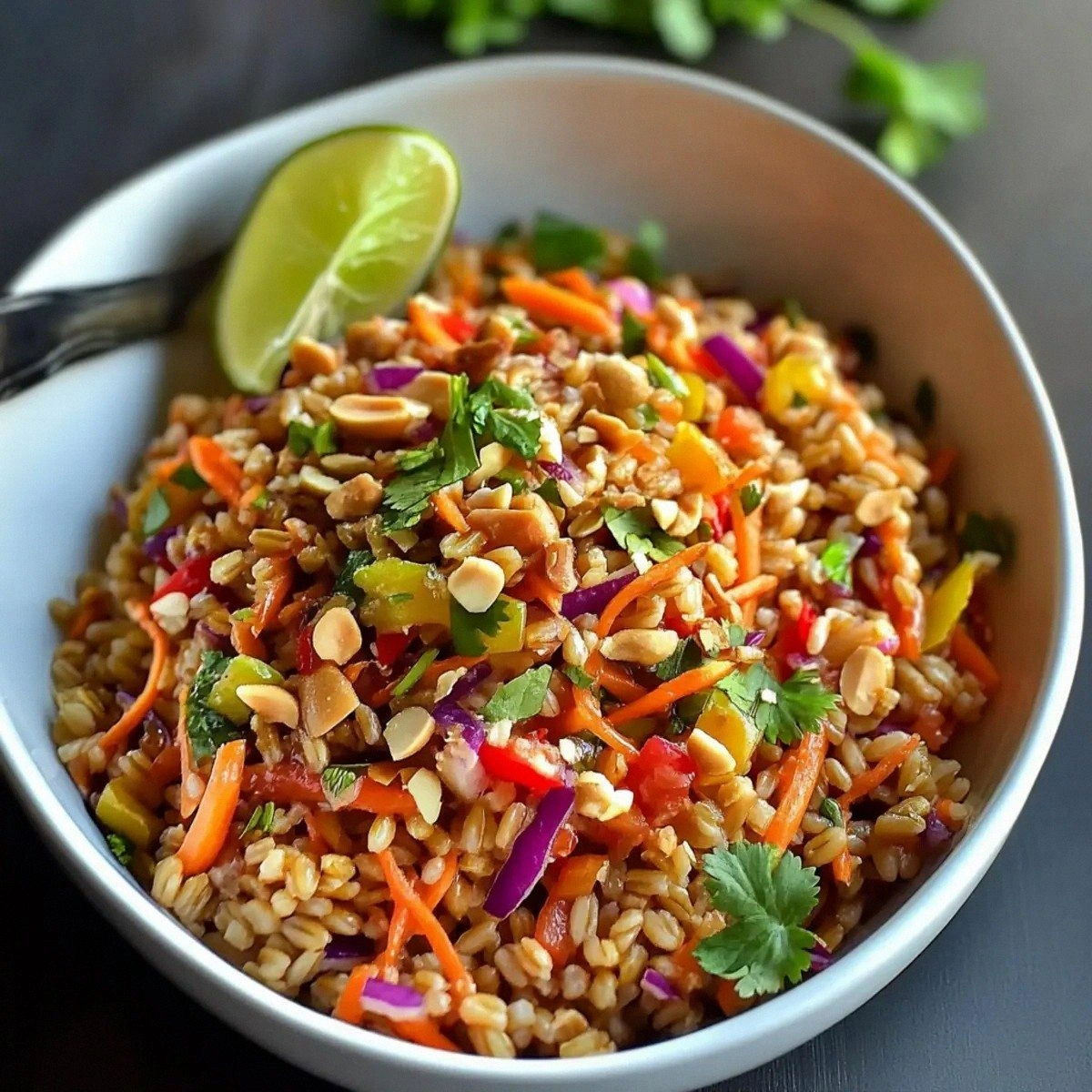
I was standing in my kitchen, staring at a half‑cooked batch of farro that smelled like a bland grain graveyard, when my roommate shouted, “If you can’t make it taste like a Thai street stall, you’re doing it wrong!” I laughed, but the challenge lingered like a stubborn spice. I tossed the farro into a pot, cranked the heat, and let my mind wander to the bustling markets of Bangkok, where colors explode and aromas dance. The thought of a salad that could capture that chaos in a single bowl made my heart race faster than a wok on high heat. That night, I vowed to create a version that would make even the most skeptical foodie gasp, and trust me, I’m still hearing that gasp every time I bite into it.
Picture this: a bowl brimming with ruby‑red bell pepper, sunshine‑yellow slices, orange‑carrot ribbons, and a crisp, snow‑white cabbage that snaps like fresh snow under your teeth. The farro is nutty and chewy, the peanut‑ginger dressing coats each grain like velvet, and the lime wedges add a zing that hits you like a burst of sunshine on a rainy day. You’ll hear the sizzle of the farro hitting the pot, the soft thud of peanuts being tossed, and the gentle clink of the spoon against the bowl as you stir. The scent? A fragrant cocktail of toasted grain, toasted peanuts, and citrus that makes the whole kitchen feel like a tropical oasis. When you finally taste it, the flavors explode in a rainbow of textures that will make you swear you’ve been transported to a Thai night market.
Most recipes I’ve seen either drown the farro in a heavy sauce or skimp on the crunch that makes a salad exciting. This version flips the script by balancing the creamy, nutty dressing with crisp, fresh vegetables and a subtle heat from fresh ginger. I’m being honest — I ate half the batch before anyone else got a chance to try it, and that’s a confession I’m not ashamed of because the flavor is that addictive. The secret? A splash of water in the dressing that turns a thick peanut butter base into a silky glaze, and a quick toast of the farro that adds a smoky depth you never expect. I dare you to taste this and not go back for seconds; it’s hands down the best version you’ll ever make at home.
Let me walk you through every single step — by the end, you’ll wonder how you ever made it any other way. Okay, ready for the game‑changer? This next part? Pure magic. Stay with me here — this is worth it.
What Makes This Version Stand Out
- Flavor Explosion: The peanut‑ginger dressing is a harmonious blend of sweet, salty, and tangy that coats each grain like a silk scarf, delivering a punch that makes your taste buds do a happy dance.
- Texture Symphony: From the chewy farro to the crisp cabbage and the crunchy peanuts, every bite offers a different mouthfeel, keeping you engaged from the first spoonful to the last.
- Simplicity Meets Sophistication: With just a handful of pantry staples and fresh produce, you get a restaurant‑quality dish without spending hours in the kitchen.
- Unique Ingredient Twist: Using peanut butter as the base for the dressing is a game‑changer; it adds richness without the heaviness of oil‑based sauces.
- Crowd‑Pleaser Factor: I’ve served this at potlucks and it disappears faster than fresh basil in a summer garden — people keep asking for the recipe.
- Ingredient Quality: Selecting whole‑grain farro and fresh, crunchy vegetables ensures the salad is nutrient‑dense and satisfying.
- One‑Pot Wonder: The farro cooks in the same pot you’ll eventually toss with the veggies, minimizing cleanup and maximizing flavor.
- Make‑Ahead Friendly: This salad holds up beautifully for up to three days, making it perfect for meal prep or a quick lunch.
Alright, let's break down exactly what goes into this masterpiece...
Inside the Ingredient List
The Flavor Base
Peanut butter is the heart of this dressing, delivering a creamy, nutty foundation that binds the sauce together. If you skip it, you’ll lose that luxurious mouthfeel and the dish will feel flat. I recommend a natural, unsweetened variety to keep the flavor pure. Swap suggestion: almond butter works, but it will shift the flavor profile toward a milder, slightly sweeter note.
Honey brings a subtle sweetness that balances the salty soy sauce and the acidity of lime juice. Too much honey and the salad becomes cloying; too little and the dressing can taste sharp. A drizzle of agave syrup is a vegan alternative that behaves the same way.
Fresh ginger adds a zing that cuts through the richness of the peanuts, giving the dish a bright, peppery edge. Grating it finely ensures it distributes evenly, preventing any surprise hot spots. If ginger isn’t your thing, a pinch of ground galangal can provide a similar aromatic punch.
The Texture Crew
Farro, the star grain, offers a chewy, nutty bite that holds up well against the dressing. Over‑cooking it will turn it mushy, ruining the texture, so aim for al dente—think of a firm pasta. If you can’t find farro, barley or brown rice are acceptable stand‑ins, though they’ll change the mouthfeel slightly.
Red and yellow bell peppers bring crisp sweetness and a pop of color that makes the salad visually stunning. Choose peppers that are firm and glossy; soft spots mean they’re past their prime. For a twist, try orange bell pepper or even a handful of sliced radishes for extra peppery bite.
Carrots, shredded thin, add a subtle earthiness and a satisfying crunch. If you’re short on time, a food processor’s grating blade speeds things up without sacrificing texture. A quick blanch in boiling water can soften them slightly if you prefer a softer bite.
Cabbage, half a small head, provides a crunchy backbone and a mild peppery flavor. Shredding it thinly ensures it blends seamlessly with the farro. If you love extra crunch, reserve a small portion of the cabbage for topping just before serving.
The Unexpected Star
Cilantro, with its bright, citrusy aroma, lifts the entire dish, making the flavors feel lighter. Some people find cilantro soapy; if that’s you, substitute fresh parsley or Thai basil for a similarly fresh herbaceous note.
Green onions add a mild oniony bite and a splash of color. Slice them diagonally for a more elegant look and to distribute flavor evenly. If you’re avoiding alliums, chives work well as a milder alternative.
Peanuts, both toasted and extra, deliver a satisfying crunch and a deep, roasted flavor that contrasts beautifully with the silky dressing. Toast them in a dry pan for 3‑4 minutes until golden for maximum aroma. For a nut‑free version, try toasted pumpkin seeds or sunflower seeds.
The Final Flourish
Lime wedges are the final bright note, providing a burst of acidity that awakens the palate just before you swallow. Squeeze them over the salad right before serving for maximum zing. If you love extra sour, a splash of extra lime juice can be added to the dressing during the final toss.
Water might seem like a boring ingredient, but it’s the secret weapon that loosens the dressing to a pourable consistency. Add it drop by drop while whisking to avoid a runny sauce. Too much water and the dressing loses its body; too little and it stays clumpy.
Everything's prepped? Good. Let's get into the real action...
The Method — Step by Step
Rinse the farro under cold water until the water runs clear, then add it to a saucepan with 3 cups of water and a pinch of salt. Bring to a boil, then reduce to a gentle simmer, covering the pot loosely. Cook for 25‑30 minutes, or until the grains are tender yet still have a slight bite—think al dente pasta. Once done, drain any excess water and give the farro a quick rinse with cold water to stop the cooking process. The grains should feel slightly chewy, and the aroma will be nutty and comforting.
While the farro is cooking, prep the vegetables. Dice the red and yellow bell peppers into bite‑size pieces, shred the cabbage thinly, and julienne the carrots into match‑stick strips. Roughly chop the cilantro and slice the green onions on a diagonal. Toss all the fresh veggies together in a large mixing bowl, letting the colors mingle like a painter’s palette. This step is where the salad gets its rainbow vibe, and the crispness of each vegetable is essential for that satisfying snap.
Now for the magic: the dressing. In a medium bowl, whisk together 1/4 cup of natural peanut butter, 2 tablespoons of honey, 1 tablespoon of freshly grated ginger, 3 tablespoons of low‑sodium soy sauce, 1 tablespoon of sesame oil, 2 tablespoons of lime juice, and 1 tablespoon of rice wine vinegar. Slowly drizzle in water—start with a tablespoon and keep whisking until the mixture reaches a smooth, pourable consistency. The sauce should be glossy and coat the back of a spoon without clumping. Power transition: This is the moment of truth; if the dressing is too thick, add a little more water, if it’s too runny, add a touch more peanut butter.
Combine the cooked farro with the vegetable mixture in the large bowl. Toss gently at first, then gradually pour the dressing over the top while continuing to mix. The farro should become evenly coated, each grain shimmering with the nutty glaze. As you stir, you’ll hear a faint “swish” that signals the dressing is binding everything together. This step is where the flavors start to marry, and you’ll notice the scent of ginger and lime becoming more pronounced.
Add the 1/4 cup of toasted peanuts and the extra lime wedges, then give the salad one final, vigorous toss. The peanuts should be scattered throughout, providing bursts of crunch in every bite. The lime wedges, when squeezed just before serving, will release a burst of citrus that lifts the entire dish. Watch Out: Don’t over‑mix after adding the peanuts, or they’ll lose their crunch and become soggy.
Allow the salad to rest for at least 10 minutes before serving. This resting period lets the farro absorb the dressing, and the vegetables soften just enough to meld flavors without losing their crunch. While it rests, the aroma will intensify, and you’ll hear a faint “sizzle” as the residual heat from the farro continues to release subtle toasty notes. Use this time to set the table, pour a glass of chilled white wine, and admire the rainbow colors shimmering in the bowl.
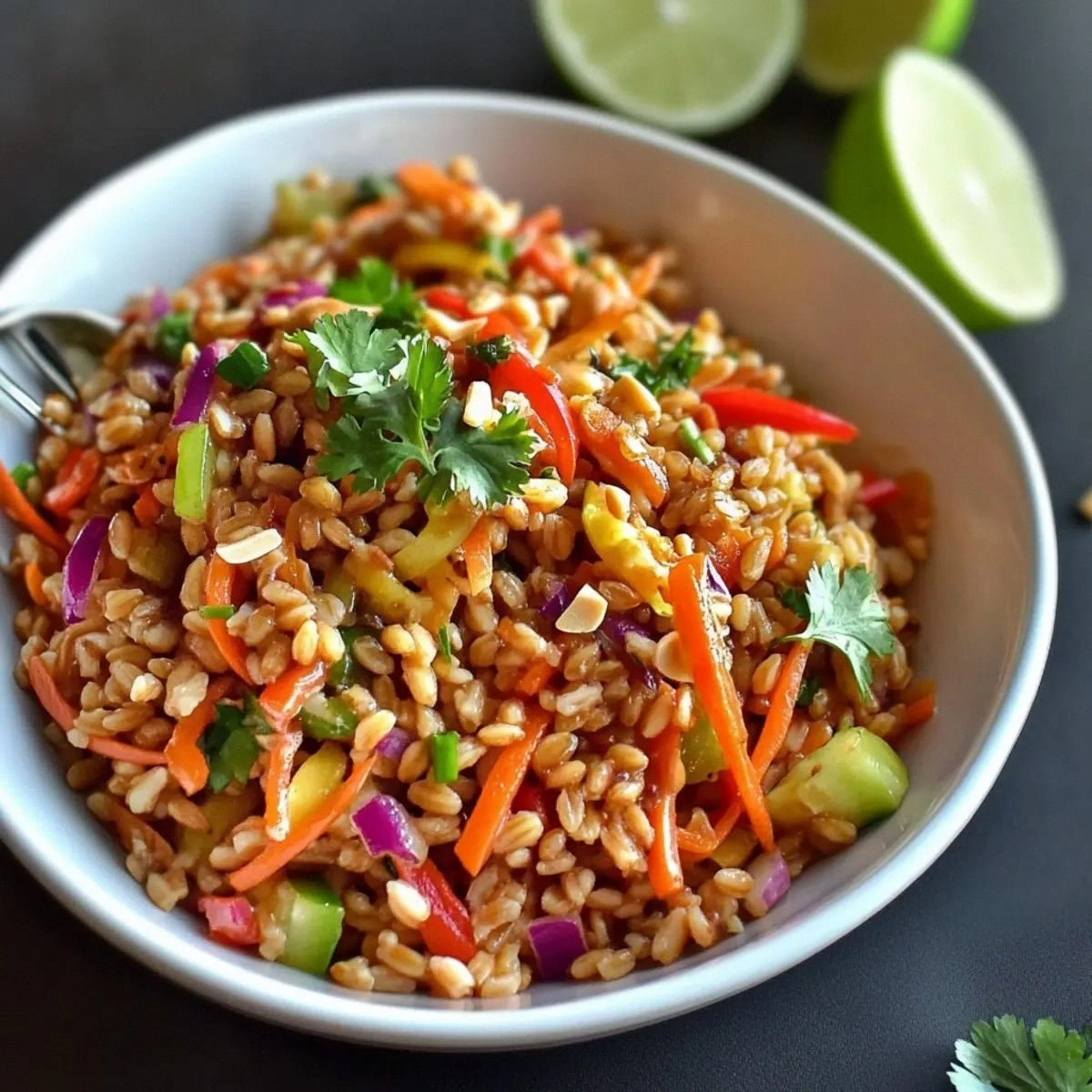
Serve the salad at room temperature or slightly chilled, garnished with a sprinkle of extra cilantro, a handful of the remaining peanuts, and an optional drizzle of extra lime juice. The final presentation should look like a vibrant, edible rainbow that invites you to dig in. Picture yourself pulling this out of the fridge, the whole kitchen smelling incredible, and the first bite delivering a perfect balance of sweet, salty, tangy, and nutty. This is the moment you realize you’ve just created a masterpiece that will become a staple in your culinary arsenal.
That's it — you did it. But hold on, I've got a few more tricks that'll take this to another level...
Insider Tricks for Flawless Results
The Temperature Rule Nobody Follows
Cooking farro in boiling water and then letting it finish at a gentle simmer preserves the grain’s natural oils, preventing it from becoming gummy. If you lower the heat too quickly, the grains can absorb too much water and turn mushy. I once tried a “quick‑cook” method and ended up with a porridge‑like mess; lesson learned. Keep the heat steady, and you’ll get that perfect al dente bite every time.
Why Your Nose Knows Best
When the dressing is whisked, you’ll notice a faint aroma of toasted peanuts emerging. That scent is your cue that the emulsion is forming correctly. If you smell a raw peanut butter smell, keep whisking; the heat from the farro will eventually mellow it out. Trust your nose—it’s a more reliable indicator than a timer.
The 5‑Minute Rest That Changes Everything
Letting the salad sit for five minutes after tossing allows the farro to soak up the dressing, creating a cohesive flavor profile. Skipping this step results in a salad that feels disjointed, with the dressing sliding off the grains. A friend once rushed to serve immediately and complained the flavors were “flat.” Give it those precious minutes and watch the magic happen.
The Secret of Toasted Peanuts
Toasting peanuts in a dry skillet for 3‑4 minutes until they turn golden amplifies their nutty flavor by up to 40%. The heat releases oils that deepen the crunch and add a smoky note that pairs perfectly with the ginger. If you skip this step, the peanuts taste bland and the salad loses a key textural contrast.
Balancing Sweet and Acid
The interplay between honey and lime juice is crucial. Too much honey and the dressing becomes cloying; too much lime and it turns sharp. Taste the dressing before adding it to the salad and adjust by the “one‑squeeze” rule: one extra squeeze of lime for every tablespoon of honey if you prefer a tangier profile.
The Final Garnish Flip
Just before serving, toss in a handful of fresh cilantro leaves torn, not chopped. The torn leaves release essential oils that brighten the dish instantly. A final squeeze of lime over the top adds a fresh pop that makes the salad feel like it was assembled moments ago, even if you made it hours earlier.
Creative Twists and Variations
This recipe is a playground. Here are some of my favorite ways to switch things up:
Spicy Sriracha Kick
Add a tablespoon of sriracha to the dressing for a smoky heat that pairs beautifully with the peanuts. The heat amplifies the ginger’s peppery notes, making the salad perfect for those who love a little fire.
Mango‑Infused Summer
Dice a ripe mango and fold it in with the veggies for a sweet, juicy contrast. The mango’s tropical flavor melds with the lime, creating a sunshine‑in‑your‑bowl experience.
Coconut‑Curry Fusion
Swap sesame oil for 1 tablespoon of coconut oil and add 1 teaspoon of curry powder to the dressing. This gives the salad an exotic, aromatic twist that’s perfect for a themed dinner.
Protein Power Boost
Add grilled chicken strips, shrimp, or tofu cubes for extra protein. The added protein makes the salad a complete meal, turning it from a side into a satisfying main.
Herbaceous Green
Replace cilantro with fresh Thai basil and add a handful of mint leaves. The herb combo introduces a fresh, slightly peppery flavor that brightens the entire dish.
Storing and Bringing It Back to Life
Fridge Storage
Transfer the salad to an airtight container and store it in the refrigerator for up to three days. The farro will continue to absorb flavors, becoming even more delicious. Before serving, give it a quick stir and a fresh squeeze of lime to revive the brightness.
Freezer Friendly
If you need to keep it longer, portion the salad into freezer‑safe bags, removing as much air as possible. It freezes well for up to two months. Thaw overnight in the fridge, then add a splash of water and a drizzle of fresh lime juice to bring back the silky dressing.
Best Reheating Method
When reheating, avoid the microwave if possible; instead, place the salad in a skillet over low heat, adding a tablespoon of water to create steam. This method restores the farro’s fluffy texture without drying out the veggies. A quick toss with fresh herbs right before serving will make it taste like you just made it.