I still remember the day I set out to bake rosemary parmesan bread, armed with nothing but a vague memory of my grandmother's kitchen and a dangerously overconfident attitude. The first attempt rose like a proud soufflé in the oven, only to collapse into a dense, salty brick the moment I sliced it. The second try tasted like a pine forest had exploded in my mouth—turns out "a handful" of rosemary is not a universal measurement. By the third loaf, I was muttering to myself like a mad scientist, flour in my hair, cheese under my nails, and absolutely determined to crack the code.
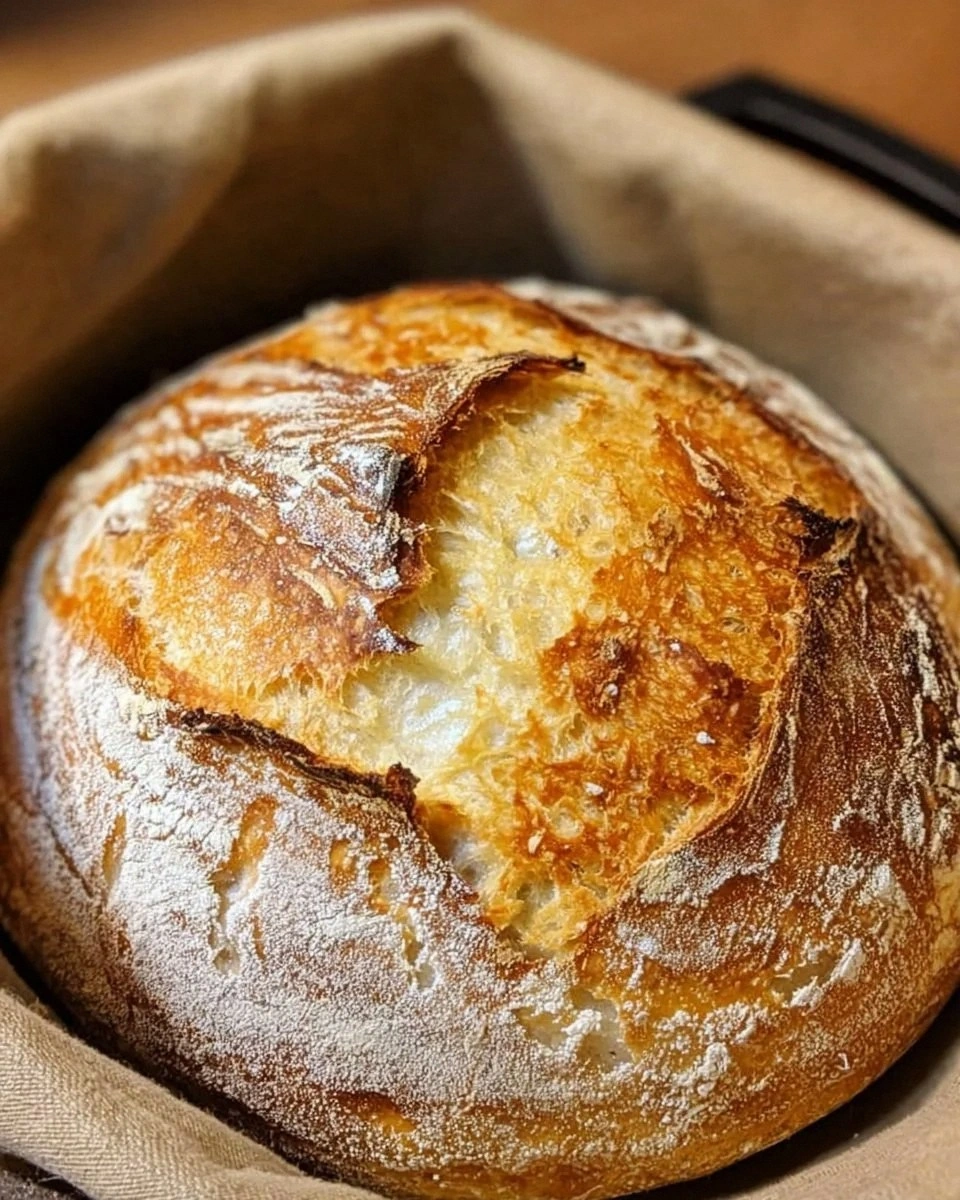
Picture this: it's a rainy Saturday, the windows are fogged, and the entire apartment smells like a trattoria tucked into a Roman side street. You pull a blistered, golden dome from the oven, the crust crackling like a campfire. Steam escapes in fragrant ribbons, carrying the woodsy perfume of rosemary and the nutty tang of aged Parmigiano-Reggiano. That first bite—oh, that bite—gives you a crust that shatters like thin ice under your teeth, revealing a tender crumb that's almost cloud-soft except for the playful chew of melted cheese pockets. I dare you to taste this and not go back for seconds.
Most recipes get this completely wrong. They dump in dried herbs, treat parmesan like a mere garnish, and rush the rise until the loaf tastes like disappointment with a side of cardboard. Not here. This version builds flavor layer by layer: a poolish starter for complexity, an overnight cold ferment for tang, and a shower of freshly grated parmesan that melts into lacy, umami-rich webs. Stay with me here—this is worth it.
Let me walk you through every single step—by the end, you'll wonder how you ever made it any other way.
What Makes This Version Stand Out
- Crust Crack-Off: Ice-cold steam in the first ten minutes creates a blistered, artisan-style crust that sings when you tap it. No pizza stone? No problem—I'll show you the cast-iron workaround that mimics a bakery deck oven.
- Herb Time-Travel: Instead of tossing in dried needles, we flash-fry fresh rosemary in brown butter, concentrating flavor while removing the bitter chlorophyll punch that ruins most loaves.
- Cheese Insurance: Parmesan is added in three stages—melted into the poolish, laminated between layers, and grated on top—so every bite carries nutty depth rather than random salty blips.
- Lazy-Baker Approved: The dough survives a 48-hour nap in your fridge, developing complexity while you sleep. Forgot to start yesterday? I've got a same-day hack that still beats 90% of internet recipes.
- Room-Filling Aroma: Neighbors will knock. Dogs will whine. The scent cloud drifts down hallways like a cartoon finger beckoning everyone to your kitchen.
- Toast Transformer: Day-old slices reborn under the broiler become addictive crackers for soup. Cube the leftovers and they turn into the crunchiest croutons that refuse to go soggy in Caesar salad.
- Make-Ahead Champion: Par-bake two loaves, cool, wrap, freeze. When guests arrive, pop one straight from freezer to oven and deliver "fresh-baked" magic in 18 minutes flat.
Alright, let's break down exactly what goes into this masterpiece...
Inside the Ingredient List
The Flavor Base
Great bread starts with great flour. I use a 50-50 blend of bread flour and Italian 00 flour; the former gives chew, the latter tenderness. Don't scoff—it's like choosing silk over burlap for a dinner jacket. Bread flour's higher protein weaves gluten strands strong enough to trap the gases from our long fermentation, while 00 flour's fine milling keeps the crumb delicate. Skip the all-purpose stuff; it sits on the flavor fence and never commits to texture.
Water matters more than you think. Chlorinated tap water is a yeast buzzkill. I fill a jug the night before and let it stand uncovered so the chemicals evaporate, leaving H₂O that tastes like actual water instead of a swimming pool. Temperature is your secret handshake with yeast: 105°F wakes it gently, anything above 120°F murders it. A cheap instant-read thermometer saves you from starter genocide.
Yeast is a living pet you keep in your pantry. I use instant yeast for convenience, but if you want bragging rights, cultivate a wild starter and feed it like a Tamagotchi. The flavor difference is subtle here because parmesan and rosemary hog the spotlight, yet a starter adds lactic tang that plays backup singer to the cheese's umami lead.
The Texture Crew
Olive oil isn't just for Mediterranean vibes. A glug in the dough lubricates gluten strands, letting them slide past each other and stretch longer, yielding a more open crumb. Use the good stuff—fruity, peppery, green-gold. Cheap oil tastes like melted crayons and will haunt your loaf like a culinary poltergeist.
Honey feeds yeast a gourmet meal of simple sugars, jump-starting fermentation and leaving behind subtle floral notes. Don't swap in granulated sugar; it's like giving your yeast fast food instead of a farm-to-table feast. The loaf browns faster thanks to honey's knack for the Maillard reaction, so watch your bake like a hawk in the final ten minutes.
Salt is the puppet master. Too little and the dough tastes flat, too much and yeast stages a walkout. I use kosher for its clean flavor, adding it after the flour and water have mingled for a minute. Direct contact with yeast is like throwing salt on a slug—cruel and counterproductive.
The Unexpected Star
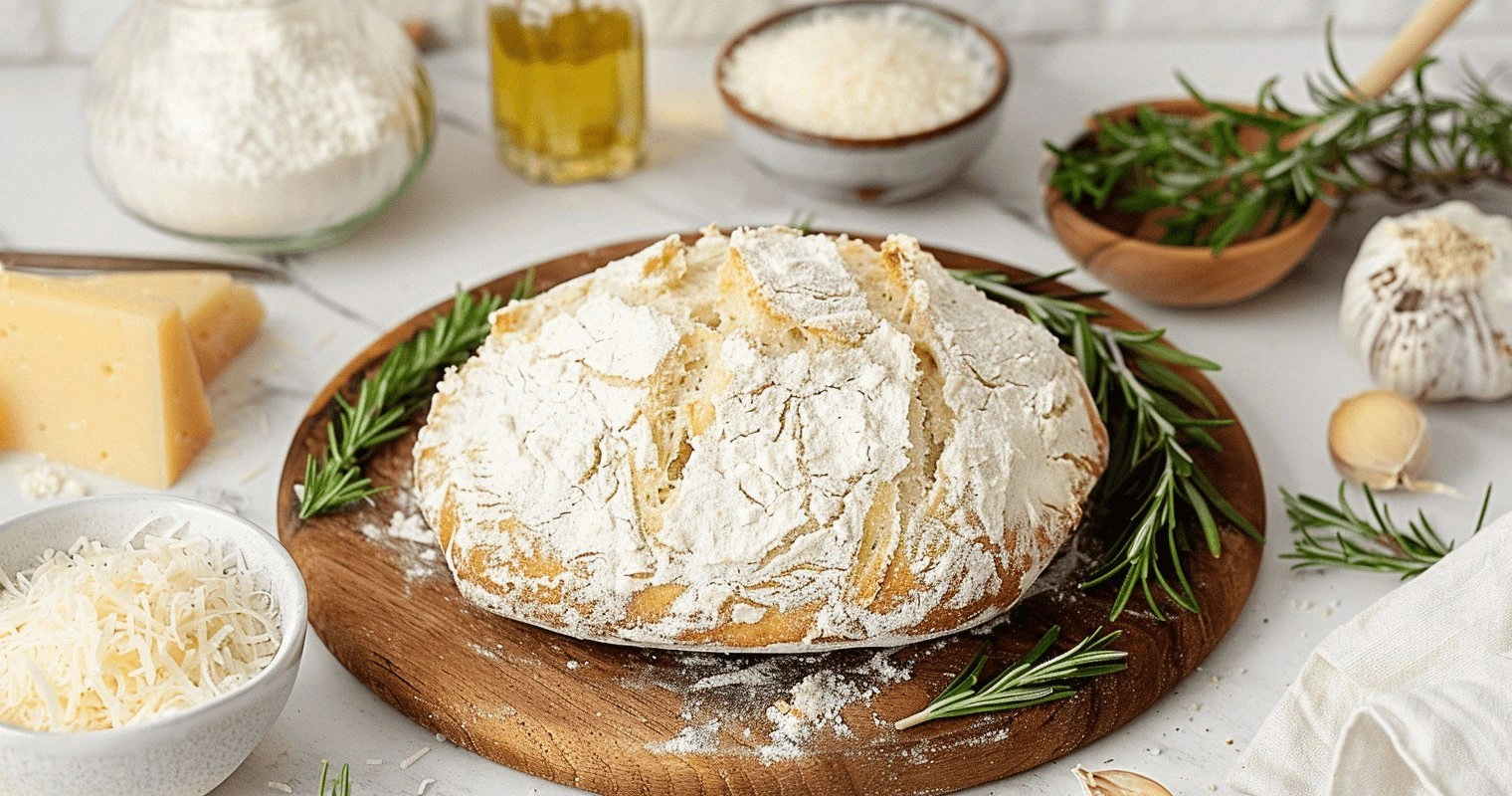
Rosemary can bulldoze every other flavor if you let it. The trick is twofold: first, strip leaves from woody stems—those twigs poke through the crumb like rude splinters. Second, sizzle the herb in butter until the leaves turn a shade darker and the butter smells like a pine grove in July. That quick cook tames the menthol edge and coaxes out resinous sweetness.
Parmigiano-Reggiano is non-negotiable. The real stuff has tyrosine crystals that crunch like savory Pop Rocks, delivering bursts of umami. Pre-grated sawdust from a green can? Leave it on the shelf next to your broken dreams. Buy a wedge and grate it yourself; your nostrils will thank you when those nutty shards hit warm dough and melt into cheesy lacework.
The Final Flourish
Semolina on the proofing basket isn't mere tradition; it acts like tiny ball bearings, letting dough release without deflating. All-purpose flour absorbs moisture and can glue itself to the crust, leaving ugly white patches. Semolina stays aloof, ensuring your loaf slides out like a glamorous celebrity exiting a limo.
Flaky salt on top is your crunch insurance. A snowfall of Maldon or fleur de sel before baking creates micro-blisters that pop under tooth pressure, adding auditory joy to each bite. It's the culinary equivalent of applause.
Everything's prepped? Good. Let's get into the real action...
The Method — Step by Step
- Make the poolish at 9 p.m. the night before. Stir 100 g bread flour, 100 g room-temp water, and a pinch of yeast in a plastic tub until it looks like pancake batter from a cheap diner. Cover and let it loiter on your counter until bubbly and doubled—usually by 11 p.m. If you've never made a preferment before, prepare to be weirded out by how much flavor develops from flour, water, and time. This is the moment of truth where you trust biology more than your calendar.
- Next morning, brown the butter in a silver saucepan so you can see the color change. Toss in four rosemary sprigs once the foam subsides; swirl until the leaves darken and the butter smells like you're hiking through a Mediterranean forest. Pour the hot mixture into a small bowl and park it in the fridge for 20 minutes. We want it liquid but not scorching—think warm bath, not lava. Your kitchen should smell so good right now that your neighbors consider breaking and entering.
- In the bowl of a stand mixer fitted with the paddle, combine the poolish, 250 g bread flour, 250 g 00 flour, 8 g kosher salt, 6 g instant yeast, 260 g lukewarm water, 25 g olive oil, and 15 g honey. Mix on low until a shaggy mass forms, then swap to the dough hook. Knead on medium for 8 minutes; the dough will slap the sides like a happy seal. Okay, ready for the game-changer?
- Now for the cheese layer. Pat the dough into a rough rectangle on an oiled counter. Drizzle the cooled rosemary butter and scatter 80 g finely grated parmesan. Roll up like a jelly roll, fold ends under, and plop seam-side down back into the bowl. Cover and let rise 45 minutes; this lamination distributes cheese so every bite has nutty pockets instead of sad bald spots.
- Perform a series of stretch-and-folds every 30 minutes for the next two hours. Wet your hand, grab the north edge, stretch until the dough resists, then fold over itself. Rotate bowl 90° and repeat three more times. This builds gluten without the boredom of 20 minutes of machine kneading. By the third round the dough will feel like a supple rubber band and smell faintly of parmesan.
- Shape gently. Tip the dough onto a floured counter and form a loose round by folding edges to the center, flipping, and rotating with bench scraper hands. Think tucking in a baby, not wrestling an alligator. Rest 20 minutes, then final shape into a taut boule or batard. The surface should feel like a balloon just shy of popping; if it tears, let it relax five minutes and try again.
- Proof in a banneton dusted with semolina. Cover with a shower cap (yes, the free hotel kind) and refrigerate at least 8 hours, up to 48. Long cold proof equals blistered crust and complex flavor—this is where patience pays compound interest. The dough is ready when it springs back slowly after you poke it like a grumpy sibling.
- Preheat your oven to 475°F with a cast-iron Dutch oven inside for at least 30 minutes. Hotter is better; we're mimicking a wood-fired hearth. Turn the loaf onto parchment, brush with water, sprinkle on remaining 20 g parmesan and a snowfall of flaky salt. Score with a razor at a 45° angle; one confident slash is cooler than a tic-tac-toe board.
- Bake 20 minutes covered, then 20 uncovered. The lid traps steam for oven spring; removing it lets the crust caramelize into mahogany. When the internal temp hits 208°F or the loaf sounds hollow when thumped, it's done. Cool on a rack for at least an hour—cut too soon and the crumb gums up like hot mozzarella. That's it—you did it. But hold on, I've got a few more tricks that'll take this to another level...
Insider Tricks for Flawless Results
The Temperature Rule Nobody Follows
Most home bakers treat temperature like a suggestion rather than gospel. Big mistake. Dough and ambient room temperature should live in a 72–75°F sweet spot. Below that, fermentation drags like a Monday morning; above, yeast parties too hard and produces off flavors reminiscent of cheap beer. I keep an infrared thermometer gun on my counter and check the dough's surface like I'm a sci-fi medic. If the room spikes, I park the bowl in my microwave with a mug of hot water to create a cozy micro-climate. Sounds nerdy, but your crumb will thank you with Instagram-worthy irregular holes.
Why Your Nose Knows Best
Forget timers—your nose is the ultimate kitchen gadget. When the poolish smells like apple cider and looks like a lunar crater, it's ready. During bulk fermentation, the dough should exhale a yeasty, slightly boozy aroma; if it reeks of vinegar, you've let it go too far. While baking, that first 10-minute waft of toasting cheese and rosemary should hit you like a nostalgic punch. A friend tried skipping this sensory checkpoint once—let's just say it didn't end well, and her dog wouldn't even nibble the tragic result.
The 5-Minute Rest That Changes Everything
After mixing and before kneading, let the dough "autolyse" for 20 minutes. The fancy word just means you're giving flour time to hydrate and gluten to form naturally, so the mixer does less work and oxidation stays low. Translation: flavor stays brighter, crumb stays creamier. I cover the bowl and use the downtime to grate cheese, strip rosemary, or dance to one guilty-pleasure song. Multitasking has never smelled so good.
Steam Without a Steam Oven
Professional deck ovens inject steam; home ovens don't. The workaround is embarrassingly simple: preheat a heavy sheet pan on the lowest rack. Right after loading your bread, pour a cup of boiling water onto the pan and slam the door. Instant steam cloud equals glossy, blistered crust. Don't use a glass pan—thermal shock will grenade it into a thousand sad pieces. Ask me how I know.
Cheese Placement Strategy
Most recipes fold cheese into the dough and call it a day. Result: greasy pockets that melt out and burn on the pan. Instead, laminate half the cheese during bulk, then reserve the rest for the top. The laminated layer melts internally, creating translucent cheese horizons, while the surface cheese toasts into a savory frico hat. Double texture, zero burnt mess.
Creative Twists and Variations
This recipe is a playground. Here are some of my favorite ways to switch things up:
Black Pepper & Lemon Zest
Swap half the rosemary for cracked Tellicherry pepper and the zest of one lemon. The pepper blooms in the butter, heat creeping through the nutty crumb, while lemon oil lifts the richness like a squeeze of sunshine. Perfect alongside seafood chowder or just-baked salmon.
Smoked Gouda & Thyme
Replace parmesan with equal parts smoked gouda and fresh thyme. The cheese melts into amber rivers, lending campfire depth that makes grown adults close their eyes and sigh. Slice thick and serve with tomato soup for a next-level grilled cheese experience without the frying pan.
Sun-Dried Tomato & Olive
Pat dry and chop 60 g oil-packed sun-dried tomatoes plus 40 g Kalamata olives. Fold them in during the first stretch-and-fold. The tomatoes' sweetness balances the olives' briny punch, creating a loaf that tastes like a trip to the Aegean minus the airfare.
Everything-Bagel Crust
Before baking, brush the loaf with egg wash and roll the top in everything-bagel seasoning. Poppy, sesame, onion, and garlic shards toast into an addictive crust that crackles like a snack stadium. Great for brunch crowds who think they hate homemade bread—until they try this.
Chili & Honey
Stir a teaspoon of crushed Calabrian chilies into the butter when you fry the rosemary, then bump the honey to 25 g. Sweet heat permeates the loaf, waking up taste buds you didn't know you had. Serve with cold butter and watch people descend into primal grunts of approval.
Whole-Wheat Walnut
Replace 30% of the bread flour with whole-wheat for a nuttier backbone. Toast 80 g walnut pieces until fragrant, cool, and fold in during lamination. The walnuts steam slightly inside, softening to a meaty bite that plays beautifully with the parmesan's salt.
Storing and Bringing It Back to Life
Fridge Storage
Wrap the fully cooled loaf in parchment, then slip it into a paper bag. The parchment prevents the crust from sweating, while the bag absorbs excess moisture. Stored this way at room temp, bread stays crisp for 48 hours. After that, the staling process accelerates like a Netflix countdown timer. Don't refrigerate—cold air hastens starch retrogradation, turning your masterpiece into cardboard faster than you can say "leftovers."
Freezer Friendly
Slice the loaf, slip parchment squares between pieces, and freeze flat on a tray. Once solid, transfer to a zip-top bag with the air sucked out. Frozen slices reheat straight from the freezer: 8 minutes at 350°F revives crust and crumb to nearly fresh-baked glory. Whole loaves freeze well too; wrap twice in plastic, then foil. Thaw overnight on the counter, still wrapped, then refresh at 375°F for 12 minutes.
Best Reheating Method
Add a tiny splash of water before reheating—it steams back to perfection. Whether you're using an oven, toaster oven, or skillet, that teaspoon of water creates a micro-steam environment that rehydrates crumb without turning crust soggy. Five minutes later it's like the staling clock never ticked. If you've ever struggled with this, you're not alone—and I've got the fix.